More than 110 years ago, a nurseryman in New Jersey bought a 65-acre farm to grow trees, and part of his old nursery is now protected land where rows of trees still stand
Its Princeton Elm would prove resistant to Dutch elm disease, and on November 19 the National Register approved new documentation for the old nursery.

· 3 min read
Key points
- William Flemer Sr. paid $9,000 for the 65-acre Myrick farm in Kingston in 1913.
- Princeton Elms planted in 1925 or 1926 still line Washington Road in West Windsor Township.
- At its peak after World War II the nursery covered about 1,500 acres at Kingston.
- The old headquarters now houses the central offices of the Delaware and Raritan Canal State Park.
The old fields of Princeton Nurseries in New Jersey are back on the federal record. On November 19, 2026, the National Register of Historic Places approved additional documentation for the Princeton Nurseries Historic District. The change appears on the National Park Service's weekly list.
The story began in 1913, when nurseryman William Flemer Sr. paid $9,000 for a 65-acre farm in Kingston. In the 1920s his son developed the Princeton Elm, an American elm variety that would prove resistant to Dutch elm disease.
Nursery work at Kingston ran until about 1995. Part of the former nursery land is now preserved open space held by the state and South Brunswick Township, and rows of trees from those years still stand.
Four farms and a teenage manager
Flemer was born in 1861 in what is now Roselle, in Union County, and already ran a nursery in Springfield. He chose Kingston, where a canal and a railroad could carry his trees to market, the nomination explains.
After the Myrick farm in 1913, he bought the neighboring Higgins farm the next year for $14,000. The 85-acre Matthias Van Dyke farm followed for $12,000. The last was the Archibald Gulick farm, 70 acres for $11,500.
By 1915 he owned 285 contiguous acres and four farmhouses, for a total investment of $46,500. In 1914 he put his son, William Flemer Jr., then only 18, in charge of the Kingston operation. Planting appears to have begun that year.
The elm that survived
Under William Jr., the nursery grew to 800 acres by the early Depression years. At its peak after World War II, it covered about 1,500 acres at Kingston.
It became one of New Jersey's largest wholesale tree nurseries. It grew trees from seed and raised them on its own ground.
William Jr. bred that elm in the 1920s. Dutch elm disease was already killing elms in Europe and reached the United States with force in the 1930s.
The nursery did not discover the tree's value against the disease until the 1950s, according to the nomination. In the meantime, the outbreak hurt the business, because nurseries holding elms were quarantined for shipment.
Princeton Elms planted in 1925 or 1926 line both sides of Washington Road in West Windsor Township. They form an arched entrance to Princeton from the east. That elm allée was itself placed on the National Register in 1999.
Trees for highways and towns
The nursery sold trees to state highway departments and urban park commissions. In 1930 it supplied the more than 4,500 trees planted along U.S. Route 1 between Trenton and New Brunswick.
William Jr. also introduced the 'Euclid' linden and the 'Sinclair' ginkgo. His son, William Flemer III, added the 'October Glory' red maple and the 'Shademaster' locust. He patented nearly four dozen plants.
To keep its fields watered, the company built its own reservoir and wells. It even created the Kingston Water Company, which supplied public water to the village. Seasonal and year-round staff eventually totaled 300 people.
From nursery to open land
The business reached its best year in the late 1980s, with $14 million in sales. Its fortunes turned in the early 1990s. Administrative operations moved to Upper Freehold in 1994, and other work at Kingston was suspended soon after.
When development threatened the land, a group called the Friends of Princeton Nursery Lands formed in 1997. After long negotiations, Princeton University donated 127 acres to the state's Department of Environmental Protection and to South Brunswick.
The state's Green Acres Program bought another 60 acres from William Flemer's Sons, Inc. Twelve acres along the canal were leased for 20 years to Mapleton Nurseries, founded by William Flemer IV. They are to pass to the state when the lease ends.
What still stands
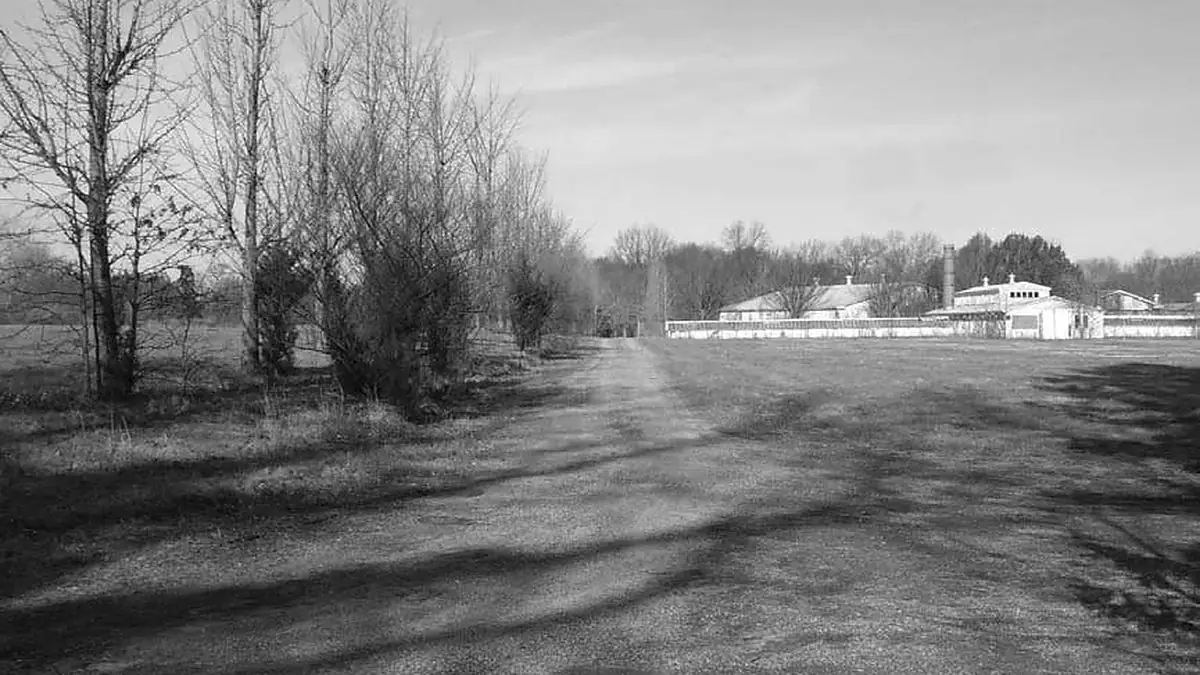
The historic district covers 272 acres in Plainsboro and South Brunswick townships. It includes 65 buildings, three bridges and two public roads. An allée of London plane trees along Mapleton Road dates from the nursery years, windrows still separate the old fields, and ginkgos line a field road.
The former nursery headquarters on Mapleton Road now houses the central offices of the Delaware and Raritan Canal State Park. When the nomination was written, trees were still grown on the leased parcel.
Its history is documented in its National Register nomination file, held by the National Park Service. The additional documentation appears on the weekly list published on November 20, 2026.
Photo: National Park Service, National Register nomination file (Hunter Research, 2008)
Jordi Company
Writer at ECOnewsJordi Company is a well-known figure in Catalan publishing and a pioneer of the free press model, with 40 years of experience in television, radio and print. He has founded and led several media groups and today heads ECOticias.com, an environmental news outlet read in Spanish and English around the world and an audience leader since 2004. He is a member of the International Network of Writers for the Earth (RIET), among other organisations.
More from Jordi CompanyComments · 0
Rules ›No comments yet. Be the first to share your view.