A US national laboratory scientist who designs enzymes to break down plastic bottles has won the Energy Department's Lawrence Award, one of the longest-running US science honors
Gregg Beckham won the Energy Department's Lawrence Award for turning plant waste and plastics into chemicals, including enzymes that recycle PET bottles.

· 4 min read
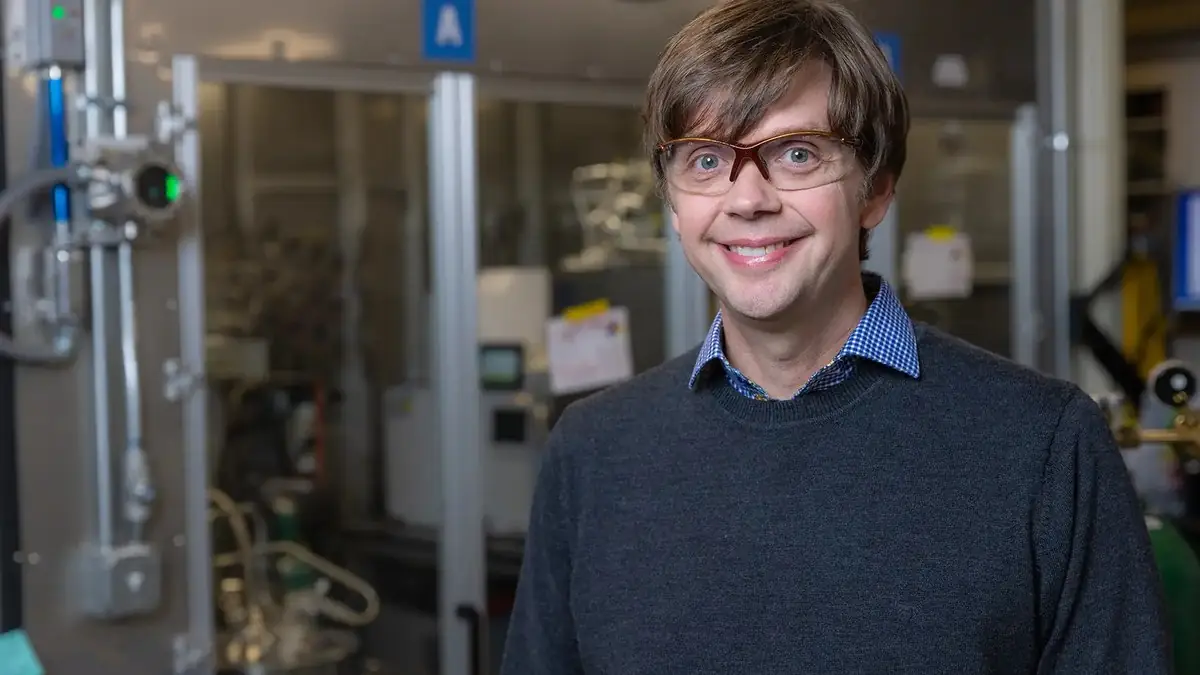
Gregg Beckham, a senior research fellow at the National Laboratory of the Rockies, has won the Energy Department's Ernest Orlando Lawrence Award, one of the longest-running and most prestigious science honors given by the U.S. government. He was one of nine recipients this year. The award recognizes his work turning plant waste and plastic into building blocks for fuels, chemicals and materials. His team has developed enzymes that break down PET, the plastic used in soda bottles and textiles, even when it is contaminated or colored. A 2025 study modeled a process in which enzyme-recycled PET cost one dollar and fifty-one cents per kilogram, below the one dollar and eighty-seven cents for U.S. virgin PET. Beckham also leads BOTTLE, a consortium that has founded three start-ups and trained more than one hundred seventy early-career researchers. His collaborations have produced more than forty-four patents.
Key points
- Enzymes can break down PET even from contaminated and colored waste.
- The modeled cost of enzyme-recycled PET fell below that of new PET.
- The BOTTLE consortium has founded three start-ups.
Gregg Beckham has spent 18 years at a U.S. national laboratory working to turn plant waste and plastic trash into something useful. This month, that work earned him the Ernest Orlando Lawrence Award, one of the U.S. government's most prestigious science honors.
Beckham is a senior research fellow at the National Laboratory of the Rockies (NLR). He received the award's gold medal from Energy Secretary Chris Wright in Washington, D.C., on November 13, 2026, according to the laboratory.
He was one of nine recipients this year. The Energy Department named him in the Energy Science and Innovation category. It lists him with NLR and the University of Colorado Boulder.
What the award recognizes
According to the Energy Department's announcement, Beckham was honored for his "transformative research in the conversion of lignocellulosic biomass and waste plastics via biology, chemistry, and engineering, yielding building blocks for sustainable fuels, chemicals, and materials."
Lignocellulosic biomass is the woody material in plants. In short, Beckham's work breaks down two stubborn materials, plant matter and plastic. The goal is chemical building blocks for fuels, chemicals and materials.
Established in 1959, the Lawrence Award recognizes mid-career U.S. scientists and engineers across nine scientific and engineering categories. The department calls it among the longest-running and most prestigious science and technology honors given by the U.S. government.

Plastic waste ran through more than one award this year. Thomas Epps III, of the University of Delaware, was honored in materials sciences. His citation includes the chemical upcycling of polymeric waste.
Enzymes that eat plastic bottles
On plastics, the lab says Beckham and his colleagues have developed biological and chemical recycling methods. Their work includes advances in enzymatic recycling, chemical oxidation and solvent-based recycling of composite materials.
The enzyme work targets polyethylene terephthalate, or PET. It is the plastic used in single-use packaging, soda bottles and textiles.
Current recycling methods often cannot handle typical low-quality PET waste, according to the lab. Enzymes can break down PET selectively, even from contaminated and colored plastic waste.
A 2025 study in Nature Chemical Engineering improved each stage of the process, from breaking down the plastic to recovering its building blocks. Beckham's team worked with the University of Massachusetts Lowell and the University of Portsmouth, in England. In the modeled process, they cut expensive acid and base additions by more than 99%, annual running costs by 74% and energy use by 65%.
The modeled cost of the enzyme-recycled PET came to $1.51 per kilogram. That is below the $1.87 per kilogram of U.S. virgin PET, the lab said, which makes it an attractive option for industry.
"Despite the advantages of enzymatic recycling for complex plastic waste streams, the field has encountered multiple challenges for realistic implementation," Beckham said at the time.
John McGeehan, a co-author who had recently joined the lab from Portsmouth, said he looked forward to working with industry partners to "accelerate the design and construction of the first U.S. enzymatic plastic recycling plant."
According to a 2022 study by the lab, cited in that release, 86% of plastics in the United States were landfilled in 2019.
A consortium for plastic waste
Beckham helped establish and now leads a consortium called BOTTLE. The name is short for Bio-Optimized Technologies to keep Thermoplastics out of Landfills and the Environment. The consortium is funded by the Energy Department's Alternative Fuels and Feedstocks Office.
According to its website, it develops new chemical upcycling strategies for today's plastics. It also redesigns tomorrow's plastics to be recyclable by design. The site says 5.7 billion metric tons of discarded plastic have never been recycled.
BOTTLE has founded three start-ups and licensed multiple inventions, the Energy Department says. It has also trained more than 170 early-career researchers.
A 2022 paper in Science by Beckham and colleagues tackled mixed plastics waste. Its method paired chemical oxidation with what the authors called biological funneling.
Patents, jet fuel and teamwork
Beckham's collaborations have produced more than 44 patents. Much of that intellectual property has been licensed to companies. One example, from NLR and MIT, turns compounds derived from lignin into drop-in aviation fuel with enhanced energy density.
That technology has been licensed by a company called Bioleum, which is working to scale up the process. Beckham has also advised or co-advised more than 140 postdoctoral researchers and Ph.D. students.
He trained as a chemical engineer and earned his Ph.D. at the Massachusetts Institute of Technology in 2007. He was elected to the National Academy of Engineering in 2025, according to BOTTLE.
"While my name is on this award, the achievements it recognizes reflect the collective efforts of many extraordinary people," Beckham said.
"I can't think of someone more deserving of this honor," said Bill Tumas, NLR's deputy laboratory director of science and technology.
Photo: Joe DelNero, National Laboratory of the Rockies
Glossary for this story
- Biomass
- Organic matter, such as forest, crop or animal waste, used to produce energy, heat or fuels.
ECOnews Newsroom
Writer at ECOnewsA team of journalists specializing in socio-environmental news, sustainability, climate change, the environment, responsible consumption, and innovation. At EcoNews, we provide clear, reliable, and relevant coverage of the environmental and social challenges shaping our era.
More from ECOnews NewsroomComments · 0
Rules ›No comments yet. Be the first to share your view.