Josh Hicks, Texas A&M psychology professor: the part of a meaningful life most strongly linked to nature is "appreciating what's around them," according to his team's studies of 1,864 people
Texas A&M professor Josh Hicks says noticing and appreciating nature, not just time outdoors, is what links nature to a sense of meaning in life.

· 3 min read
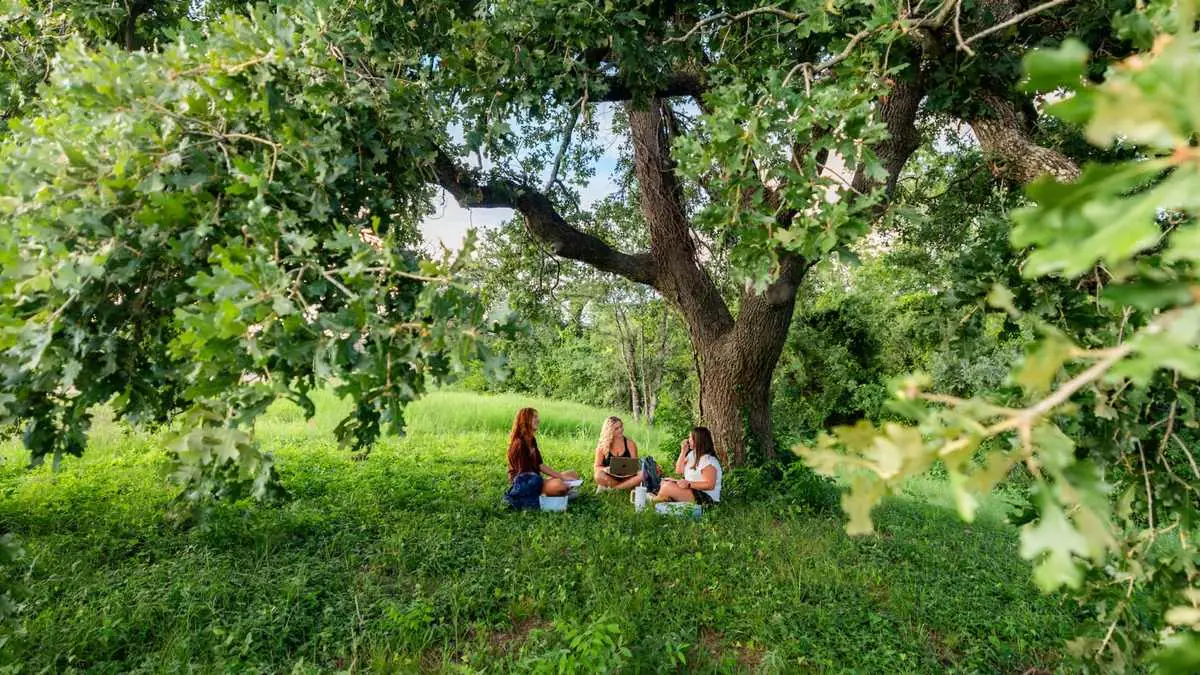
Researchers at Texas A&M University say the link between nature and a meaningful life may depend less on time outdoors and more on paying attention. Psychology professor Josh Hicks and graduate student Lydia Needy ran five studies with one thousand eight hundred sixty-four people in total. They looked at three parts of meaning: whether life makes sense, whether you have a purpose, and whether you matter. They also added a fourth, called experiential appreciation, which means valuing your surroundings. That fourth part was the factor most strongly tied to nature. Even a nature video raised feelings of meaning. People with a stronger sense of meaning also reported greater intentions to act in environmentally friendly ways, though the authors call that part exploratory. The university says small habits, like noticing birdsong or sunlight on a sidewalk, may help. The work appears in the journal Environment and Behavior.
Key points
- The study ran five studies with 1,864 participants: three surveys, a field study and a video experiment.
- Experiential appreciation was the strongest correlate of feeling connected to nature.
- A nature video also raised feelings of meaning, suggesting even indirect exposure may help.
Spending time outdoors in nature can influence how a person feels. A team at Texas A&M University wanted to know why, and its findings suggest the answer may have less to do with hours in the park than with paying attention.
"We wanted to look at how nature makes life feel meaningful, with a main goal of understanding what aspect of meaning is most relevant to experiences in nature," said Josh Hicks, a professor in the Department of Psychological and Brain Sciences, in a university news story published on November 25, 2026.
Hicks worked on the research with graduate student Lydia Needy, the first author listed on the paper. It was published in the journal Environment and Behavior.
A growing body of research already links nature experiences, and feeling connected to nature, with a stronger sense of meaning in life. But meaning has several sides, and it was not clear which of them explains that link, the authors write.
Five studies, 1,864 people
The researchers ran five studies with a total of 1,864 participants, according to the paper. There were three surveys and a field study that compared people in different locations. The fifth was an experiment in which participants watched a nature video.
Meaning in life is hard to pin down, so the team broke it into parts. The team considered three: whether life makes sense, whether a person has a purpose and whether people feel that they matter.
"We would argue there is a fourth one, as well, called the experiential appreciation of appreciating what's around them," Hicks said.
Experiential appreciation means recognizing and valuing one's experiences and surroundings. Across three surveys and the field study, it was the factor most strongly linked to nature, the university reports.
Noticing may beat time outside
In the three surveys, people who felt more connected to nature as a trait also reported more meaning in life. Experiential appreciation was the strongest correlate and the most robust mediator of that link, the abstract says.
The field study looked at where people were when they answered the survey. Being in nature predicted greater meaning in life indirectly, through experiential appreciation. That held even after the researchers accounted for the other parts of meaning and for positive mood.
According to Texas A&M, the results suggest that the benefits of nature may come less from simply being outdoors. They may come more from slowing down to notice and appreciate one's surroundings.
Experiential appreciation had the strongest relationship with meaning. So the benefits may depend less on how much time someone spends outside and more on how that time is spent, the university says.
A video also helped
The video experiment also raised participants' feelings of meaning, even though the exposure was indirect, through a nature video. That suggests that even indirect exposure to nature may have benefits, according to the researchers.
It was the only fully experimental study of the five, while the field study was quasi-experimental. According to the abstract, it provided causal evidence for the role of all four parts of meaning.
Meaning and green intentions
The researchers also found that people who reported a stronger sense of meaning expressed greater intentions to act in environmentally friendly ways. The authors describe this part of the work as exploratory.
The finding suggests that people who find meaning in the world around them may also be more inclined to protect it, Texas A&M says.
Small habits, not big changes
The research points to small, accessible habits rather than major lifestyle changes. Pausing to notice the shade of a tree, the sound of birds or sunlight falling across a sidewalk may help direct attention toward the present moment, the university notes.
Hicks said future research could explore how long these effects last. It could also test whether different settings, such as gardens and forests, produce different outcomes.
Another open question is whether people can be encouraged to make appreciation part of their daily routines. For now, Texas A&M says, the findings are a reminder that nature can be more than a destination. It can also be a readily available source of meaning, the university adds.
The study, titled "Nature and the Experience of Meaning in Life: The Role of Experiential Appreciation," is dated May 12, 2026. Its authors are Lydia Needy, Morgan G. Peace, Chase Gause, Sofia Alvarez Orska and Joshua A. Hicks.
Whitney Moody/Texas A&M University
ECOnews Newsroom
Writer at ECOnewsA team of journalists specializing in socio-environmental news, sustainability, climate change, the environment, responsible consumption, and innovation. At EcoNews, we provide clear, reliable, and relevant coverage of the environmental and social challenges shaping our era.
More from ECOnews NewsroomComments · 0
Rules ›No comments yet. Be the first to share your view.