As global amphibian populations slide toward crisis, with roughly four in ten species now threatened with extinction, every patch of safe water starts to matter. On a small property near a trout hatchery, one homeowner decided to test how much difference a single backyard pond could make.
They dug a shallow basin only about 0.6 meters deep in a low spot of lawn where spring meltwater usually rushed into a roadside ditch and simply let it fill with rain and thaw. Within weeks, the new fish-free pool held five masses of wood frog eggs, a scatter of branches and leaves, and a fringe of mud that swallows could scoop up for nests.
What can one shallow hole in the ground really do for wildlife? Quite a lot, it turns out.
A temporary pond by design, not by accident
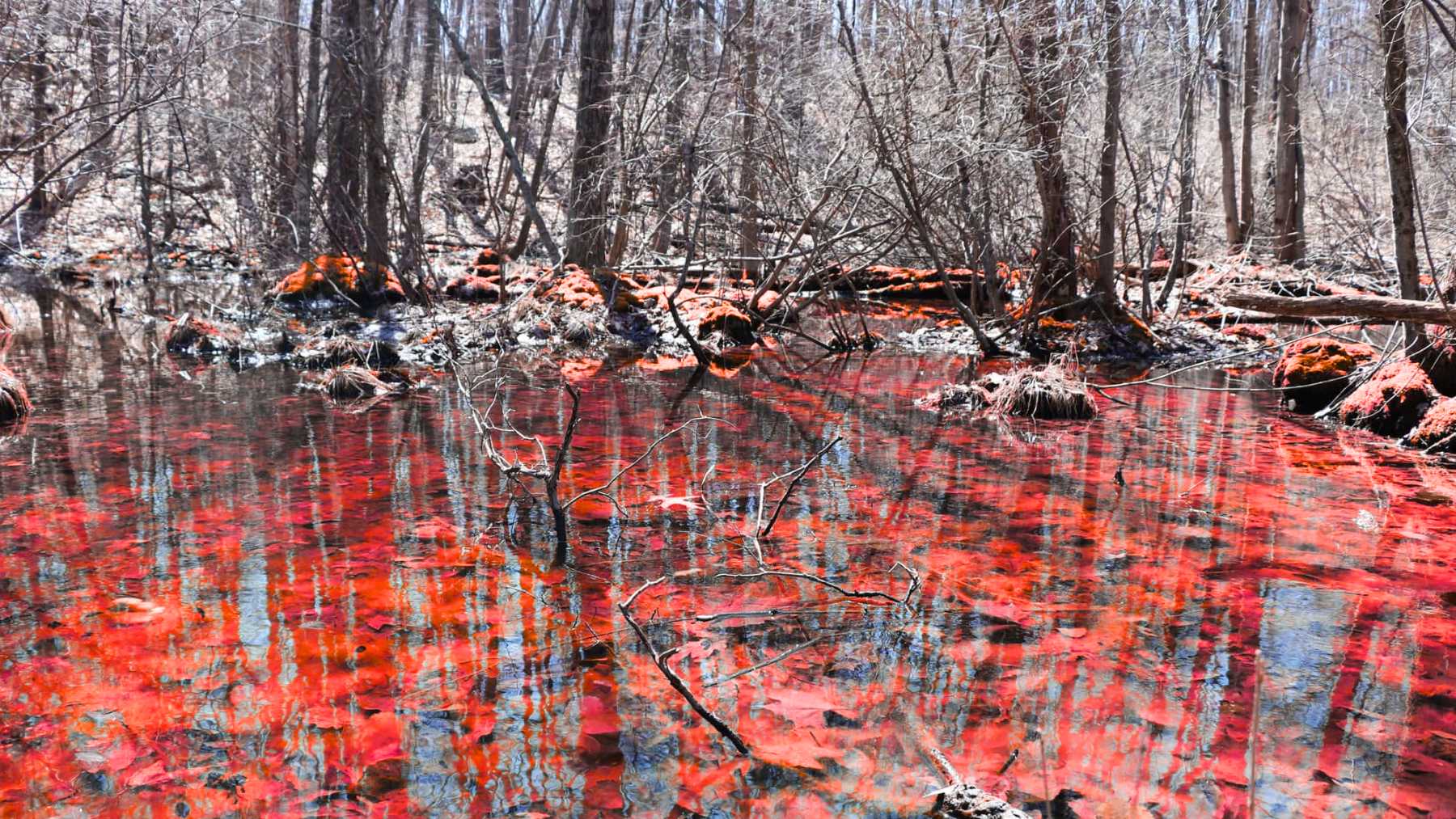
The pond was planned as a vernal pool, which is a small seasonal wetland that fills with rain and snowmelt in late winter and spring, then usually dries out by late summer. Because these pools go dry, they cannot support fish, and that fish-free window is exactly what many frogs and salamanders need to breed safely.
In this case, the deepest point was kept to around two feet so the water would warm quickly and hold enough oxygen to speed up the development of eggs and tadpoles. That is not a minor detail. Amphibians using temporary pools have a simple deadline in front of them. Tadpoles have to grow legs and leave before the water disappears. Warmer, shallow water helps them beat the clock.
The location was just as intentional. Instead of letting runoff from the trout ponds and spring melt slide off the property in a ditch, the owner intercepted that flow in a grassy swale and slowed it with a series of small depressions that feed the main pool.
A low clay berm, built with the soil dug out by backhoe, holds water long enough for breeding but is porous enough that the pond will still dry by about August in most years. It is basic earthwork, but it listens carefully to how water already moves across the yard.
Frogs arrive first, with swallows close behind
Once the sediment settled and a few branches and buckets of fallen leaves were tossed into the water, the structure was surprisingly simple. There was still little vegetation. Even so, wood frogs found it almost immediately and left five gelatinous egg masses clinging to twigs in the shallow zone.
That number may not sound like much until you remember that a single wood frog egg mass can contain hundreds or even thousands of eggs. For a species already under pressure from habitat loss, disease, and climate change, each successful clutch becomes a small act of resistance.
The pond was also built with birds in mind. The year before, barn swallows had inspected the house eaves but never committed to nesting. One working theory was that there simply was not enough accessible wet mud nearby.
By leaving part of the bank bare instead of fully covered in plants, the project created a reliable mud patch that swallows and other backyard birds can use to reinforce their nests around the house. The same corner of lawn that used to be just something to mow now works like a tiny construction site for local wildlife.
A bat box mounted just behind the pond adds another layer, inviting insect eating bats to hunt over the water and nearby meadow. Together, water, insects, frogs, birds, and bats turn a once uniform pine stand and lawn into a more varied mosaic of clearings, brush piles, and flowering edges.
One yard in a much bigger amphibian story
This little experiment is happening against a sobering backdrop. The latest global assessment found that about 40.7 percent of amphibian species are threatened with extinction, making them the most imperiled class of vertebrates on the planet.
Habitat loss and disease still do much of the damage, and climate change is now driving roughly 39 percent of recent declines by altering rainfall, drying breeding sites, and shifting seasons.
Vernal pools, including small artificial ones like this, are emerging as quiet refuges in that changing landscape. Their seasonal nature keeps fish out, which protects eggs and tadpoles, and they serve as stopover feeding spots for birds, reptiles, and mammals.
Yet because they are small and temporary, these wetlands often slip through legal definitions and can be left unprotected unless local rules specifically recognize them.
At the end of the day, a single 0.6 meter pond will not reverse a global extinction trend. But multiplied across thousands of backyards, farms, schoolyards, and city edges, these pockets of water can stitch together a network of safe breeding spots that buys time for frogs and salamanders while larger policy battles play out.
Could you trade a bit of lawn for a vernal pool?
Not every yard is suited for this kind of project. You need a place that naturally gathers water, soils that can hold it for a few months, and room to let vegetation grow a bit wilder around the edges without causing drainage problems for neighbors. Local wetland rules matter too, so checking with municipal authorities or a conservation group is an important first step.
But for many homeowners who watch a low corner of grass turn into a muddy puddle every spring, that frustration could be the beginning of something else. Keeping a pool shallow, avoiding fish, planting native grasses and wildflowers, and leaving some branches and leaf litter in place can create an inviting nursery for amphibians and a useful resource for birds, with only modest maintenance.
Would you trade a strip of neat turf for a seasonal pond alive with peeping frogs and swooping swallows? For the most part, that is the choice this project puts on the table.