A homesteader's barn built into an Idaho hillside on a stone foundation in 1888, according to county records, has just been added to the National Register
Victor Bellmore, a German immigrant, claimed the Cougar Gulch land in 1894; the barn, its stone foundation and an 1890s springhouse still stand.

· 3 min read
Key points
- County assessor records date the barn to 1888; Victor Bellmore filed his homestead claim in 1894 and got full title in 1901.
- A springhouse from about the 1890s still covers the spring that supplied water for the livestock and the house.
- The National Park Service listed the farm on November 12, 2026; it is privately owned and not a public site to visit.
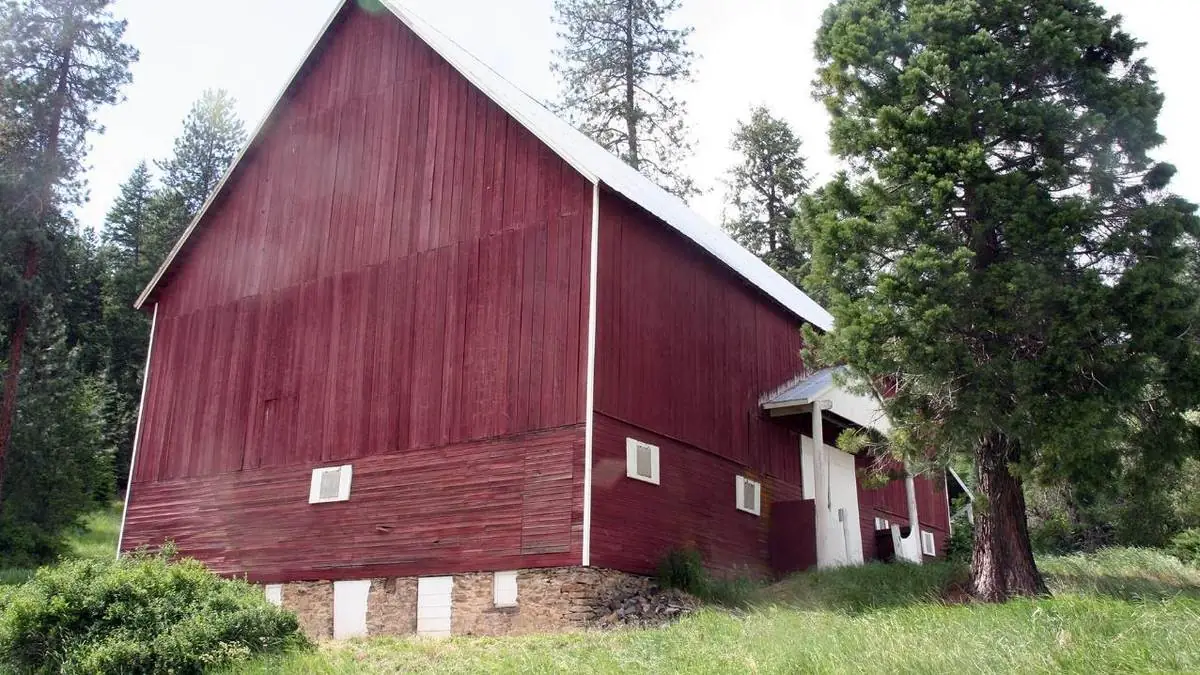
A homesteader's wooden barn, set into an Idaho hillside, is now on the National Register of Historic Places. According to county assessor records, it was built in 1888.
The National Park Service listed the property on November 12, 2026, according to its weekly list of November 13. It appears as the Carousel Arabian Ranch, in the vicinity of Coeur d'Alene, Kootenai County. The farm is privately owned, and it is not a public site to visit.
The barn is the oldest dated building on a farmstead that began with Victor Bellmore, a German immigrant. Its nomination form describes the farm as a working agricultural property since Bellmore received the patent for his homestead in 1901.
Land that opened in 1892
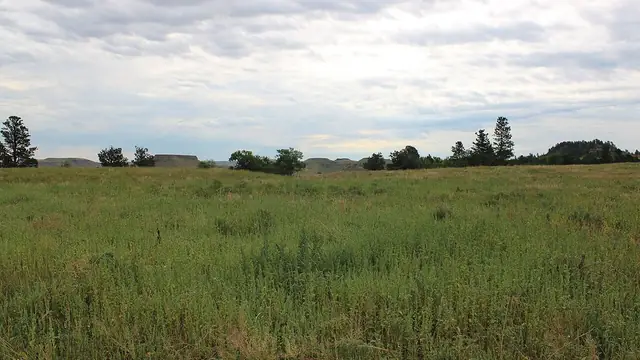
The farm sits near the east end of Cougar Gulch, a fairly steep V-shaped valley with Cougar Creek running along its base. The entrance to the gulch is about seven miles from the center of Coeur d'Alene. The valley stretches east-west for about 11 miles.
To the east it borders the wetlands of Cougar Bay, on Lake Coeur d'Alene. Mica Peak, Blossom Mountain and Signal Point frame it on the west, and pine forests cover much of its hillsides.
The land was originally in the northern section of the Coeur d'Alene Indian Reservation. It was part of 250,000 additional acres ceded by the Tribe in a second round of negotiations, which Congress approved in 1891. The government opened the area for settlement in 1892.
Some early claimants, often referred to as squatters, likely occupied parts of Cougar Gulch before the land was officially available. Victor Bellmore "may have been one of this group," the nomination says.
A claim filed after 1888
Bellmore did not formally file a claim under the Homestead Act until 1894. He received full title to the land in 1901. The barn date of 1888 comes from the Kootenai County Assessor.
The nomination explains the gap. Many settlers occupied their land for years before they officially registered with the land office, "and so it is possible that he did build the barn at an earlier date," it says.
It calls the barn "one of the oldest standing buildings in Cougar Gulch." The building has a simple side-gable design. It sits on a mortared stone foundation, particularly visible on the downhill south end.
Much of the barn is covered in vertical rough-sawn wood siding. A corrugated steel roof now covers the remnants of the earlier wood shakes. It was the centerpiece of the farmstead, used for both hay storage and livestock.
A spring under a roof
Up the hillside stands a small wooden springhouse, dated to about the 1890s. It sits where a spring rises above a small swale.
A springhouse covered the water source to protect it from debris, animals and other contamination, the form explains. Springhouses were typically cool inside and could be used to chill food or milk.
Below it, a low course of stones encircles a pool where the water could be held. The spring creek ran downhill to Cougar Creek. At one time the water apparently flowed under parts of the barn, damaging some of its foundation, and had to be redirected.
The barn and the springhouse count as contributing resources, along with a small pumphouse and a metal arena building from 1964 and 1965. The residence does not.
A string of owners
Bellmore farmed for a few more years and then sold. Jean Nogues and his wife bought the property in 1904, and Daniel and Carrie Hall followed in 1909.
The 1910 fire burned through the land of many neighbors in the upper gulch. The Halls' farm was not directly affected. They farmed and raised cattle there until 1917.
Roy and Clara Stockton then owned it until 1945, growing crops like potatoes and expanding into orchards. Three more owners followed.
In 1964, Donald and Margaret White bought the farm and raised Arabian horses there. In 1980 they turned to Christmas trees, a business that is no longer in operation.
The farm saw additions and changes over the years, and the residence was heavily altered. Still, the nomination says the contributing buildings retain their integrity, and it counts a history of "nearly 138 years."
The listing is part of a multiple property document, "Historic Agricultural Properties of Cougar Gulch, Kootenai County, Idaho 1888-1976." The National Park Service approved its cover documentation the same day. The details of the farm come from the draft nomination form posted by the Idaho State Historic Preservation Office, prepared by Sharon Boswell of Partners in History.
Sharon Boswell / Courtney Beebe, National Register nomination (Idaho SHPO)
Glossary for this story
- Wetlands
- Areas covered by water all or part of the year, such as marshes, swamps and bogs. They teem with life and store a lot of carbon.
Javier Niño
Writer at ECOnewsJavier Niño has been a Spanish National Police officer since 2017 and a journalist specialising in employment, labour law and Social Security, with more than seven years of writing experience. At ECOnews he covers environment, energy and sustainability news, focusing on how new regulations and court rulings affect people in their everyday lives.
More from Javier NiñoComments · 0
Rules ›No comments yet. Be the first to share your view.