Bison and buffalo: in North America they are the same animal, the U.S. national mammal since 2016 with bulls up to 2,000 pounds, while true buffalo live in Africa and Asia
Bison: Yellowstone says buffalo is the informal name and bison the scientific one, and the Park Service calls it North America's largest land mammal

· 5 min read
In North America, bison and buffalo are two names for the same animal, the American bison. Bulls stand about six feet tall and weigh up to two thousand pounds. Bison is the formal and scientific term, while buffalo is the informal one, and Indigenous people generally prefer buffalo in cultural settings. True buffalo, like the Cape buffalo and the water buffalo, live in Africa and Asia. By the late eighteen hundreds, only a few hundred bison were left in the United States. Yellowstone's herd has since climbed back to nearly five thousand three hundred animals. On May ninth, twenty sixteen, the bison became the national mammal of the United States. If you go to see one, keep a safe distance, because bison can be aggressive, and a raised tail may signal a charge.
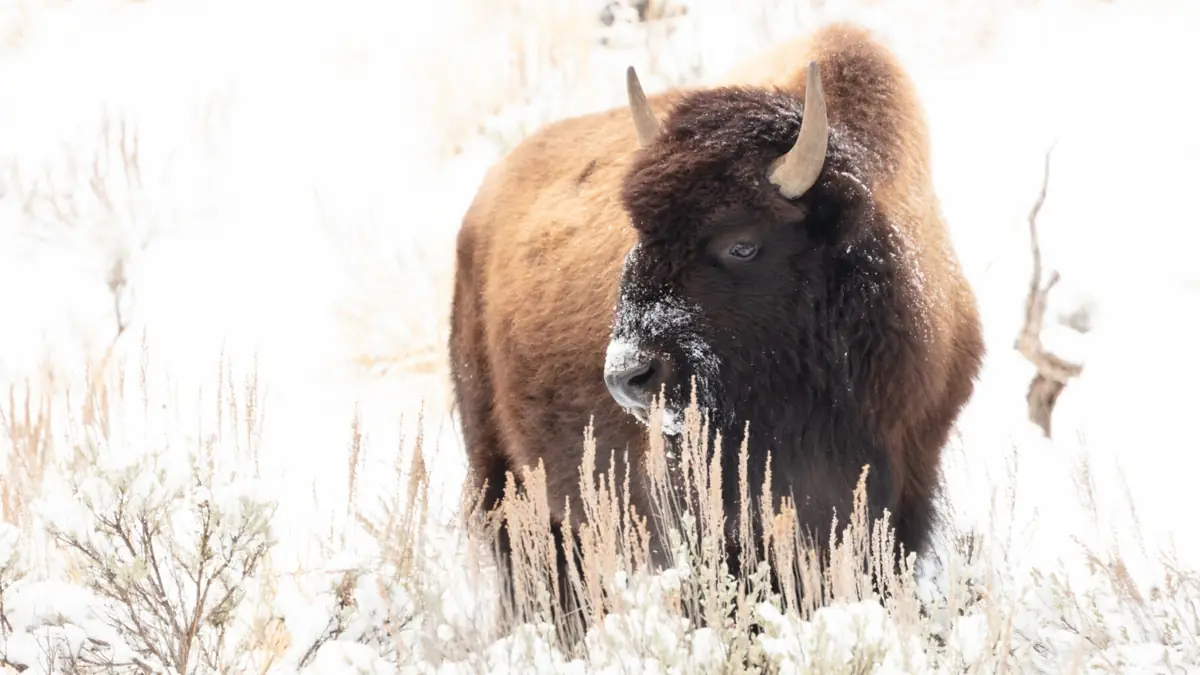
In North America, bison and buffalo are two names for one animal, the American bison (Bison bison), a hump-shouldered grazer whose bulls stand about 6 feet (1.8 meters) tall and weigh up to 2,000 pounds (about 907 kilograms), according to the National Park Service's 15 Facts About Bison. Buffalo is the informal name, and bison is the one to use in formal or scientific writing, Yellowstone National Park says.
The catch is that the word buffalo already has owners elsewhere. The Smithsonian's National Zoo uses it for Old World animals such as the Cape buffalo and the water buffalo. The Park Service's About Bison page sets the American animal apart from African and Asian buffalo, and Wind Cave National Park notes that some people argue the "true" buffalo live on other continents and are only distant relatives.
It's a fight over a word, then. In the U.S., there aren't two different animals sharing the prairie, just one animal with two names.
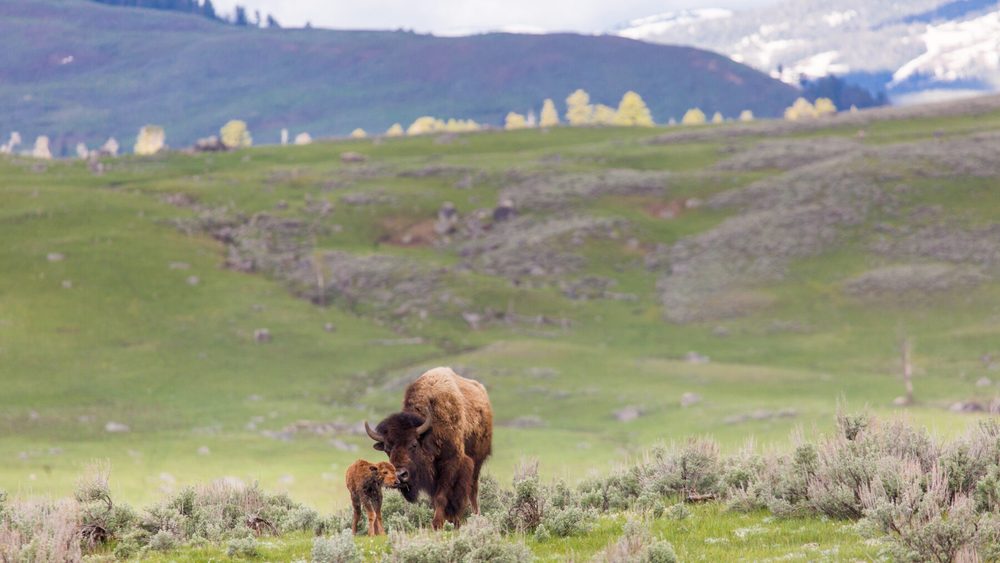
A bison carries most of its bulk up front. The Zoo describes a hump over the front shoulders and slimmer hindquarters, and both males and females grow a single set of short, sharp, hollow horns that curve outward and up. The hump has a job, too: it helps a bison swing its head to clear snow, according to the Park Service.
The Park Service calls the bison the largest land mammal in North America. Cows weigh up to 1,000 pounds (about 454 kilograms) and stand 4 to 5 feet (1.2 to 1.5 meters) tall. The Zoo's figures run bigger, with mature bulls at 9 to 12.5 feet (2.7 to 3.8 meters) long and 5.5 to 6.5 feet (1.7 to 2 meters) tall at the hump, and a listed weight of 1,800 to 2,400 pounds (816 to 1,088 kilograms).
That much animal can still move. Bison run up to 35 miles per hour (about 56 kilometers per hour) and spend 9 to 11 hours a day foraging, the Park Service says. They live 10 to 20 years, and they're nearsighted, though their senses of smell and hearing are strong.
Calves are born from late March to May and weigh 30 to 70 pounds (about 14 to 32 kilograms) at birth, and the Park Service says a newborn has a nickname of its own: "red dog."
Why are bison called buffalo?
Yellowstone's answer comes with a hedge: the word buffalo likely traces back to boeuf, the French word for beef, the park says.
Lakota speakers have their own words for the animal, and Wind Cave National Park lists two of them: tatanka and pte.
The name people pick often depends on who's talking. Indigenous people generally prefer buffalo in cultural contexts, according to the Park Service's About Bison page, while bison is the word used in scientific contexts. You can see that preference in the Intertribal Buffalo Council, which has more than 60 participating tribes, according to the findings of the National Bison Legacy Act. The same law says members of Indian tribes have a combined herd on more than 1,000,000 acres (about 405,000 hectares) of tribal land.
Is the American buffalo a bison?
Yes. Its scientific name is Bison bison, and the U.S. Fish and Wildlife Service's species profile lists "American bison" and "bison" as its common names.
North America has two subspecies, according to the Park Service. Plains bison (Bison bison bison) lived across the lower 48 states and southern Canada. Wood bison (Bison bison athabascae) are the larger of the pair and ranged over northern Canada and eastern Alaska. The size gap doesn't make them two species, though, because DNA shows plains and wood bison belong to the same one, the Zoo says.
Bison once roamed from Alaska to northern Mexico, according to the Zoo, and conservation herds now occupy about 1 percent of that original range. By the late 1800s, only a few hundred bison were left in the U.S., the Park Service says. Yellowstone's own herd fell to about two dozen animals by 1902 because of poaching, then climbed back to nearly 5,300 in the park's 2025 estimate.
Zoo animals helped restart wild herds. The American Bison Society was founded on December 8, 1905, by William Hornaday, Theodore Roosevelt and others, the 2016 law says. On October 11, 1907, the society sent 15 captive-bred bison from the Bronx Zoo to the Wichita Mountains Wildlife Refuge. Wind Cave's herd descends from 14 bison shipped from the New York Zoological Gardens in 1913 and six from Yellowstone in 1916, the park says.
Where to see America's national mammal
The bison became the national mammal of the United States on May 9, 2016, under Public Law 114-152. The law's title is about as direct as legislation gets: "To adopt the bison as the national mammal." Its findings call the animal a historical symbol of the country.
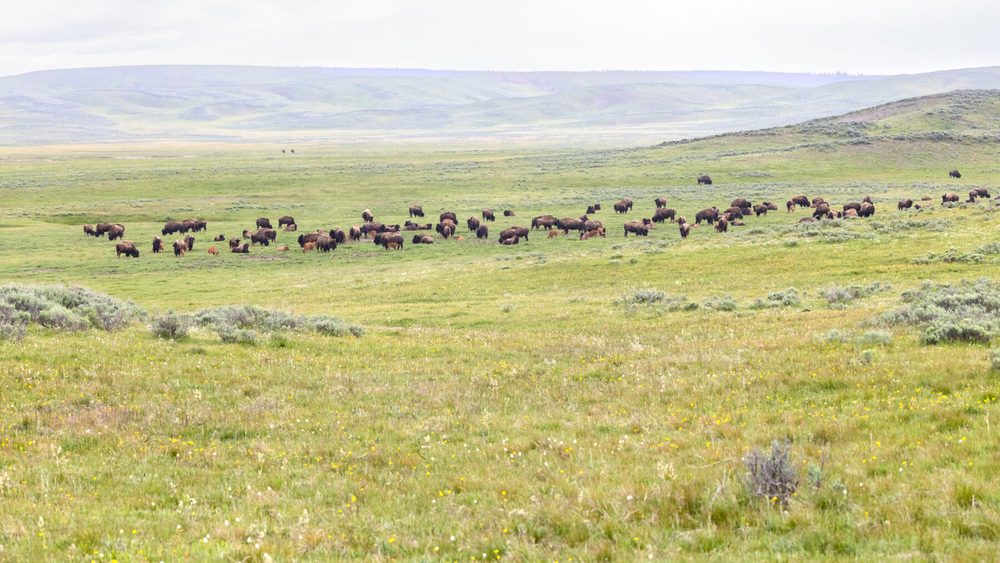
Yellowstone is the obvious place to start. The park says it's the only place in the lower 48 states with a continuously free-ranging bison population since prehistoric times, and it has two breeding herds, one northern and one central. The Hayden and Lamar valleys are year-round bets, and in summer the park also points visitors to its grasslands. In winter, it lists the hydrothermal areas, the Madison River, the Blacktail Deer Plateau, Tower and the Gardiner Basin.
Bison have company there. The park's wolves numbered 84 across seven packs and one new group at the end of 2025, three decades after the first 41 were released. And when bison show up around the steaming ground in winter, Yellowstone's grizzlies are in their dens, where a hibernating bear's heart can slow from 40 to 50 beats per minute to as few as 8.
Outside Yellowstone, the Park Service also points bison watchers to Grand Teton and Wind Cave national parks.
Wherever they turn up, Yellowstone tells visitors to keep a "safe distance" and warns that bison can be aggressive. That's where the tail comes in. A bison that holds its tail straight up may be about to charge, according to the Park Service.
Javier Niño
Writer at ECOnewsJavier Niño has been a Spanish National Police officer since 2017 and a journalist specialising in employment, labour law and Social Security, with more than seven years of writing experience. At ECOnews he covers environment, energy and sustainability news, focusing on how new regulations and court rulings affect people in their everyday lives.
More from Javier NiñoComments · 0
Rules ›No comments yet. Be the first to share your view.