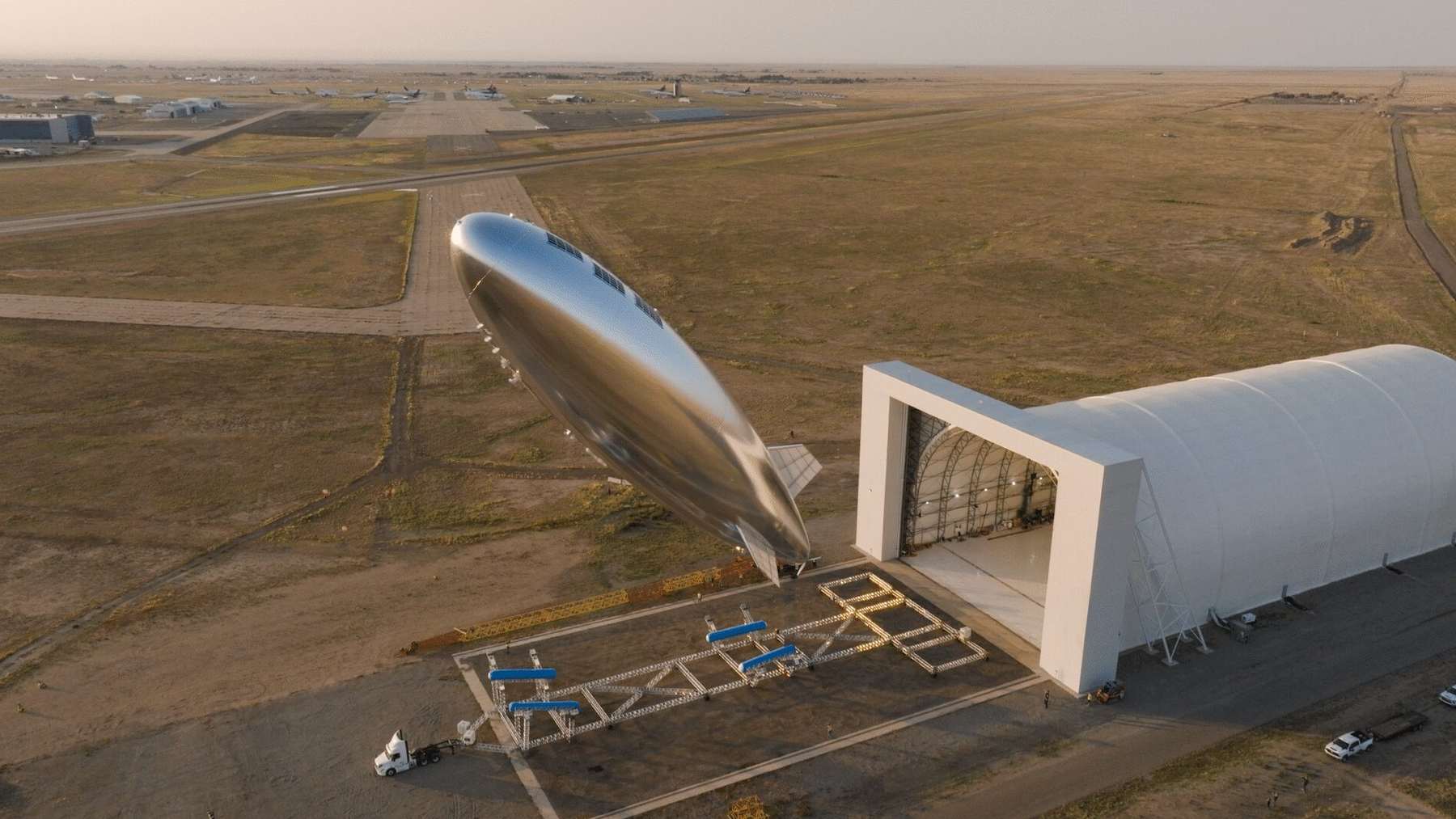
On the morning of August 9, 2026, a silver stratospheric airship rose out of the New Mexico desert and set off across the Pacific. About a month later it was back over New Mexico, after a round trip to Japan of nearly 30,000 kilometers (about 18,600 miles) and a week spent working as a cell tower above the Japanese coast.
The uncrewed craft belongs to Sceye, an aerospace company based in Moriarty, New Mexico, and the mission, called Service Test 1 (ST1), was flown with the Japanese carrier SoftBank Corp. Over Japan, ordinary smartphones on the ground used it for calls, text messages and video.
“Groundbreaking and historic only begin to describe our ST1 flight,” said Mikkel Vestergaard Frandsen, founder and CEO of Sceye, in the company’s September 9 announcement. “This mission proved not only that our technology, vehicle systems, payload, and operational infrastructure are ready for connectivity services, but also that the stratosphere is where the future non-terrestrial infrastructure lies.”
A month above the Pacific
SoftBank says the airship took about 13 days to cross more than 15,000 kilometers (9,300 miles) and entered Japanese airspace on August 23. It was back over the continental United States on September 4 and ended the mission near Sceye’s headquarters the next day with what the company calls “a planned termination and descent.”
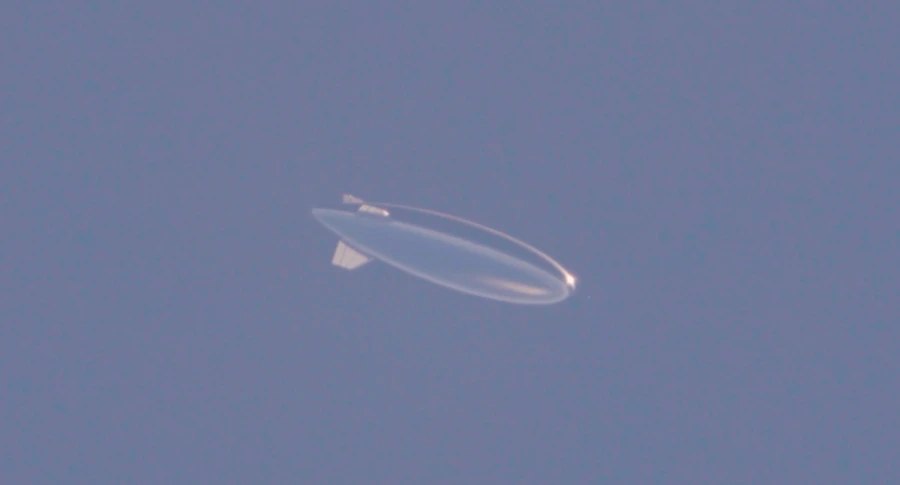
Sceye builds high-altitude platform systems, or HAPS, which the company says operate “like geostationary satellites, only 1,800 times closer to Earth and at a fraction of the cost.” Over Japan, ST1 flew between 16.5 and 17 kilometers up, roughly 54,100 to 55,800 feet. Helium gives it lift, as it does for China’s floating S1500 wind turbine far closer to the ground, and solar arrays charge an advanced lithium-sulfur battery that keeps the electronics and fans running through the night.
Sceye’s pitch is the altitude itself. The stratosphere, the company’s September 9 release says, “offers space-like conditions without the cost of being in space and the disadvantages of being in orbit.”
Phone calls from 54,000 feet
The airship carried SceyeCELL, an antenna the company calls a “cell tower in the sky,” and worked over the sea off Cape Muroto in Kochi Prefecture. SoftBank picked that spot to rehearse a large disaster, such as an earthquake on the Nankai Trough off southwestern Japan.
According to SoftBank’s September 2 release, phones on the ground handled voice calls, texts, social media apps and video, and received test earthquake and tsunami warnings. The teams also tested calls to 118, Japan’s maritime emergency number, with the Japan Coast Guard.
Junichi Miyakawa, president and CEO of SoftBank Corp., said in the release that combining the two companies’ technologies gave SoftBank “confidence to realize a three-dimensional communications network utilizing HAPS.”
The partners also ran a server on the airship itself, so a phone’s request was answered in the stratosphere without a trip to a distant data center. The average response took 68 milliseconds, with latency more than 40 percent lower than cloud processing over the internet, the companies say.
What the 500-tower figure means
Sceye says one fully deployed platform is designed to cover the area of about 500 ground towers. That is an area figure, and the companies’ releases do not say how many people one platform could serve at the same time.
Flights lasting years remain a goal
Sceye’s website says its HAPS are designed to stay up for months to a year at a time. After a 12-day, 6,400-mile flight to the coast of Brazil this spring, the company said it was moving “towards months and eventually years-long flights.”
ST1 itself ended after about a month, and SoftBank describes the Japanese trials as limited in duration, area and devices. The distance, latency and coverage figures come from the two companies, and neither release gives pricing. The partners aim for commercial service in Japan from 2027 onward.
The mission results were announced by Sceye on September 9, 2026, and the Japanese trial results by SoftBank Corp. on September 2, 2026.
“The stratosphere is what will enable the always-on future – including the promised land of 6G,” Frandsen said in the September 9 announcement.
Photo: Sceye