







Science

Alicella gigantea supergiant amphipods swarm a baited deep-sea lander on the abyssal seafloor.

A strange 34-centimeter creature was recorded in the deep ocean between 3,000 and almost 9,000 meters deep, and the question is no longer whether it exists, but how many there really are

January 6, 2026 at 3:14 PM
Earth in space with lightning-like energy lines, illustrating a hidden electric field pulling atmospheric particles into space.

Earth’s hidden electric field is quietly leaking our atmosphere into space

January 6, 2026 at 9:41 AM
Illustration showing Mars with water imagery, symbolizing ancient wave ripples that suggest shallow, ice-free lakes once existed on the planet.

The small marks that anyone has seen on a beach now appear on Mars and could be the clearest evidence of shallow, ice-free lakes

January 6, 2026 at 5:30 AM
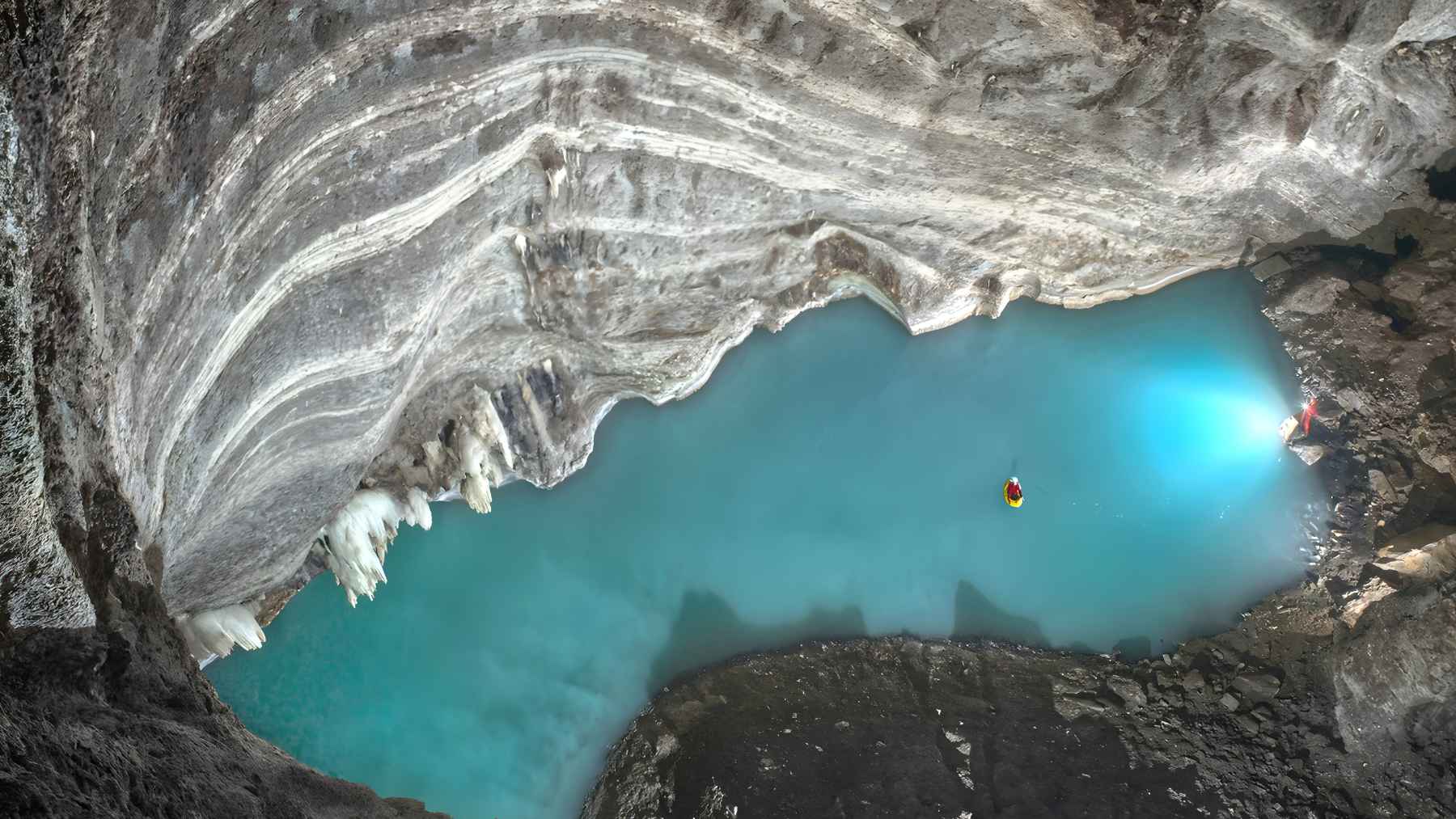
Underground cave lake with turquoise water and mineral formations, used as an illustration for Earth’s “hidden ocean” discovery.

Gigantic “hidden ocean” discovered 700 kilometers beneath Earth’s surface

January 5, 2026 at 6:36 PM
Illustration of a Martian crater lake, representing evidence of ancient liquid water on Mars from wave ripple patterns.

Clear and definitive evidence of liquid water, not just ancient ice, found on Mars

January 5, 2026 at 12:05 PM
Two spherical dinosaur egg fossils from Anhui, China, cracked open to reveal sparkling calcite crystals inside like a geode.

Scientists find two nearly perfect dinosaur eggs in China and, upon opening them, discover a shiny interior filled with crystals like a geode

January 5, 2026 at 7:32 AM
NASA LunaRecycle Challenge winners announcement graphic over the Moon’s surface with NASA logo and recycling badge.

NASA’s 3 million dollar “lunar recycle” bet could change how we deal with trash on and off the Moon

January 4, 2026 at 10:38 AM
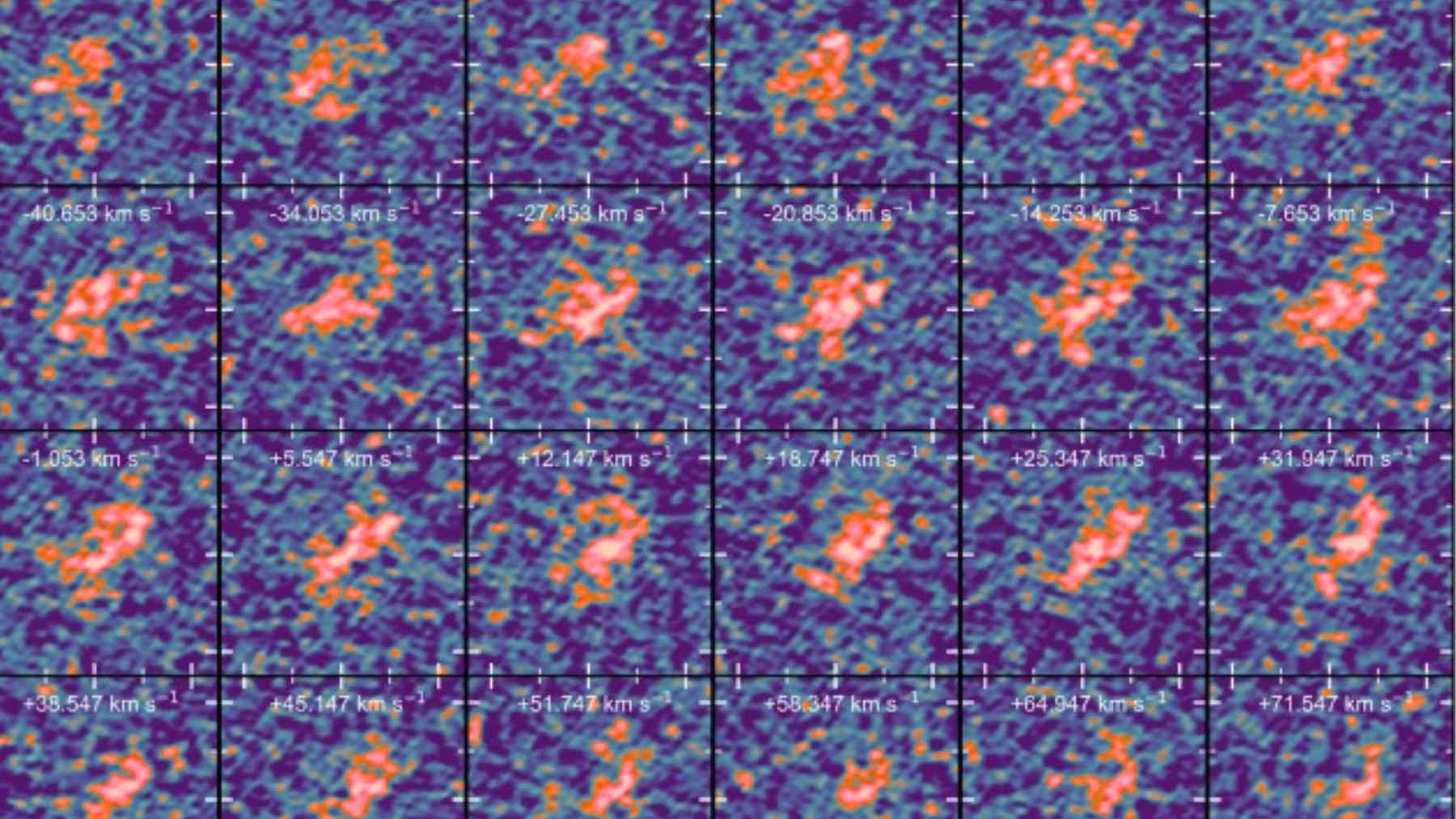
Montage of ALMA observations showing warped, tilted protoplanetary discs traced by carbon monoxide gas around young stars.

Astronomers tracked carbon monoxide around young stars and found a twist that shouldn’t be there

January 4, 2026 at 7:01 AM
NASA’s Perseverance rover on Mars with inset close-up of the metal-rich rock “Phippsaksla,” likely an iron-nickel meteorite.

Perseverance finds a metal stranger on Mars and a new clue to our own planet’s past

January 3, 2026 at 3:45 PM
Drone view of Uşaklı Höyük, Turkey, where seven infants’ remains were found beside a monumental Hittite stone circle.

Seven babies buried without graves or pots surrounded a monumental structure, and now archaeologists believe they understand what kind of ritual was celebrated there

January 3, 2026 at 12:03 PM
MeerKAT image of Inkathazo, a giant radio galaxy with bent jets spanning ~3.3 million light-years

A galaxy so large that it makes the Milky Way seem tiny has been detected, and scientists are calling it a “problem” for a disturbing reason

January 3, 2026 at 7:45 AM
A swirling black hole in deep space, symbolizing a “loud” alien technosignature screaming across the cosmos.

Forget flying saucers and friendly messages: the first alien civilization we detect could be “screaming” across the cosmos

January 3, 2026 at 5:34 AM
Small dark meteorite half buried in Antarctic ice, a carbonaceous chondrite studied for water and metal resources for space exploration.

A small dark meteorite trapped in Antarctic ice could be pointing to how the future will be built and supplied in space

January 2, 2026 at 3:03 PM
Aging star swelling and pulling nearby planets inward, illustrating how old suns can destroy close-orbiting worlds.

Astronomers observe aging stars that are destroying their own planets, and it could happen to Earth

January 2, 2026 at 12:59 PM
Artist illustration of a newborn gas giant forming inside a protoplanetary disk around a young Sun-like star.

They were searching for young stars for just a few minutes and ended up finding a newborn planet hidden in a spectacular disk

January 1, 2026 at 2:36 PM
Sunrise over Earth from space, symbolizing research that Earth’s oxygen-rich atmosphere has an expiration date tied to the Sun.

Earth’s oxygen has an expiration date, and it is written on the Sun

January 1, 2026 at 2:18 PM
Cracks along the Thwaites Eastern Ice Shelf in West Antarctica, with inset map showing the “end-of-the-world” glacier area.

Cracks in Antarctica’s “end-of-the-world glacier” are a sign that the safety net is failing

January 1, 2026 at 1:36 PM
Earth from space with blue oceans and cloud bands, illustrating research that Earth’s day lasted about 19 hours for a billion years.

For a billion years, Earth’s day lasted only 19 hours

December 31, 2025 at 2:44 PM
ROV image of the Arctic seabed at 3,640m, showing a hydrate mound and methane seep “living oasis” ecosystem.

A robot descended to a depth of almost four kilometers below the Arctic and found a living oasis that changes what we knew about the seabed

December 31, 2025 at 11:24 AM
Scrubland at dusk in Andhra Pradesh where Jerdon’s courser was recorded, with inset of the critically endangered bird.

For more than ten years, no one had heard it, until two recordings at night confirmed that one of the rarest birds on the planet is still alive

December 31, 2025 at 5:45 AM