Science

Local community members in eastern Congo leading forest conservation efforts in Bamasobha concession

A community that was driven from its forest lands in the 1970s now protects 71,700 acres in the Congo and has managed to reduce deforestation by 87% in just one year

July 5, 2026 at 12:30 PM
Close-up of Himalayan pit viper showing scales and tongue during new species identification study

The famous Himalayan viper, first described in 1864, has just lost its unique identity, as scientists have discovered that five species were previously grouped under that name

July 5, 2026 at 10:15 AM
Close-up of fossilized mammalian dental calculus on a museum specimen, illustrating the mineralized layers that trap ancient oral microbes.

Ancient teeth preserved in museums may harbor a vast microbial archive, and a new preliminary article suggests that dental plaque reveals how diet has influenced the oral bacteria of mammals

July 5, 2026 at 8:45 AM
Ancient dental remains from a Siberian excavation site used by researchers to identify prehistoric traces of the Yersinia pestis bacterium.

The plague may have claimed the lives of children in hunter-gatherer communities in Siberia 5,500 years ago, long before medieval cities, flea-infested rats, and the dreaded Black Death existed

July 5, 2026 at 4:30 AM
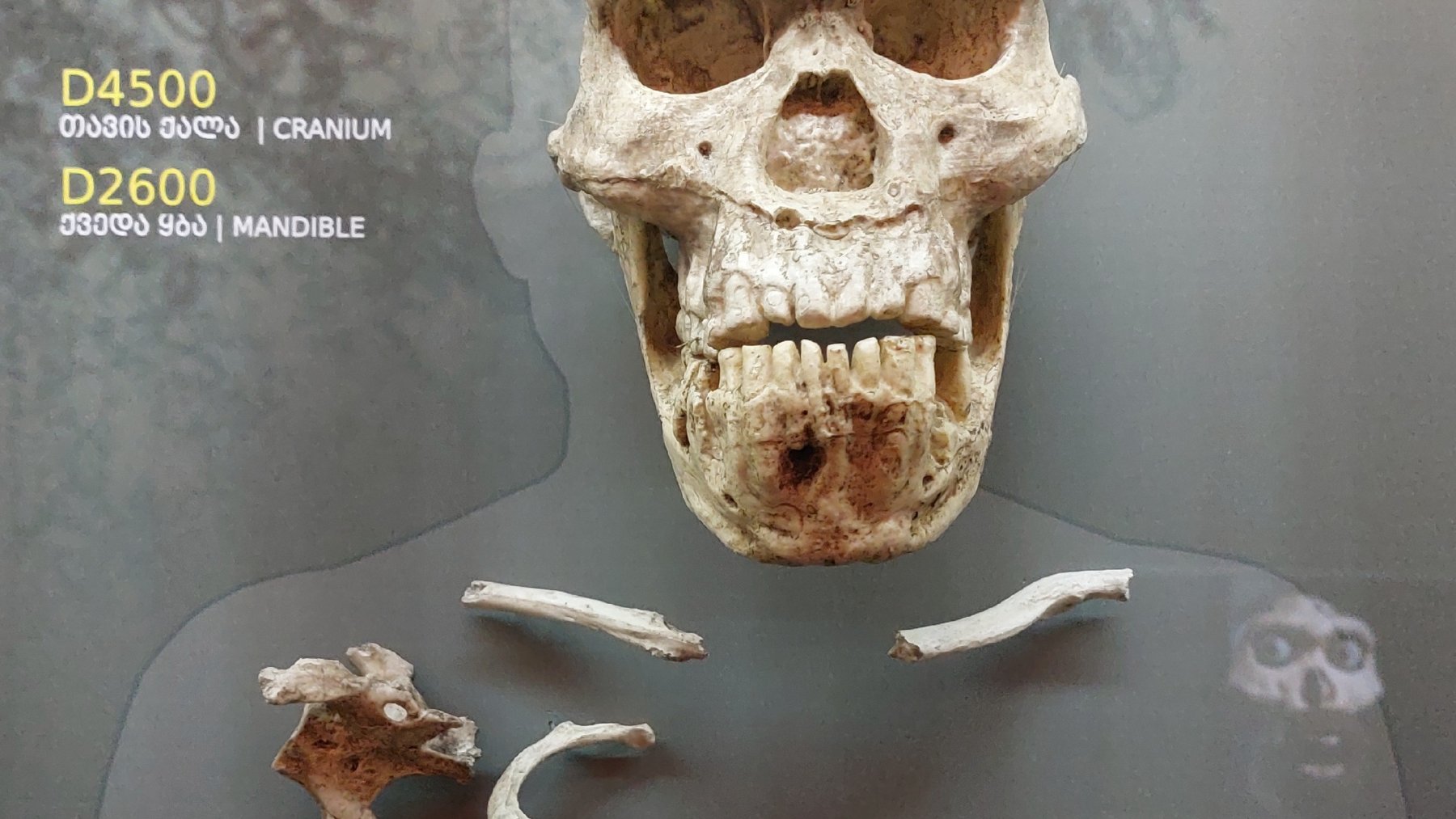
A scientific analysis of 400,000-year-old Homo erectus fossil teeth, which provided rare enamel protein evidence of ancient links to Denisovans.

Homo erectus teeth dating back about 400,000 years, found in China, have just revealed an unexpected clue about a possible family connection to the mysterious Denisovans

July 4, 2026 at 6:30 PM
Fluorescent molecular probes highlighting circular intron RNA inside a predatory bacterium and the dead cells of its archaeal prey.

Researchers have just observed a jumping gene doing something extremely unusual: jumping from a tiny predatory bacterium to the dead cells of another species, like a thief sneaking into an empty house

July 4, 2026 at 3:00 PM
The Allen Telescope Array in Northern California monitoring the interstellar comet 3I/ATLAS for potential technosignatures.

SETI tracked the interstellar comet 3I/ATLAS for more than 7 hours and analyzed nearly 74 million radio signals; the results point to something less spectacular, but just as fascinating: a natural comet

July 4, 2026 at 8:45 AM
Concept image of a lunar base with habitats and astronauts working on the Moon’s surface.

The Moon will no longer be just the place where humans left their footprints in 1969; now, NASA and China want to build bases, landing strips, control towers, and shelters there, but a fundamental regulation is still missing

July 4, 2026 at 4:29 AM
Bright meteor fireball breaking apart in Earth’s atmosphere, creating a sonic boom event.

On May 30, a loud boom shook Massachusetts and New Hampshire, and NASA traced it to a meteor that broke apart with the force of 300 tons of TNT

July 3, 2026 at 6:34 PM
Single meteor streak crossing a dark night sky during the June Bootids meteor shower.

The June Bootids meteor shower may seem very faint almost every year, but throughout its history, extremely rare bursts of up to 100 meteors per hour have been recorded, causing many people to look up at the sky

July 3, 2026 at 3:00 PM
Relativity Space rocket standing on a launch pad at night, linked to NASA’s 2028 Aeolus mission to study Martian weather.

NASA is teaming up with Relativity Space, a newbie in the space exploration field, and not Space X, for a project mapping the violent seasons on Mars due to take off in 2028

July 3, 2026 at 8:45 AM
NASA's Neil Gehrels Swift Observatory in orbit as engineers prepare a robotic mission to capture and raise the aging space telescope.

NASA is preparing an extremely unusual rescue mission to save the Swift telescope, an observatory launched in 2004 that has been recording cosmic explosions and was never meant to be recovered

July 2, 2026 at 7:30 PM
Artist's illustration of a supermassive black hole surrounded by glowing gas, used to explain echo mapping and the search for dark matter.

It all began with a strange echo around 14 giant black holes; scientists now believe it could indicate massive concentrations of dark matter, the mysterious component that makes up 27% of the universe

July 2, 2026 at 5:00 PM
Illustration of the Milky Way's motion toward the Great Attractor, a massive gravitational region located about 150 to 250 million light-years away.

Our galaxy isn’t stationary but hurtling at full speed toward a hidden gravitational anomaly located between 150 and 250 million light-years away

July 2, 2026 at 10:15 AM
Seismic activity visualization illustrating small earthquakes detected before the magnitude 8.8 Kamchatka earthquake using waveform cross-correlation analysis.

It all began with dozens of small earthquakes that no one detected; now, a 64-page study suggests that they may have been a precursor to the massive 8.8-magnitude earthquake that struck nine days earlier

July 2, 2026 at 6:30 AM
Illustration of an ear connected to the brain by glowing neural signals, representing tinnitus and hearing-related brain activity.

Everything seemed to point to a simple “malfunction” in the brain until a decade of research began to reveal a different reality: tinnitus could be a side effect of a mechanism that tries to keep hearing alive

July 2, 2026 at 4:30 AM
Anopheles mosquito feeding on human skin, the malaria-carrying insect targeted in sterile male release research.

Science discovers the “point of no return” for mosquitoes: the mathematical trick that could forever change the fight against malaria

July 1, 2026 at 6:30 PM
Ants swarm potato chip crumbs on sandy ground, illustrating how junk food scraps can distract ants from moving seeds.

A few cookie crumbs on a trail may seem insignificant, but a new study conducted in Panama suggests that they can distract ants from a task that is key to a plant’s expansion

July 1, 2026 at 8:45 AM
Macro close-up of a cockroach facing the camera, used to illustrate research on bacterial DNA fragments embedded in cockroach genomes.

Cockroaches already seemed indestructible, but a new genomic study has just revealed something even stranger: they harbor thousands of fragments of bacterial DNA hidden within their own genome

July 1, 2026 at 6:30 AM
Wide coastal view of Giant’s Causeway with hexagonal basalt stones, tide pools, and Atlantic waves in Northern Ireland.

The Giants’ Causeway was not formed as a result of a battle between giants, but rather by an explosive volcanic event that took place 60 million years ago—an event that, as scientists have now determined, occurred over a shorter period of time

June 30, 2026 at 7:30 PM
Previous Next