Planting trees usually sounds like a win. In Galicia, in northwestern Spain, eucalyptus was promoted for decades as a fast-growing answer for timber, pulp, and paper, but the story now looks much more complicated. From the roadside, those plantations can seem green and healthy. Listen closely, though, and many native forest birds are missing.
A recent study reports that eucalyptus plantations in Galicia host fewer bird species and fewer individual birds than native forests. The key lesson is simple but easy to overlook. More trees do not always mean more nature, especially when one fast-growing species takes over a living forest system.
A green forest with fewer voices
The study was carried out by Fernando García-Fernández, María Vidal, and Jesús Domínguez of the University of Santiago de Compostela, together with Adrián Regos of the Biological Mission of Galicia at CSIC. The team compared 240 forest plots in and around Fragas do Eume Natural Park, looking at both native woodland and eucalyptus stands.
Their results point in one clear direction. Eucalyptus plantations had significantly lower bird richness and abundance, meaning fewer kinds of birds and fewer birds overall. Mature native trees were especially important for forest birds, while mature eucalyptus trees did not play the same ecological role.
That matters because birds are not just background music on a walk through the woods. Many eat insects, spread seeds, and help show whether a forest is functioning well. When the morning chorus fades, it can be a sign that the whole system is thinning out.
Why eucalyptus changes the rules
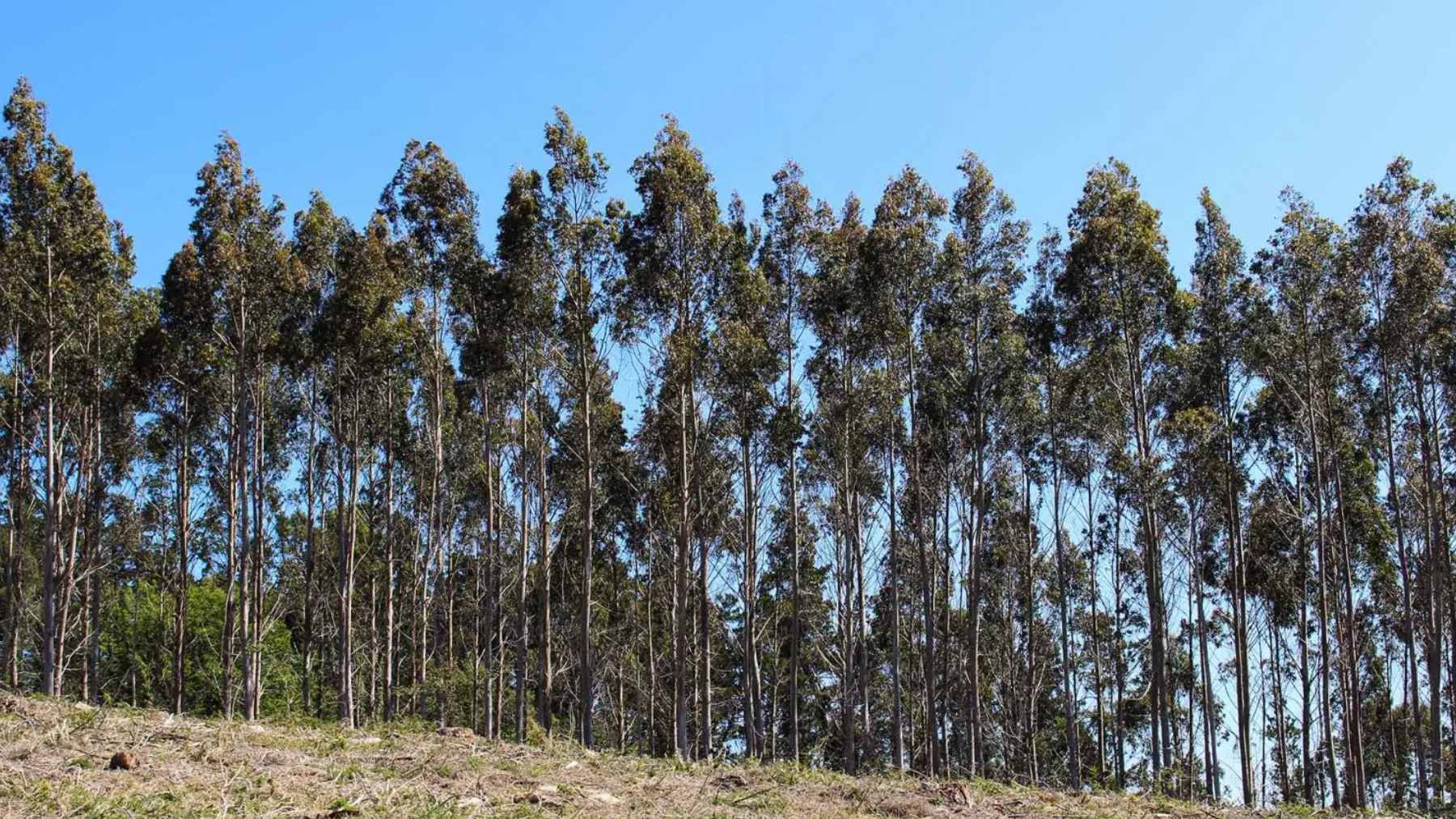
Eucalyptus arrived in Spain in the 19th century, but its large-scale expansion took off in the 20th century as forestry planners sought quick-growing trees for the paper industry. In Galicia, eucalyptus now covers about 30% of the region’s forested area, according to the study summary.
The tree grows quickly and can be profitable, which explains why landowners and industry embraced it, but a plantation is not the same thing as a native forest. Ecologists often describe these areas as “green deserts” because they may look lush from a distance while offering little food, shelter, or nesting space for local wildlife.
One reason is “allelopathy,” a process in which a plant releases chemicals that can slow the growth of other plants around it. In plain English, eucalyptus can make life harder for shrubs, herbs, and native seedlings beneath its canopy. Spanish scientific advisers have also pointed to eucalyptus leaf litter and soil effects as ecological concerns.
The birds hit hardest
Insect-eating forest birds are among the most vulnerable. Species such as the long-tailed tit, goldcrest, marsh tit, Eurasian treecreeper, and common chaffinch depend on the small insects and layered vegetation that native woods usually provide. No insects, no breakfast. It really can be that direct.
Birds that nest in tree holes face another problem. Great spotted woodpeckers, European green woodpeckers, and Eurasian nuthatches need older trees with cavities, cracks, and soft spots where nests can be made. Eucalyptus plantations are often cut on short rotations, roughly every 10 to 15 years, before many trees develop those natural features.
That is why replacing native woods with eucalyptus does more than change the scenery. It removes parts of the forest “hardware” that birds have used for generations. A straight, fast-growing trunk may be useful for pulp, but it is not always useful for a bird trying to raise chicks.
Rivers feel the impact too
The effects do not stop at the forest edge. When eucalyptus leaves fall into streams, they can decompose differently from native leaves and may alter the tiny life forms that help fuel freshwater food chains. Spain’s scientific committee cited research showing poorer aquatic decomposer communities when eucalyptus litter enters rivers.
That sounds small, but small creatures are often where a river’s food web begins. Caddisfly and mayfly larvae, along with amphibians such as the palmate newt, are part of the living chain that supports fish, birds, and other wildlife. Take away the base, and the effects can travel upward.
For people, this is the quiet part of biodiversity loss. It is not always a dramatic collapse. Sometimes it looks like fewer insects under stones, fewer birds in spring, and fewer signs that a stream is alive.
A political fight over one tree
The debate is not new. In 2017, a scientific committee advising Spain’s environment ministry recommended including several eucalyptus species in the Spanish Catalogue of Invasive Alien Species, citing their invasive character and their ability to transform ecosystems.
The Spanish government later rejected the request, reflecting the economic weight of eucalyptus forestry. At the time, eucalyptus represented about 3% of Spain’s forest area and supplied 32% of the wood consumed by national paper industries, according to reporting by El País.
Galicia has tried to slow the trend through a moratorium on new eucalyptus plantations. In October 2025, the regional government said it would extend that moratorium until 2030, while also allowing some exceptions tied to replacing existing eucalyptus areas with smaller new plantings and more conifers or broadleaf trees.
The proposed fix
The researchers are not simply calling for every eucalyptus tree to vanish overnight. Their proposal is more practical. They recommend adding unmanaged strips of vegetation free of eucalyptus inside plantations, allowing native plants to grow and giving birds more food and shelter.
Think of those strips as breathing lanes in a crowded landscape. They would not instantly turn a plantation into an old oak forest, but they could help reconnect insects, shrubs, birds, and other wildlife. They may also support natural pest control by bringing insect-eating birds back into working forests.
At the end of the day, the lesson from Galicia is not that planting trees is bad. It is that forests are more than tree cover. A real forest is messy, layered, noisy, and full of relationships, and that is exactly what many native birds need.
The official study has been published in Forest Ecology and Management.