What if the best way to protect a beach is to hide the barrier beneath the waves? Off Poonthura in southern India, giant fabric tubes packed with sand now rest on the seabed, where people standing on shore will rarely see them.
The project is designed to weaken incoming waves and help sand collect along a coastline battered by erosion. Installation finished in March 2026, and a recent official assessment reported shoreline stabilization and beach accretion, the technical term for sand building up. However, this remains a closely watched experiment, not a permanent victory over the sea.
How the hidden barrier works
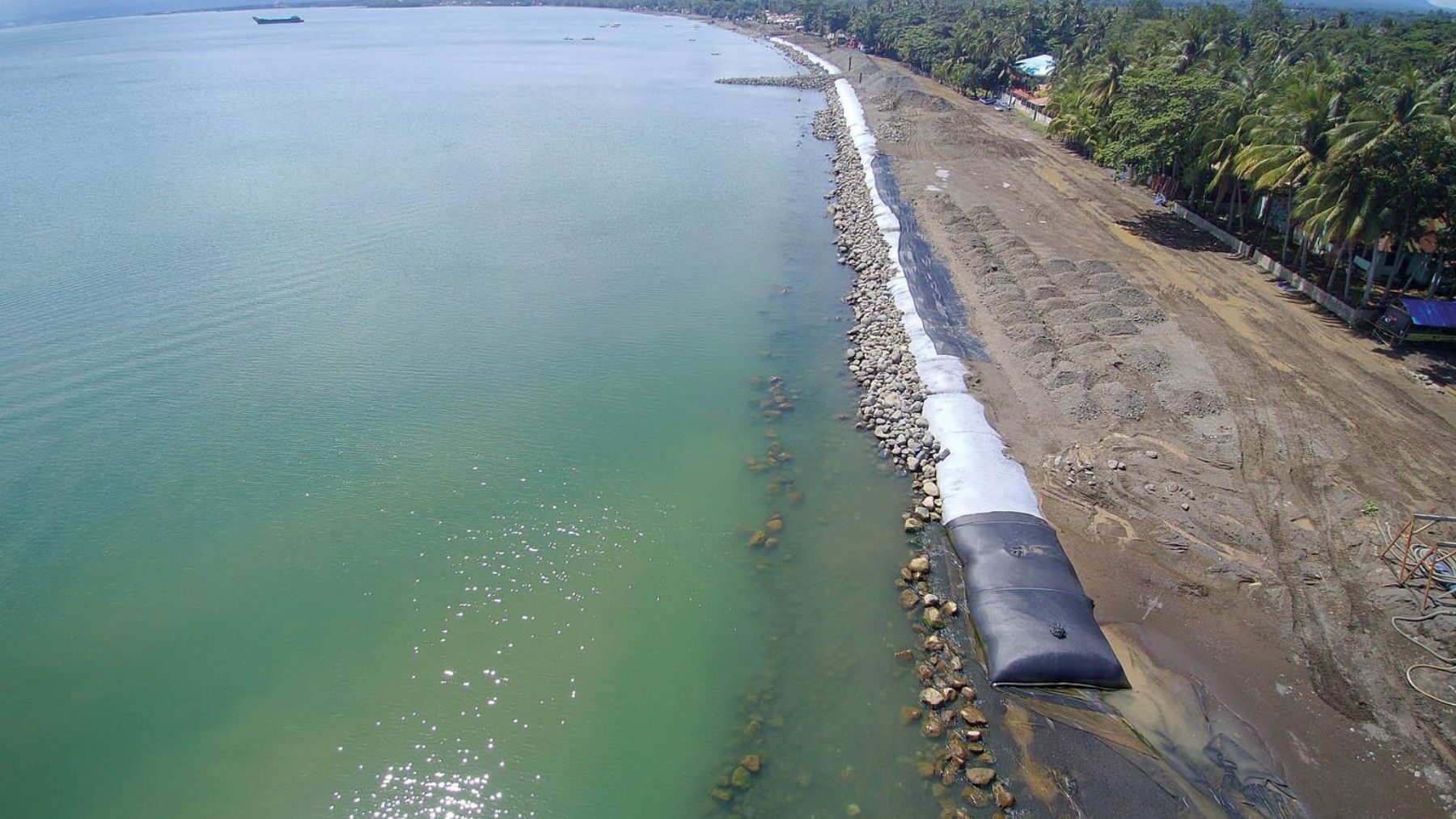
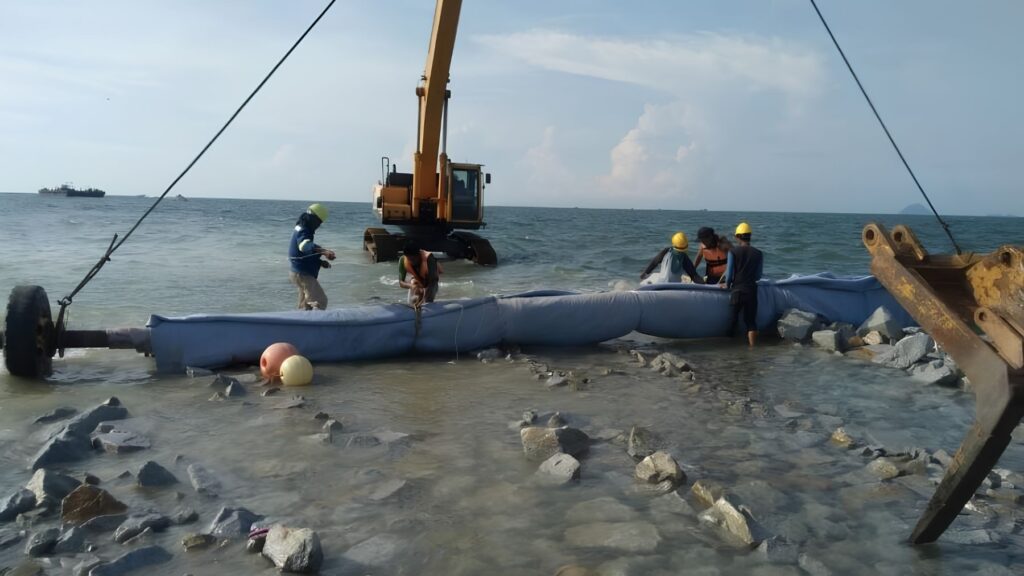
These structures are known as geotubes. They are long containers made from tough woven material, filled with sand and stacked in layers to create a submerged breakwater, a barrier that takes energy out of waves before they reach land.
At Poonthura, five sections sit on a seabed about 20 ft. deep and roughly 260 to 395 ft. from shore. Each section runs about 328 ft., while individual tubes range from around 39 to 66 ft. long and measure close to 49 ft. around.
Picture a speed bump under the ocean. Waves still cross the barrier, but they should arrive with less force, allowing more sand to settle between the tubes and the beach. One project official put it simply, saying, “The system works with natural processes rather than resisting them.”
Why Poonthura needs protection
Poonthura is part of Thiruvananthapuram, Kerala’s capital, and is home to fishing communities. Coastal erosion there is not an abstract line on a map. It can mean damaged homes, unsafe boat landings, lost working space, and waves reaching roads.
The problem reaches far beyond one village. A national shoreline analysis by the National Centre for Coastal Research found that about 33.6% of India’s mainland coast was eroding based on data from 1990 through 2018. Kerala’s southwest monsoon brings stronger seas during the months when the barrier faces its hardest test.
Who built the offshore barrier
The Kerala State Coastal Area Development Corporation led the work, with technical support from the National Institute of Ocean Technology and funding from the Kerala Infrastructure Investment Fund Board. Together, they chose a system meant to avoid a large wall of rocks rising above the water.
The full project covers a 0.47-mile stretch across Poonthura and nearby coastal areas. It is estimated to cost roughly $2.1 million at July 2026 exchange rates.
Authorities have described geotubes as cheaper and less disruptive than conventional rock defenses. That does not make the system impact-free, since engineers must watch whether changing wave patterns shift erosion to nearby sections. The ocean rarely follows a neat blueprint.
Delays beneath rough seas
The project began in February 2022 after approvals, but offshore construction moved slowly. Work depended on calmer seas, barges, divers, and short operating windows before the monsoon turned the water rough.
A major stoppage began on May 7, 2025, after customs rejected imported tubes and purchasing rules pushed the project toward Indian suppliers. The made-to-order material could not be replaced overnight, and the deadline slipped from March 2025 to April 2026.
A manufacturer in Gujarat was later selected to supply the remaining tubes. Work resumed after a seven-month pause, and installation finished in March 2026. In practical terms, the invisible wall took years to build because the sea and the supply chain both had a vote.
Early results look promising
The first signs appeared before the entire structure was finished. In February 2025, an official project update said about a quarter mile of the planned 0.47-mile stretch had been completed and described the first phase as successful.
More importantly, the latest performance assessment announced significant shoreline stabilization and beach accretion. That means the beach was holding more sand and becoming more stable behind the barrier, at least during the period measured.
Promising is not the same as proven for every season. Geotube defenses can lose effectiveness as sea levels, waves, and seabed conditions change, so surveys are needed after strong monsoons. The real question is not whether sand appeared once, but whether it stays, a concern also raised by related research into the wider effects of submerged breakwaters.
Fishing communities want proof
Local fishermen have not always shared the government’s optimism. After a powerful sea surge in March 2024, residents argued the unfinished barrier had not protected them and asked for stronger rock defenses. Three fishermen were injured during the rough conditions, according to local reporting.
More recent accounts describe cautious optimism after consultations and the project’s completion. Still, people who launch boats through surf, hear waves strike the seawall at night, and worry about homes near the water may judge success differently from a spreadsheet.
For them, the useful measures are plain. Are landings safer and homes less exposed? Is enough beach returning for boats, nets, and daily work?
A possible model for Kerala
The Poonthura system is being treated as a pilot for other erosion hotspots along Kerala’s coast. If monitoring continues to show wider beaches and weaker wave impacts, officials may consider similar submerged defenses elsewhere.
However, one design will not fit every shoreline. Water depth, currents, sand supply, storm direction, and fishing routes change from place to place, and research warns that breakwaters can reshape nearby beaches as well as the section they protect.
At the end of the day, the project is trying to do something simple with a complicated ocean. It aims to slow the waves, keep more sand onshore, and protect communities without building a visible wall across the beach. The early evidence is encouraging, yet future monsoons will tell the longer story.
The official update was published by the National Institute of Ocean Technology.