USDA forecasts food prices will rise 2.9% in 2026, with beef and veal up 9.0% and eggs down 29.5% as egg production recovers from bird flu losses
ERS outlook: grocery prices +2.4% and restaurant prices +3.6% forecast for 2026; fresh vegetables and sugar and sweets also +6.5%.

· 4 min read
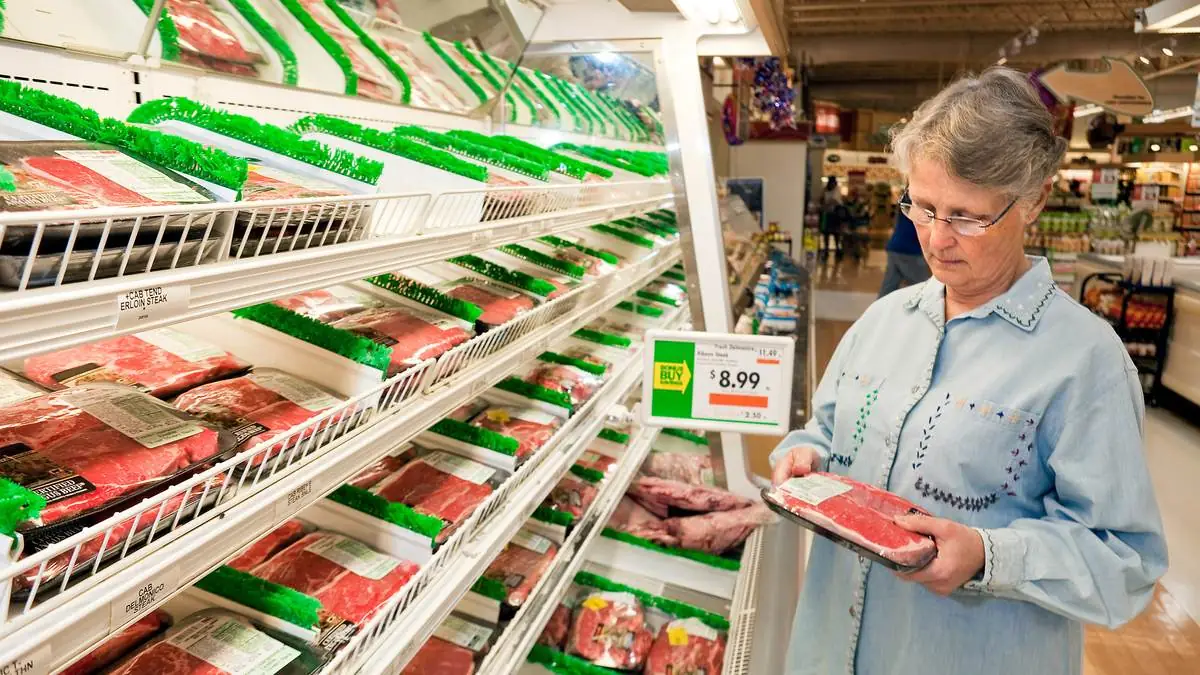
U.S. food prices are forecast to rise 2.9 percent in 2026, according to the Department of Agriculture's Economic Research Service. Grocery prices are expected to climb 2.4 percent, while restaurant prices are forecast to rise 3.6 percent. Beef and veal are set to jump 9.0 percent, as federally inspected beef production has been lower than a year earlier and is expected to stay below those levels through the end of the year. Fresh vegetables and sugar and sweets are each forecast to rise 6.5 percent. Eggs are the big exception, with prices forecast to fall 29.5 percent as egg production recovers from the losses caused by bird flu. Dairy products are also expected to edge down 0.1 percent. For 2027, the agency expects all food prices to rise 3.0 percent, though its forecast range is very wide.
Key points
- For 2027, the ERS forecasts a 3.0% rise in all food prices, within a wide interval of -0.7% to 6.9%.
- October 2025 price data are missing, so the USDA compares October 2026 with September 2025, a span of more than a year.
- Eggs, dairy products, and fats and oils are the only grocery categories forecast to cost less in 2026 than in 2025.
U.S. food prices are forecast to rise 2.9% in 2026, according to the latest Food Price Outlook from the U.S. Department of Agriculture's Economic Research Service (ERS). The forecast interval runs from 2.7% to 3.1%.
The November outlook was updated on November 24 and uses October 2026 consumer and producer price data. For 2027, the ERS expects all food prices to rise 3.0%. That forecast has a much wider interval, from -0.7% to 6.9%.
Over the previous 20 years, from 2006 to 2025, food prices rose 3.0% per year on average, the agency says.
Groceries and restaurants
Grocery store and supermarket prices are forecast to rise 2.4% in 2026, within an interval of 2.2% to 2.6%. Restaurant and other foodservice prices are forecast to rise 3.6%, within 3.5% to 3.8%.
For 2027, the ERS forecasts a 1.9% increase in grocery prices and a 3.6% rise in restaurant prices. Its intervals for that year are wide. They run from -3.4% to 7.8% for groceries and from 1.6% to 5.5% for eating out.
The forecasts are based entirely on statistical models fitted to recent trends in the data, the agency explains. They compare average prices across a whole year with the average of the year before.

A note on the comparison
Consumer Price Index operations, including data collection, were suspended during the federal government shutdown from October 1 to November 12, 2025.
October 2025 CPI data are therefore unavailable. As a result, year-over-year comparisons of consumer food prices for October are not possible, the ERS says.
This month's outlook therefore compares consumer food prices in October 2026 with those in September 2025. That is a comparison across more than a year, not a one-month change.
On that basis, all food prices in October 2026 were 2.9% higher than in September 2025. From September to October 2026 alone, they rose 0.4%.
Beef, vegetables and sweets climb
Beef and veal prices are forecast to rise 9.0% in 2026, with an interval of 8.2% to 9.8%. They rose 0.6% from September to October 2026 and were 4.1% higher in October 2026 than in September 2025.
Federally inspected beef production has been lower in most months of 2026 than a year earlier, according to the ERS. It expects production to stay below year-ago levels through the end of the year.
Fresh vegetables are also climbing. Their retail prices rose 2.2% from September to October 2026 and are forecast to increase 6.5% in 2026, within 5.9% to 7.1%.
Sugar and sweets are forecast to rise 6.5%, and prices in that category have risen mainly for candy and chewing gum, the ERS says. Nonalcoholic beverages, including coffee and tea, are forecast to rise 4.2%. Retail coffee prices have tended to climb faster than other drinks this year, the ERS notes.
Eggs fall as flocks recover
Egg prices are forecast to drop 29.5% in 2026, with an interval of -30.8% to -28.0%. In October 2026 they were 20.6% lower than in September 2025.
An outbreak of highly pathogenic avian influenza began in 2022. It pushed egg prices up by reducing egg-laying flocks and egg production, the ERS explains. Retail egg prices rose 32.2% in 2022, 1.4% in 2023, 8.5% in 2024 and 21.9% in 2025.
The USDA now projects higher egg production in 2026 than in 2025. New bird flu detections in the first quarter of 2026 were fewer than a year earlier. Replacement young hens have also been sufficient to cover regular flock turnover and outbreak losses, according to the agency.
Other foods in the basket
Seven of the 15 grocery categories tracked by the ERS are forecast to grow faster than their 20-year average this year. The list includes beef and veal, fish and seafood, fresh fruits, fresh vegetables, processed fruits and vegetables, sugar and sweets, and nonalcoholic beverages.
Pork is forecast to rise 0.9% and poultry 1.2%. Dairy products are forecast to edge down 0.1%. The USDA expects more milk from a larger dairy herd and higher output per cow.
Bigger swings on the farm
Prices at the farm level can move much more than in stores. Farm-level fresh vegetable prices rose 40.0% from September to October 2026 and were 36.0% higher than in October 2025, according to the ERS.
Those prices can undergo large swings based on weather, production, seasonality and other factors, the agency says. It forecasts farm-level vegetable prices to rise 26.6% in 2026, within 21.0% to 34.0%.
Farm-level egg prices are forecast to fall 81.9% this year. Farm-level cattle prices have declined for five consecutive months, yet the ERS still forecasts them to rise 5.4% in 2026.
Eggs, dairy products, and fats and oils are the three grocery categories forecast to cost less in 2026 than in 2025, the ERS says.
Stephen Ausmus / USDA Agricultural Research Service
Glossary for this story
- Highly pathogenic avian influenza
- A severe, highly contagious form of bird flu that spreads among wild birds and poultry, often causing high death rates, and can occasionally infect mammals.
Javier Niño
Writer at ECOnewsJavier Niño has been a Spanish National Police officer since 2017 and a journalist specialising in employment, labour law and Social Security, with more than seven years of writing experience. At ECOnews he covers environment, energy and sustainability news, focusing on how new regulations and court rulings affect people in their everyday lives.
More from Javier NiñoComments · 0
Rules ›No comments yet. Be the first to share your view.