Algae and cynobacteria, common water-dwelling microorganisms, are capable of using energy from sunlight to perform water splitting which results in the production of hydrogen. Though this is a natural ability of the organisms, it’s not one that happens frequently as they are more likely to use the energy from sunlight to produce sugar, a compound needed to support their own growth.
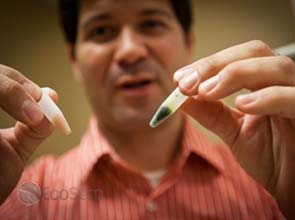
“The algae are not really interested in producing hydrogen, they want to produce sugar,” said Iftach Yacoby, a postdoctoral researcher at M.I.T.
Mr. Yacoby, along with fellow postdoc Sergii Pochekailov, and Shuguang Zhang, associate director of M.I.T.’s Center for Biomedical Engineering worked with colleagues at Tel Aviv University in Israel and the National Renewable Energy Laboratory on improving what is known as biological water splitting or photobiological water splitting.
The researchers got over the algae’s reluctance to produce hydrogen by introducing a specially engineered enzyme in the liquid where the algae live.
The bioengineered enzyme combined photosynthetic membranes and ferredoxin proteins and was able to suppress sugar production and redirect the organisms’ energies into hydrogen production.
Adding the enzyme was said to have increased the rate of algal hydrogen production by about 400 percent which out totally eliminating sugar production and allowing the organism to keep living.
Mr. Zhang and Mr. Yacoby plan to continue developing the system to increase its efficiency. Ultimately, this could lead to a system to produce hydrogen on a large scale.
Hydrogen produced this way could be used to generate electricity via a fuel cell or to power a vehicle or even combined with carbon dioxide to make methane or other more renewable, carbon-neutral fuels, said the researchers.
Bio-reactors
Hydrogen from algae is usually produced in labs inside what are known as bioreactors. In their simplest form, these bioreactors are merely transparent bottles filled with living algae and exposed to the sun.
During normal photosynthesis, the algae in these bioreactors absorb the sun and convert carbon dioxide and water into glucose, releasing oxygen and a small amount of hydrogen in the process. Only about 3 to 5 percent of photosynthesis creates hydrogen.
Earlier studies placed the potential amount of hydrogen produced by an algae strain that was dedicated to just hydrogen production would be 80 kilograms per acre of algae a day.
Photosynthesis for hydrogen
Recently, chemist David Tiede of the Argonne National Laboratory and his co-researchers developed a new catalyst that worked in tandem with the photosynthetic process to produce hydrogen, opening up new potentials for fuel applications.
The researchers still used platinum for the catalyst, which – though proven effective in causing a water splitting reaction – is an expensive and rare metal. Their next step would be to experiment with alternative materials that could make the process less costly and more attractive as an industrial process.