The U.S. Department of Defense (DoD) recently released its annual update to the Section 1260H blacklist, a list that highlights Chinese companies believed to be linked to the Chinese military. The 2024 update includes 134 companies, some of which are influential players in the global tech and energy sectors, such as the tech giant Tencent and battery manufacturer CATL. The blacklist is created to address national security concerns and aims to prevent U.S. investments in firms with ties to the Chinese military, reflecting ongoing tensions between the U.S. and China.
No immediate action, but investment in Chinese business could be pulled
Inclusion on the Pentagon’s Section 1260H blacklist doesn’t trigger immediate sanctions, but it can significantly impact the companies listed by damaging their reputations and restricting their ability to expand commercially, especially in the United States. For instance, Tencent, known for its popular Chinese super-app WeChat, saw its shares drop by 6.5% in Hong Kong, while CATL, a leading battery manufacturer, saw a more than 3% decline in its Shenzhen-listed shares on Tuesday.
These companies now join a growing list of alleged Chinese military-linked firms accused of operating directly or indirectly in the U.S., according to a notice posted in the Federal Register on Monday. The Pentagon emphasized that the Section 1260H list is “an important continuing effort” in addressing China’s “military-civil fusion” strategy. This strategy aims to create the most technologically advanced military by eliminating the divide between civilian research and the country’s armed forces. The Pentagon’s updated blacklist highlights the U.S. government’s ongoing efforts to curb China’s military expansion through the integration of civilian and military sectors, which could have broader implications for international trade and security.
Competition increases between China and the U.S for dominance in the EV world
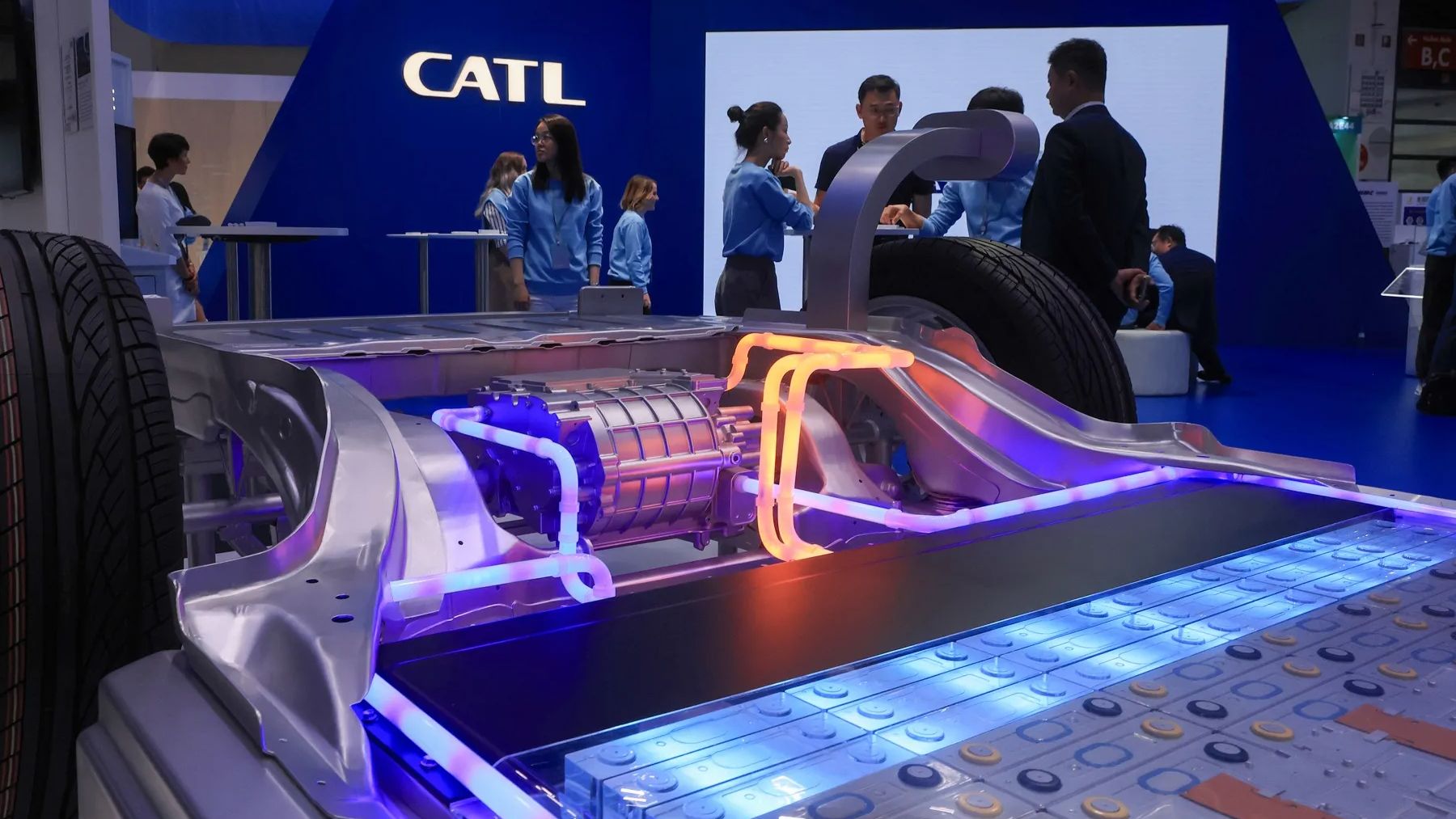
The sanctioning of CATL, a key player in the global electric vehicle (EV) battery market, highlights the intensifying competition between China and the U.S. for dominance in the rapidly growing EV sector. As the world shifts toward cleaner energy solutions, the race to secure market share in the electric vehicle industry has become a strategic priority. China has emerged as a leader with CATL providing batteries for a significant portion of the world’s electric cars (including Tesla) further solidifying the country’s influence.
In response, the U.S. has ramped up efforts to protect its domestic industries and limit China’s access to crucial markets, such as through sanctions or restrictive measures. By targeting firms like CATL, the U.S. is signaling its intent to protect its position in the global EV supply chain, particularly as electric vehicles and their components are seen as critical to future economic and technological leadership. This move reflects the broader geopolitical tension surrounding the race to lead in electric mobility and the transition to sustainable energy.
CATL said in a statement that it “has never engaged in any military-related business or activities, so this designation by the Department of Defense is a mistake.” They added, “we will proactively engage with DoD to address the false designation, including legal action if necessary.”
EVs becoming more in global demand amidst climate concerns
EVs are increasingly seen as the cars of the future, driven by the global shift toward sustainable energy and reduced carbon emissions. With advancements in battery technology, longer ranges, and faster charging times, EVs are becoming more practical and affordable for everyday consumers. Governments worldwide are offering incentives and setting ambitious targets for EV adoption, further accelerating their popularity. As major automakers ramp up their production of electric models and infrastructure improves, it’s clear that EVs will play a central role in the automotive industry’s future, shaping a cleaner, greener transportation landscape.