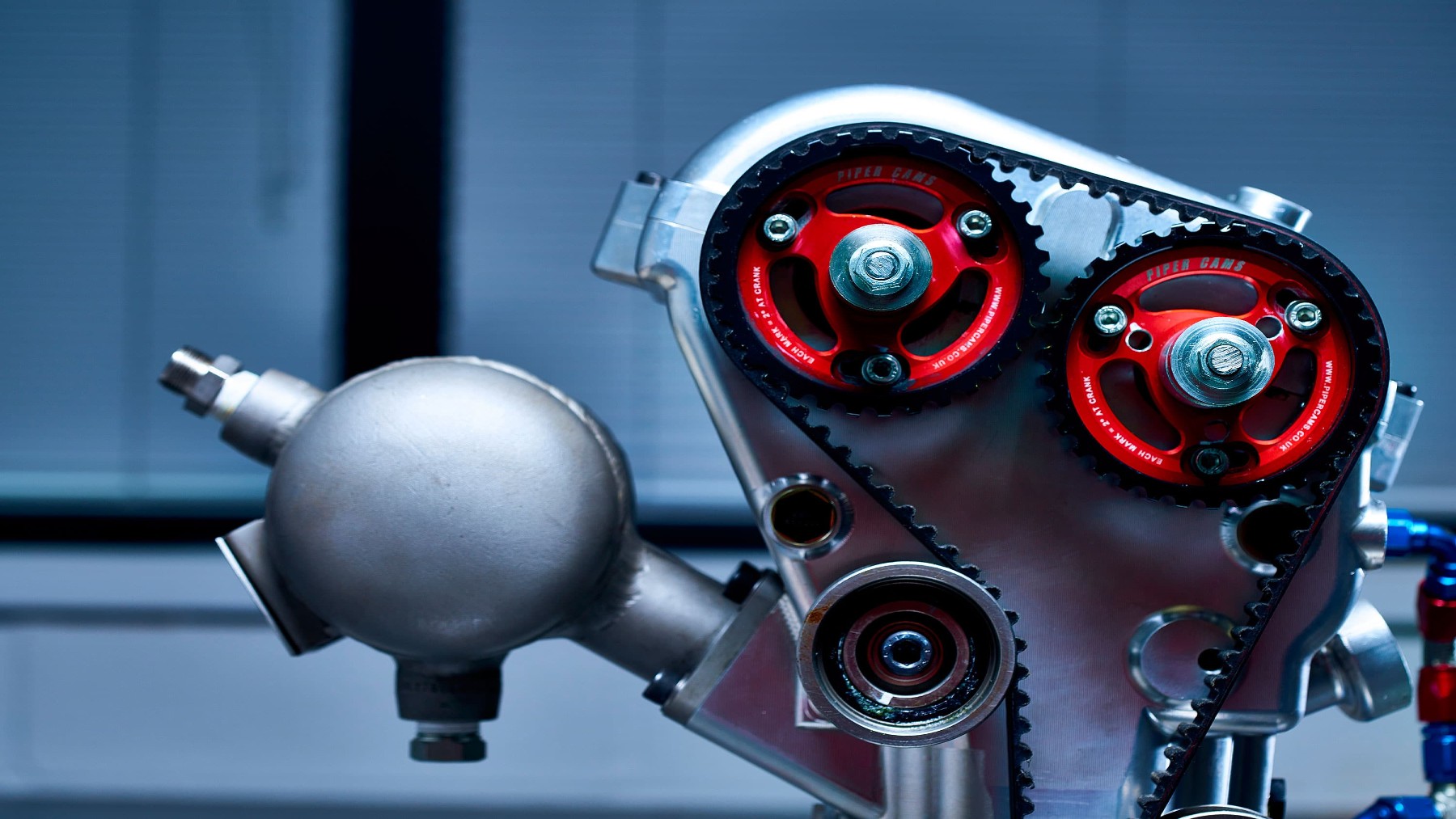
Researchers accomplished a landmark in history when they ran the world’s first liquid air-powered engine. The innovative liquid air engine by Dearman Engine Company opens up new horizons for energy and transport technologies. The analysis below presents an overview of how the engine operates, with benefits to local and international markets.
The surprising way this engine generates power without emissions
This emerging technology uses liquid air as a fuel that expands quickly when warmed to power the engine’s pistons. Compared to traditional combustion engines, the liquid air engine is emission-free and thus a clean source. It is also more energy efficient and lowers the use of fossil fuels. Possible applications are refrigerated transport, power generation, and backup power storage. As the world demand for clean energy rises, the Dearman engine will transform industries with a cheaper and cleaner solution.
If implemented universally, the technology would greatly reduce carbon emissions while enhancing global energy security. The innovative Dearman engine, invented by Peter Dearman, expands liquid nitrogen to generate power. The engine technology from The Guardian Company produces no harmful pollutants during operation while discharging pure cold air into the environment.
The power system proves fit for refrigerated transport and bus climate control systems and provides a clean diesel fuel alternative. The engine utilizes isothermal expansion through piston chamber liquid nitrogen injection, generating power by heat absorption, vaporization, and piston movement. Because of its high efficiency, the system functions to generate power alongside cooling applications and benefits industries that require temperature control systems.
A game-changer: how this innovation slashes fuel costs and pollution
The Dearman Engine cuts down pollution emissions and fuel expenses through its operation. Dearman technology provides sufficient replacements for diesel refrigeration engines to decrease annual UK particulate matter emissions by 180 tonnes, according to The Guardian. Air quality improvement is possible through the Dearman Engine since it only generates clean, cold air while operating.
The worldwide urban pollution crisis makes this technology ideal to produce substantial public health benefits. The engine system reduces fuel expenses and generates environmental advantages. Adoption of liquid air vehicles until 2025 will lead to UK carbon savings of one million tonnes while removing 1.3 billion liters of diesel consumption, which will result in reduced operational expenses for businesses.
In his backyard in Hertfordshire, Peter Dearman started increasing the efficiency of the liquid air engine. His big breakthrough, according to Atlas of the Future, was when he realized that using antifreeze as an injection boosted the piston chamber’s efficiency. Even though experts had initial doubts, he managed to form a consortium with MIRA, Air Products, and Loughborough University, where he acquired funds to enhance the technology.
Where do you go from here? The potential of liquid air technology is nearer than you can imagine.
The specialists argued he didn’t have the funds or the technology to back it all up, but with industry assistance and state grants, everything shifted. The project went from prototype to real-world utilization, showcasing its practicality and paving the path toward commercialization. The successful trials on the Dearman Engine mark a key milestone in energy sustainability. Its use can range from transportation to farming and many industries in between, as it is a cleaner replacement for fossil fuels.
Dearman is working on a heat hybrid engine that can potentially decrease the use of diesel in buses by 25%. Also, the extreme allows agriculture to be changed by using cooling power at the same time to decrease food spoilage while increasing productivity. If the world embraced liquid air technology, the global energy economy would significantly change. As Atlas of the Future mentions, liquid air is not lacking.