Behind every AI chatbot and video stream sits a warehouse of computers that burns through electricity. One company wants to feed that hunger with nuclear reactors retired from warships. The plan would move military hardware into civilian power lines.
Texas company HGP Intelligent Energy has asked the Department of Energy for permission to connect two retired US Navy reactors to a planned AI-focused data center at Oak Ridge National Laboratory, supplying about 450 to 520 megawatts of constant power. If approved under the Genesis Mission program launched during Donald Trump’s presidency, it would mark the first civilian reuse of naval reactors.
From warships to server racks
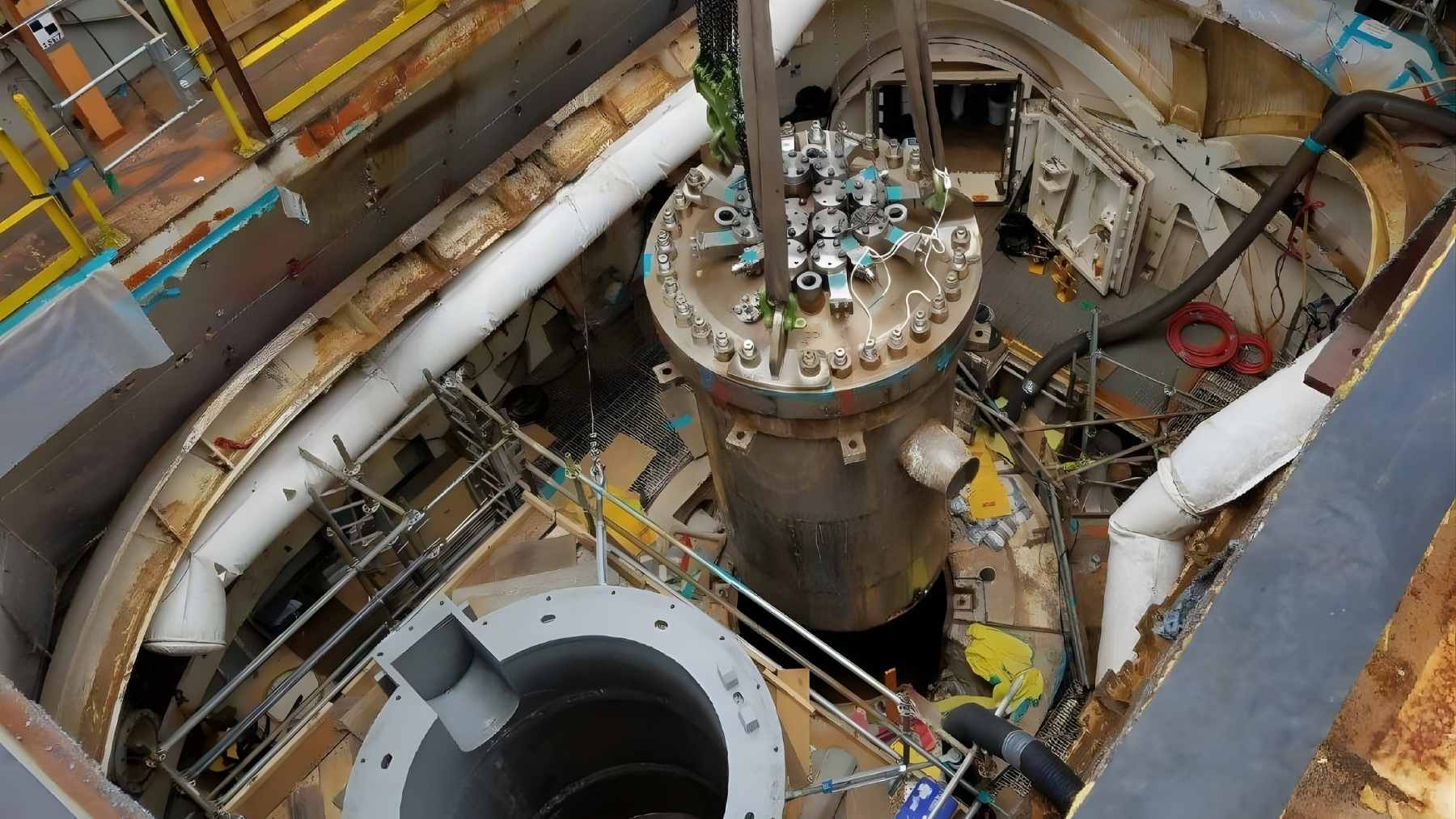
The company’s plan centers on reactors that once powered a Nimitz class aircraft carrier and a Los Angeles class attack submarine. Those compact units were designed to push warships through the ocean for years without refueling, a very different job from running server racks. USS Nimitz, commissioned in 1975, is already on its final deployment as more Los Angeles boats leave active service.
Instead of being cut up for disposal, the retired reactors would move to federal land at Oak Ridge and sit inside new civilian facilities. The agency has invited companies to build AI data centers there with their own power, and this proposal is one of the bids. Together the two units could run nonstop at a level roughly enough for several hundred thousand homes.
Why AI data centers are hungry for power
Data centers are giant warehouses of servers that run cloud services and AI systems, and they rarely sleep. Their chips must be cooled and powered every second, so operators favor steady, round-the-clock electricity instead of weather-dependent sources. At Oak Ridge, the laboratory is already preparing AI-focused supercomputers such as the Lux and Discovery systems, which will push demand even higher later this decade.
This proposal sits in a wider race to secure electricity for digital infrastructure. Google has signed an agreement with Kairos Power and the Tennessee Valley Authority to buy power from a new Hermes 2 reactor in Oak Ridge for its own data centers, aiming to add carbon free supply. Deals like this show how quickly nuclear energy is returning to the discussion about how to power always on computing.

Costs, timelines, and what happens to the reactors
Project documents describe a conversion cost between $1 million and $4 million per megawatt, for total spending of about $1.8 to $2.1 billion. The same materials suggest a first phase could be running by 2029 if permits and financing arrive on time. Supporters say that compares well with many new nuclear projects and delays the expense of dismantling the naval units at the federal Hanford waste site.
HGP Intelligent Energy also proposes to share revenue with the federal government once the facility is online and to seed a fund for dismantling the reactors later on. That money would help cover the work of managing spent fuel and taking the units apart when they finally shut down. Chief executive Gregory Forero says his team and partners already have the expertise to carry out the conversion safely at industrial scale.
Safety record and unanswered questions
Backers of the plan often point to the long safety record of naval nuclear power. The World Nuclear Association notes that the United States fleet has operated more than one hundred shipboard reactors over more than five decades without a serious radiological accident. Supporters say that history shows these compact units can run reliably when carefully maintained and regulated, even as they age.
Even with that record, moving military reactors into civilian service would raise many questions. Any project at Oak Ridge would need to satisfy national regulators on security, waste, and emergency planning, and the Energy Department says it will judge proposals on how they handle licensing and permits. In practical terms, the argument is over how to power the next wave of computing, whether with gas plants, renewables with batteries, or nuclear units old and new.
The main report has been published by Bloomberg News.
Image credit: U.S. Navy