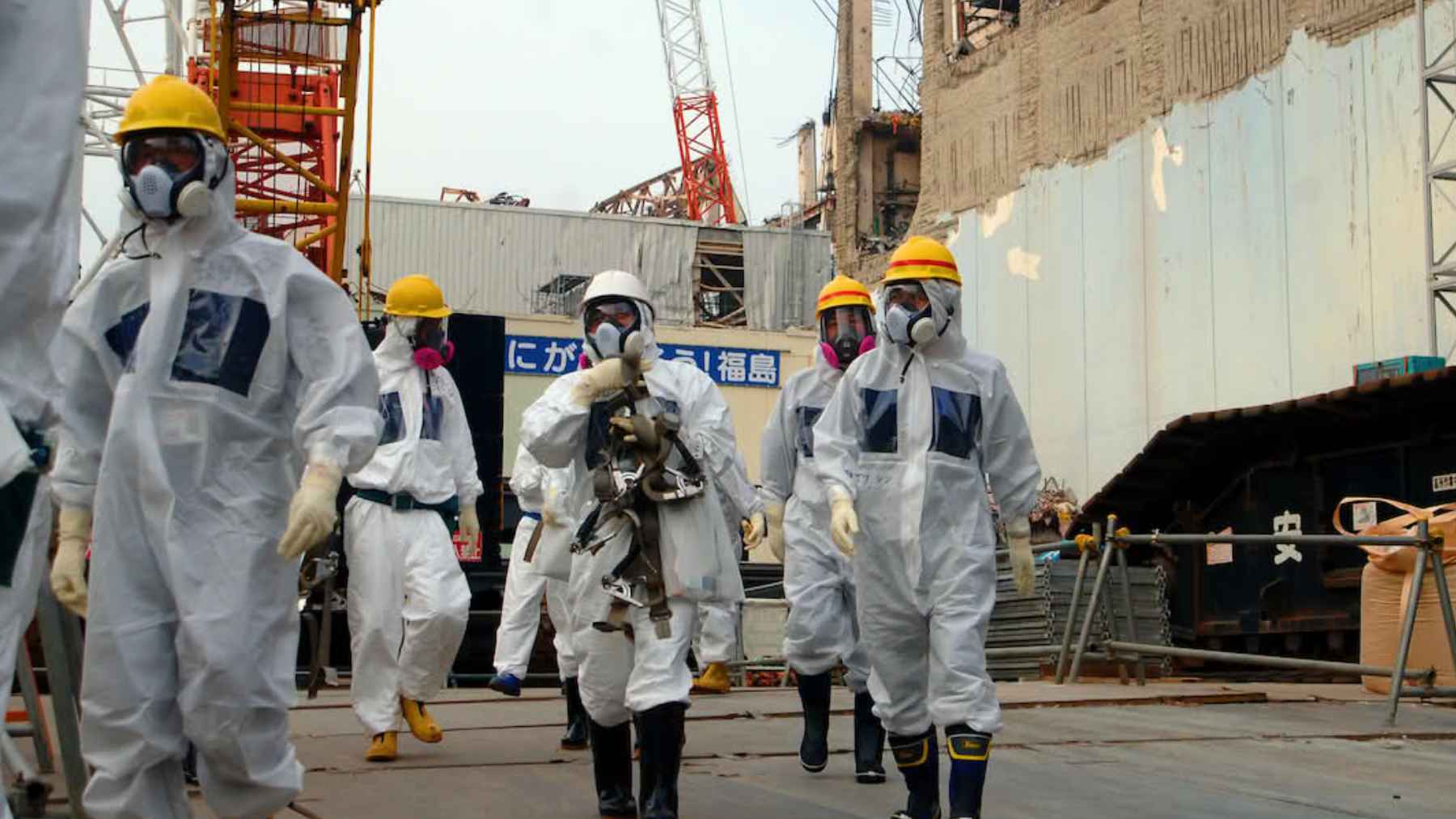
Inside one of the most contaminated basements on Earth, scientists have found something unexpected. Common marine bacteria are living in radioactive water at the Fukushima Daiichi Nuclear Power Station and carrying on as if the radiation were barely there. Their survival is striking, but for the engineers dismantling the plant, it is also one more problem to solve.
A new study of water stored in the torus room beneath Fukushima’s damaged reactors shows that microbial communities are thriving in liquid that holds about one billion becquerels of cesium 137 per liter. Instead of mutant superbugs, researchers identified mostly familiar marine bacteria that feed on minerals such as sulfur, manganese and iron.
Ordinary microbes in an extraordinary place
After the 2011 Tohoku earthquake and tsunami, emergency seawater flooded the torus room, a doughnut shaped safety chamber below the reactor that helps control steam pressure in an accident. That water mixed with radioactive material and has remained in place for years.
Biologists Tomoro Warashina and Akio Kanai at Keio University and their colleagues used 16S rRNA gene sequencing on water samples collected by Tokyo Electric Power Company Holdings from two depths in the torus room.
The upper sample, labeled TW1, was dominated by Limnobacter, a bacterium that oxidizes thiosulfate, while the deeper sample TW2 was dominated by Brevirhabdus, which can oxidize manganese. Smaller populations of Hoeflea and Sphingopyxis, known for oxidizing iron, were also present. In total, roughly 70% of the identified genera are associated with metal corrosion.
So these communities are not exotic radiation monsters. They are workaday microbes that happen to like metals.
Not radiation proof, just well protected
Given the intense contamination, the team expected to find classic radiation hardy species such as Deinococcus. Instead, tests on a closely related Limnobacter strain showed radiation resistance similar to ordinary bacteria.
That result suggests the ionizing radiation in the torus room has not been strong enough to wipe out standard microbes or to favor rare mutants with extreme defenses. How do they manage it then?
Evidence points to biofilms. The bacteria in the torus room appear to live in dense microbial mats held together by a sticky extracellular matrix. In that crowded micro world, each cell is partly shielded by its neighbors and by the slime that coats them, which acts like a layer of natural armor against radiation and chemical stress.
The mix of seawater, corrosion products and rough metal surfaces provides plenty of places for these biofilms to anchor and grow.
Why this worries nuclear engineers
Bacteria might sound like a small detail compared with melted fuel. Over decades, though, biofilms can quietly damage the hardware that keeps radioactive material contained.
The Fukushima torus room is already filled with contaminated water that must be managed for many years. Most of the detected genera are linked to microbiologically influenced corrosion, where microbial metabolism speeds up the pitting and weakening of steel and other metals.
In practical terms, that can affect pipes, tanks, valves and structural elements that are essential for safe storage and treatment of radioactive water.
After the accident at the Three Mile Island nuclear power plant in the United States, cleanup crews also reported troublesome biofilms in contaminated water that corroded equipment and reduced visibility for underwater work. Scientists now see Fukushima as another example where microbes can slow decommissioning and raise costs if they are not considered in advance.
The trouble is, the clock for decommissioning is already measured in decades. Each new complication stretches that timeline.
A reminder that nuclear cleanup is ecological too
From an environmental point of view, the discovery has a double edge. On the one hand, the torus room is not a sterile dead zone. Microbes still recycle minerals, build communities and carve out tiny habitats even in water loaded with cesium 137. On the other hand, the same activity can weaken barriers designed to keep radioactivity in place.
If corrosion speeds up on submerged steel, operators may need to inspect, replace or reinforce components more often to prevent leaks of contaminated water or sludge into adjacent systems. For coastal communities that already follow news about treated water releases from Fukushima, microscopic corrosion on hidden metal surfaces is one more factor worth watching.
As countries debate whether to expand nuclear power as a low-carbon energy source, this case is a reminder that reactors and their waste streams are embedded in living systems. Even in a flooded basement under a damaged plant, bacteria are quietly reshaping metal, water and concrete, and that in turn shapes long-term safety.
The study was published in Applied and Environmental Microbiology.