Strange wrinkle patterns in rock layers in Morocco’s Central High Atlas Mountains are being read as a signature of ancient life. Researchers found ripple marks overlaid by creases and carbon-rich layers that hint at microbial mats from about 180 million years ago.
A January 14, 2026, news release from the Geological Society of America says the most likely explanation is chemosynthetic microbes, organisms that can live off chemical reactions instead of sunlight.
Wrinkle structures are usually tied to shallow, sunlit water where photosynthetic microbes can grow. So how did a shallow-water style texture end up in the deep? If similar marks can form in darkness, geologists may be missing clues in deep-water rocks.
A hike that changed the story
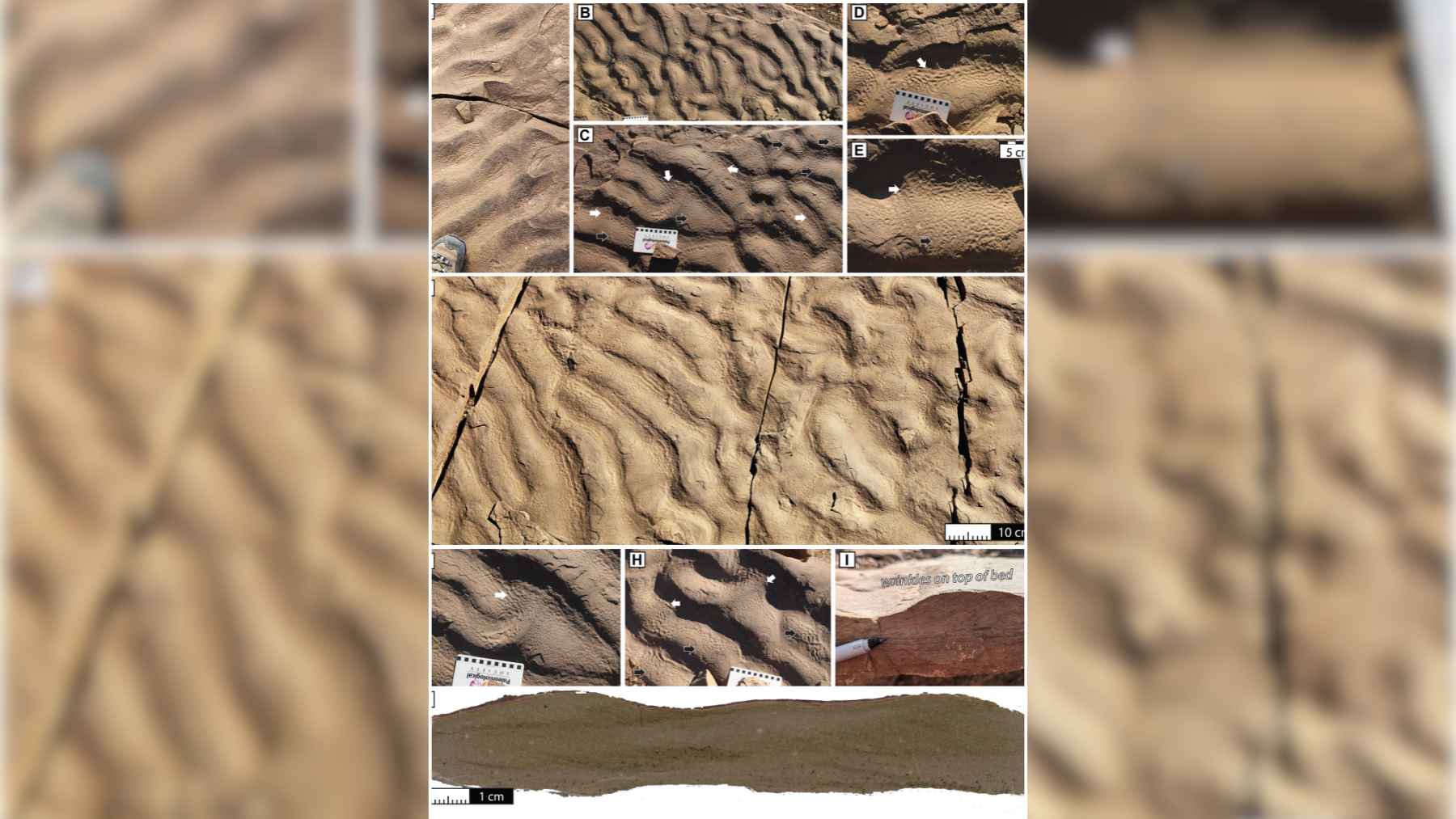
In 2016, Dr. Rowan Martindale, a paleoecologist and geobiologist at the University of Texas at Austin, noticed the wrinkled texture while hiking in Morocco’s Dadès Valley. She called over Stéphane Bodin of Aarhus University and pointed out that the rippled rock face was covered in what looked like “wrinkle structures.” In a university report, the surface was compared to “elephant skin.”
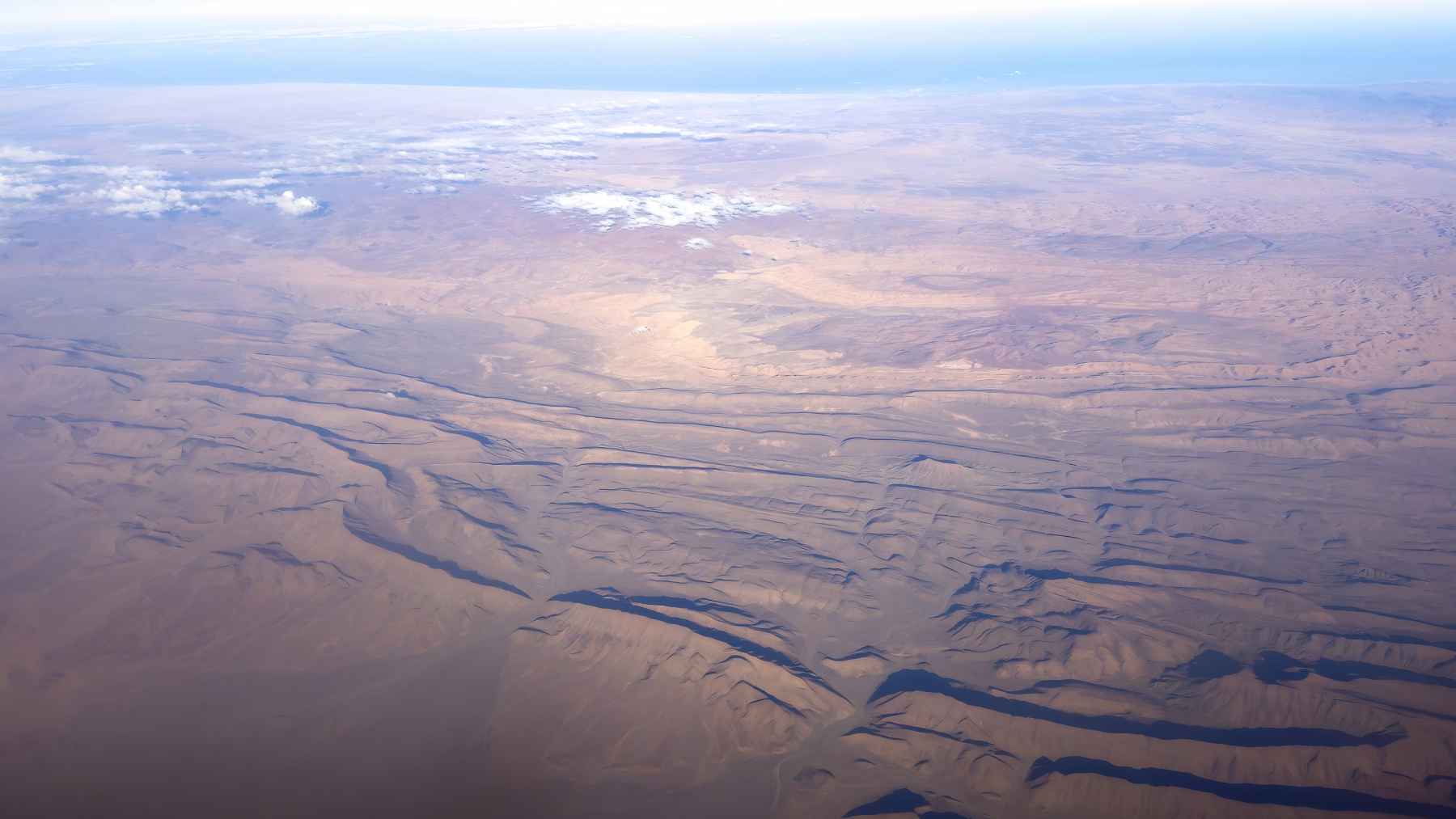
The rocks formed on an ancient seabed, then were lifted into mountains over millions of years. The team was there to study ancient reefs, and this strange layer showed up along the way.
To reach those reefs, the researchers crossed stacks of turbidites, rock beds laid down by fast, sediment-heavy flows. A turbidity current is a rapid downhill surge of murky water, like an underwater avalanche of silt. When it slows down, it drops its load and leaves a fresh layer behind.
Wrinkle structures in plain language
Wrinkle structures are small ridges and pits that crumple up a sandy surface. In these rocks, they range from a fraction of an inch to about an inch across, which is why they can hide in plain sight until the light hits just right. Once you notice them, they read like a texture, not a pattern.
They form when algae and microbes grow together in a mat, a thin living layer that spreads across sediment like a blanket. As the mat traps grains and holds them steady, it can develop tiny bumps and folds, almost like a skin tightening and wrinkling. If that surface gets buried quickly and hardens into rock, the wrinkles can be preserved.
Most modern examples show up in shallow tidal areas where sunlight reaches the bottom. There, microbes can use photosynthesis, meaning they harvest light the way a plant does. That link to sunlight is the default assumption, and it was the first thing that did not fit in Morocco.
Why deep water and time make this rare
The wrinkled layers formed at a depth of at least about 590 feet, which is a problem for any organism that relies on sunlight. The ocean’s “sunlight zone” is often described as extending to about 660 feet, and there is rarely significant light deeper than that. For photosynthesis, that drop-off can be a hard limit.
Depth was not the only hurdle. Wrinkle structures are also rare in rocks younger than about 540 million years because animals burrow, graze, and stir the seafloor, tearing apart microbial mats before they can leave a lasting impression. It is the ocean-floor version of footprints getting scuffed away on a crowded beach.
That matters because these Moroccan rocks are only about 180 million years old, during the Jurassic Period when ocean floors were already busy with animal life. Under normal conditions, that activity would churn the surface before a mat could harden into stone, yet the wrinkles still sit sharply on top of ripple marks. The team’s explanation leans on the idea that deep, low-oxygen sediment can keep many animals away, buying microbes the quiet time they need.
The chemosynthesis clue
To test whether the texture really came from living communities, the researchers examined the layers just below the wrinkles. They found elevated carbon there, a common hint that organic material was present when the sediment formed. It is not proof by itself, but it supports a biological origin when the geometry of the wrinkles also matches known microbial mats.
They also looked to the modern ocean for a reality check. Videos from remotely operated submersibles show that microbial mats can form well below the photic zone, even where sunlight cannot support photosynthesis. In those settings, the mats are associated with chemosynthetic bacteria rather than sun-dependent algae.
Chemosynthesis is a way of making energy using chemical reactions, not light, and it supports entire deep-sea ecosystems. It is the difference between running on solar panels and running on the energy stored in a battery. Scientists have studied this process for decades around hydrothermal vents, where sunlight never reaches but microbes can still power a food web.
What it means for finding ancient life
The team argues that turbidites may have helped create a short-lived “window” for microbial mats to grow and then be preserved. Debris flows can deliver nutrients and organic matter into deeper water, and they can also reduce oxygen in sediment, which discourages many animals that would otherwise shred a mat. Then, during calmer gaps between flows, microbes can spread across the surface and wrinkle.
Most of the time, the next turbidity flow would scrape that living layer away. Every so often, it gets buried gently enough to survive, and the next layer seals in the texture like a snapshot. Rare timing, rare preservation.
For geologists, the takeaway is simple but uncomfortable. Wrinkle structures have often been treated as a sign of photosynthetic mats in shallow water, yet this case suggests they can also record chemosynthetic communities in deeper settings, long after animals became common. The team wants laboratory experiments to test how often this could happen, and whether other deep-water outcrops deserve a second look.
The main study has been published in Geology.