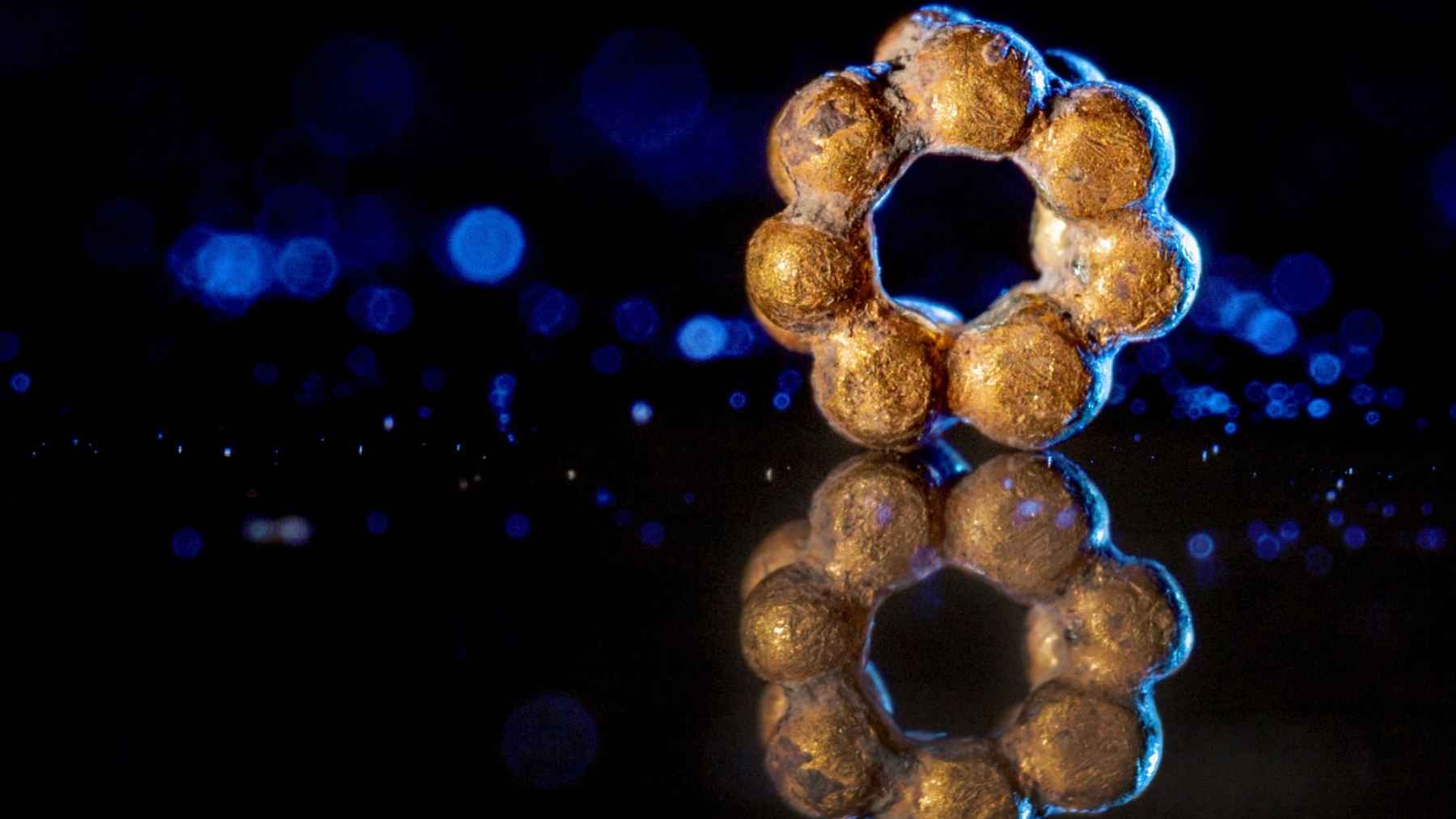
A tiny gold bead uncovered in soil from Jerusalem’s City of David is giving archaeologists a rare look at wealth, craftsmanship, and daily life near the end of the Roman era. The bead, dated to at least 1,600 years ago, was found during wet sifting connected to Israel Antiquities Authority excavations along the Pilgrimage Road, inside the Jerusalem Walls National Park.
At first glance, it is almost easy to miss, which is exactly what makes the discovery so striking. One small bead, likely once part of a necklace or bracelet, survived intact after slipping away from its owner in a grand Roman-era building where imported pottery and a decorated mosaic floor point to an affluent household.
A volunteer spotted the gold
The bead was discovered by 18-year-old volunteer Hallel Feidman while she was washing soil brought from excavations in the City of David. She noticed something shiny in the sieve and took it to an archaeologist, who confirmed that it was gold.
That small moment matters. Archaeology often moves slowly, bucket by bucket, and discoveries do not always arrive with drama. Sometimes they appear as a glint in the mud.
Dr. Amir Golani, an ancient jewelry expert at the Israel Antiquities Authority, said that finding gold in an archaeological excavation is unusual. “Throughout all my years in archaeology, I have found gold perhaps once or twice, so to find gold jewelry is something very very special,” he said.
Why one bead can say so much
The bead likely belonged to a necklace or bracelet, though researchers cannot identify the owner. Still, they can say something important about the person who wore it. Gold was expensive, and this was not a rough or simple object.
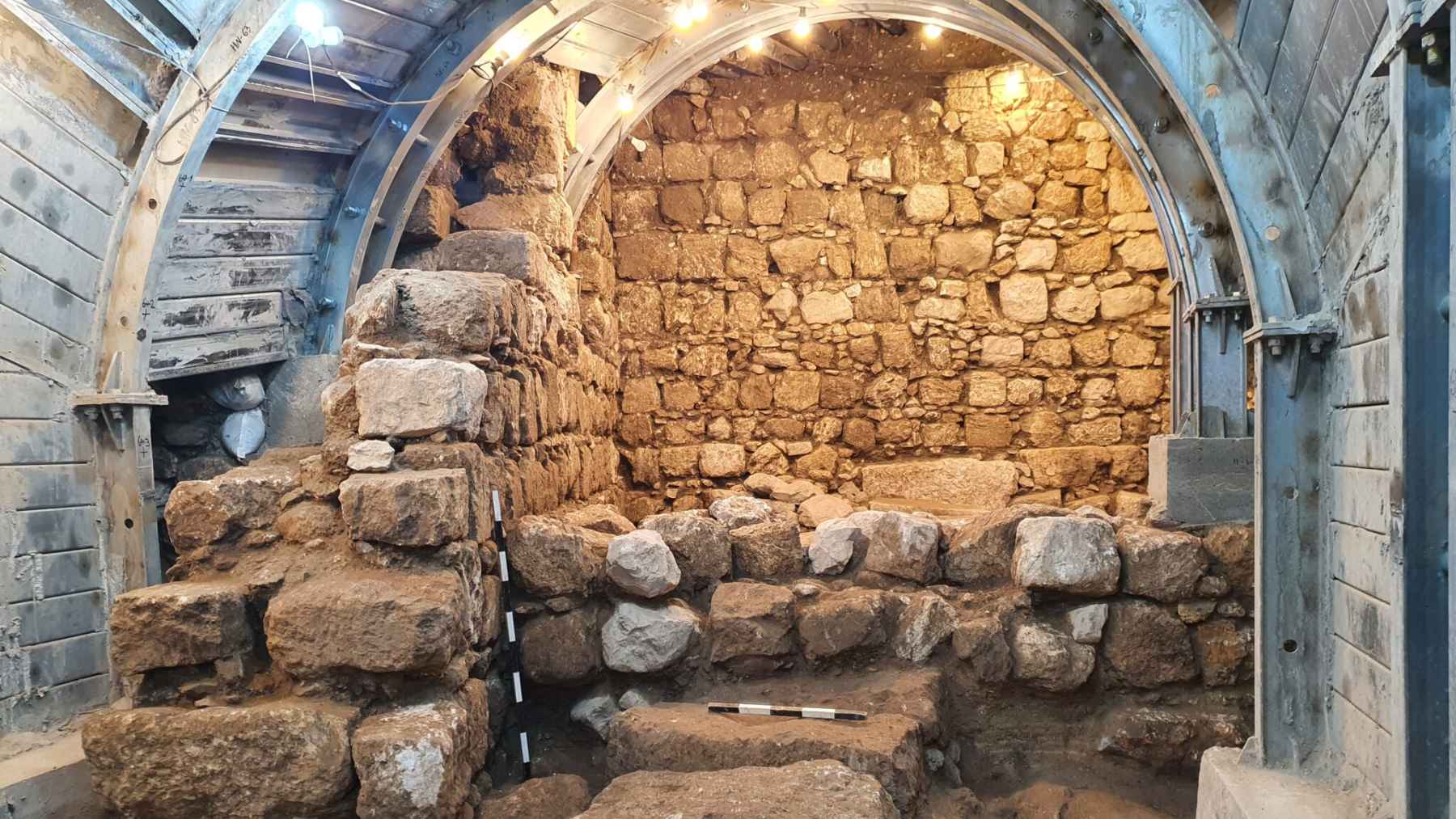
According to excavation directors Shlomo Greenberg and Ari Levy, the bead came from a large structure at least 82 ft. long. The building stood along the Pilgrimage Road and had the kind of features associated with high-status residents, including imported clay vessels and a decorated mosaic floor.
Clearly, that means this was not just jewelry, but a social signal. A bead like this would have told people something about money, taste, and access to skilled makers.
The craft behind the shine
The bead was made with a complex technique known as granulation. That process uses tiny balls of gold, joined together with careful heating to form a delicate pattern or object.
Simple? Not at all. The goldsmith had to heat the piece enough for the tiny spheres to bond, but not so much that the whole bead melted into a shapeless drop.
“The most interesting aspect of the bead is its unique and complex production method,” Golani explained. He said the process required knowledge of materials, control over heat, and a level of precision that only a professional craftsperson could achieve.
A clue from ancient trade
Researchers say the technique most likely came from Mesopotamia, where it was known thousands of years earlier. That does not necessarily mean the bead was made there, but it does point to a wider world of trade, travel, and shared skills.
Jerusalem was not isolated. Goods, ideas, tools, and fashions moved with merchants, soldiers, artisans, and families. A small bead could travel a long way before ending up around someone’s wrist or neck.
There are a few possibilities. It may have been made elsewhere and brought into Jerusalem, given as a gift, or passed down as an heirloom. Each explanation is plausible, and each one reminds us that ancient people also kept meaningful objects close.
Rare even among rare finds
Gold items are not common in excavations for one practical reason: people usually recovered and reused gold whenever they could. It was too valuable to leave behind.
That makes a tiny intact bead especially important. The City of David statement notes that only a few dozen gold beads have been found in Israel, which gives this small object a much bigger place in the archaeological record.
Similar beads have been found in burial caves from about 2,500 years ago near the City of David, at Ketef Hinnom. But those were made of silver, not gold, making this Roman-era bead stand out even more.
From a lost jewel to a human story
What happened on the day the bead was lost? No one knows. Maybe a necklace broke while someone walked through the building. Maybe a bracelet loosened during a routine moment that felt completely ordinary at the time.
That is the pull of finds like this. They do not only tell us about architecture, trade, or elite fashion. They bring the past down to the scale of a human hand, a piece of jewelry, and a tiny accident.
Eli Escusido, director of the Israel Antiquities Authority, said that personal items often create the strongest connection to people from the past. “Even with today’s advanced technology, creating something like this would be very complex,” he said.
The bead’s bigger meaning
The discovery is small, but its message is not. It shows how luxury, craftsmanship, and cultural exchange met in ancient Jerusalem, where daily life unfolded along busy roads and inside homes that still had traces of wealth under their floors.
It also shows why public sifting projects can matter. A trained eye is essential, of course, but so is patience. One careful volunteer noticed a speck of gold, and a forgotten object reentered history.
For archaeologists, the bead is a clue. For everyone else, it is a reminder that the past is often buried just below the surface, waiting for someone to look closely enough.
The official statement was published on the City of David website.