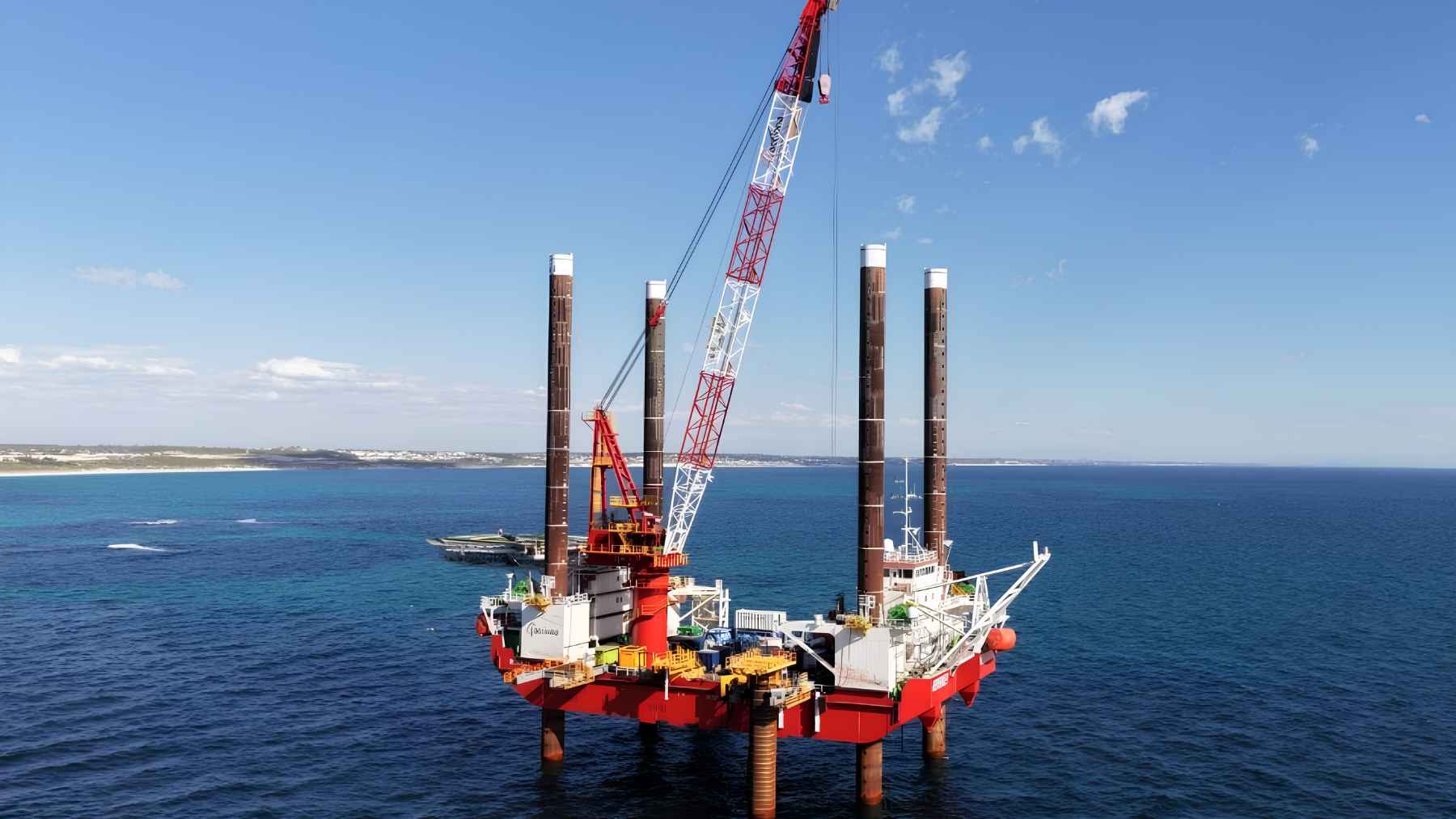
Australia’s next major drinking water source is taking shape off the coast of Alkimos, north of Perth, where a giant jack-up barge named Beverley has been moved farther out to sea for the next stage of construction.
The project is not just another coastal work site. It is part of a large desalination push designed to turn seawater into drinking water as Western Australia faces declining rainfall and a growing population. When the first stage is complete in 2028, the plant is expected to produce about 39.6 million gallons of drinking water per day, or more than 13.2 billion gallons each year.
A giant barge moves offshore
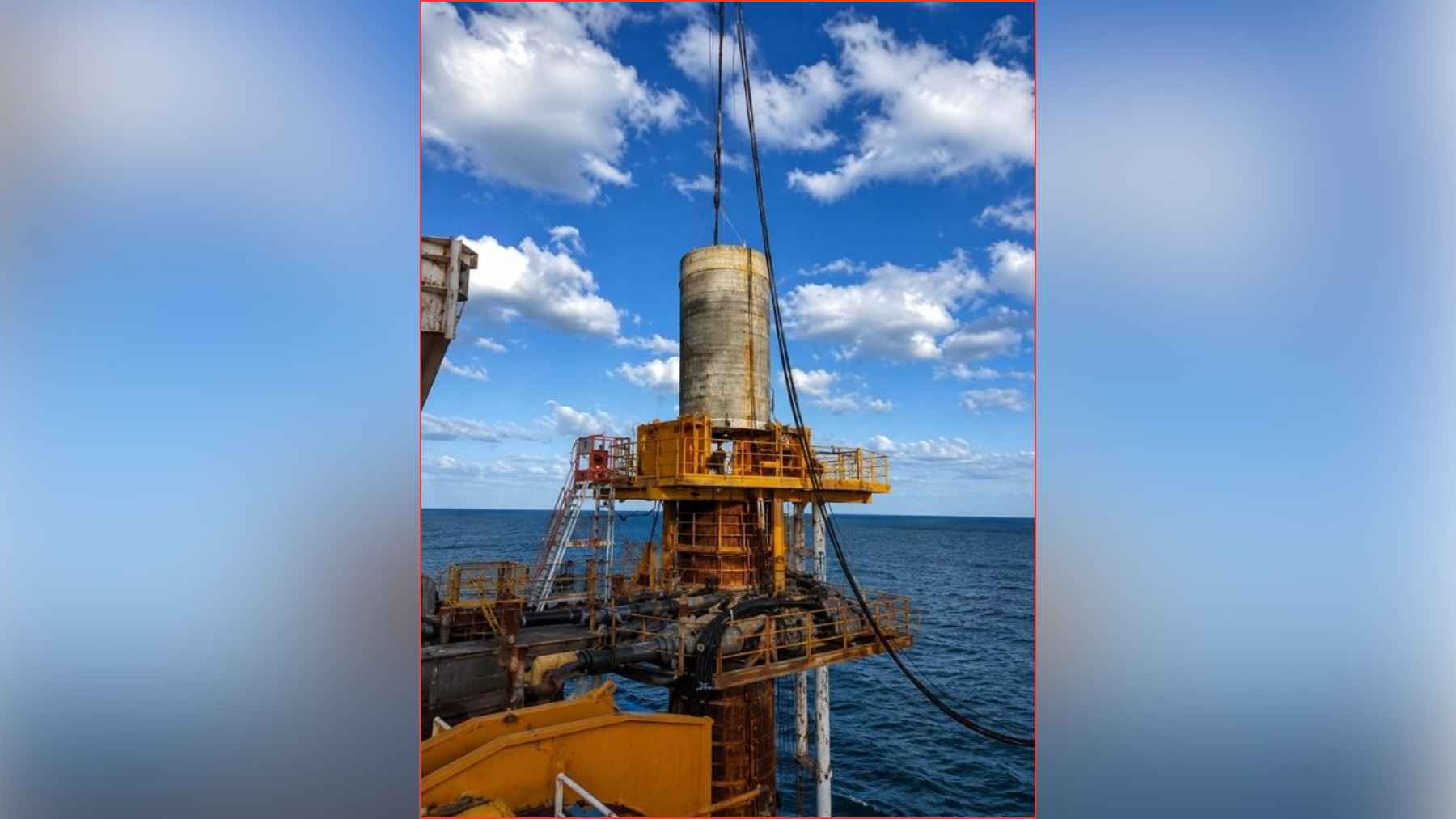
Beverley is not the kind of vessel most beachgoers expect to see on the horizon. The barge stands on legs about 256 feet tall and is being used to install heavy ocean structures that will connect the sea to the Alkimos Seawater Desalination Plant.
After crews completed work on the intake structures one mile from shore, they repositioned Beverley about 1.9 miles offshore on May 4, 2026. At that new location, it will help install the outfall structure, which is the part of the system that returns salty leftover water to the ocean.
Why Alkimos needs desalination
Desalination is the process of removing salt from seawater so it can be treated and used as drinking water. This gives a dry region another tap to turn on when rain-fed sources are under pressure.
The Alkimos plant is being built because Western Australia can no longer rely only on traditional water sources. The region has seen declining rainfall, while Perth and surrounding communities keep growing. That combination puts more strain on groundwater, reservoirs, and the everyday systems that keep showers, kitchens, and businesses running.
How the ocean system works
The plant will use two main underwater pathways. One intake tunnel will bring seawater into the plant, while a separate outfall tunnel will send brine back into the ocean after treatment. Brine is water with a much higher salt content than normal seawater.
These lines are being placed in tunnels below the seabed, not laid across sensitive coastal areas. The utility says this design is meant to protect dunes, reefs, and marine life by keeping the key infrastructure deep under the ocean floor.
Machines are tunneling under the sea
Two tunnel-boring machines, named Karli and Mary, are already moving beneath the seabed. Karli has completed more than 1.6 miles of the 2.5-mile outfall tunnel, while Mary has finished more than 1.4 miles of the 1.6-mile intake tunnel.
The machines are now digging about 59 feet per shift, and the project recently set a one-day tunneling record of more than 144 feet. That may sound slow compared with traffic on a highway, but underground, under the ocean, every foot matters.
The plant will use reverse osmosis
At the heart of the plant is reverse osmosis, a treatment method that pushes seawater through very fine membranes. Those membranes separate much of the salt from the water, leaving a fresh stream that can be prepared for drinking.
The system is expected to recover about 40% of the intake water as fresh water. The remaining 60% will return to the ocean as brine, with the outfall diffuser designed to mix it quickly with seawater so salinity drops near normal levels within a short distance.
The water still has to reach homes
Producing drinking water is only half the job. The project also includes a new underground pipeline of about 20.8 miles between Alkimos and Wanneroo Reservoir, which connects to Western Australia’s Integrated Water Supply Scheme.
That part is easy to overlook, but it is crucial. A desalination plant can make clean water, but people only benefit when that water moves through pipes, reservoirs, and distribution networks to reach homes, workplaces, and schools.
Work on land is also advancing
Onshore, the treatment complex is beginning to look less like an idea and more like a working plant. The pretreatment building is in the final stages of hydrotesting, which means crews are checking for leaks before more mechanical and electrical work begins.
The reverse osmosis building has also reached a major stage. More than 1,650 U.S. tons of reinforcement have been installed, and crews are making large concrete panels on site to reduce traffic impacts from moving oversized pieces through local roads.
Keeping watch on the marine work
Heavy marine construction can bring noise, exclusion zones, and disruption. Around Alkimos, marine exclusion zones remain in place near the active work areas to keep boats and ocean users away from construction equipment.
Piling work has been approved for longer operations, but it will only take place during daylight hours, roughly from 6 a.m. to 7 p.m., when visibility is better for protecting marine mammals. Noise monitoring is also being used, and crews can reduce impacts where possible.
A 2028 target for first water
The first stage of Alkimos is expected to deliver drinking water in 2028. A future second stage could double annual output to about 26.4 billion gallons, making the plant an even larger part of Western Australia’s water system.
The work is being delivered through the Alkimos Seawater Alliance, involving Water Corporation, Acciona, and Jacobs Group. Western Australia’s government has described the project as a major investment in long-term water security, with Water Minister Don Punch saying the state needs “the resilient water supply our communities will rely on for decades to come.”
The official project update was published by the Water Corporation.