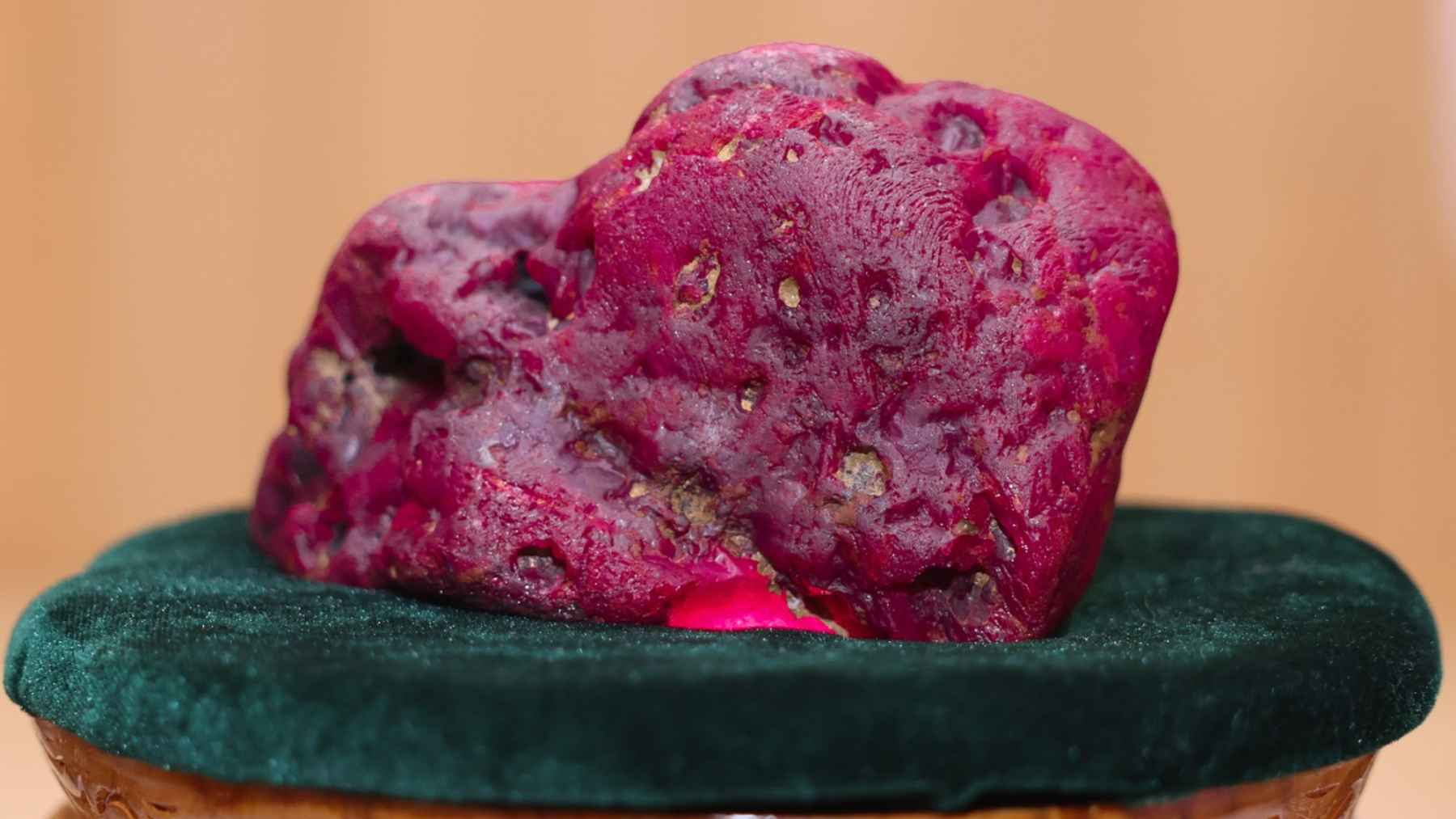
Miners near Mogok, Myanmar, have unearthed an 11,000-carat rough ruby, a find large enough to pull the world’s gem buyers back toward one of the most famous ruby regions on Earth. The stone was discovered in mid-April 2026, just after Myanmar’s traditional New Year festival, and weighs about 4.8 pounds.
At first glance, this sounds like a simple story about a huge jewel. It is not. The ruby has landed in the spotlight because Mogok is both a treasure box and a conflict zone, where gemstones can mean jobs, government revenue, smuggling routes, and power for armed groups.
A giant stone from Mogok
Mogok has long been known for rubies, especially stones with deep red tones that collectors chase across the world. This new ruby is being described as the second-largest by weight ever found in Myanmar, behind a 21,450-carat ruby discovered in 1996.
The size is easy to picture if you skip the jewelry-counter language for a moment. A carat is a tiny unit used for gems, and 11,000 carats comes out to about 4.8 pounds.
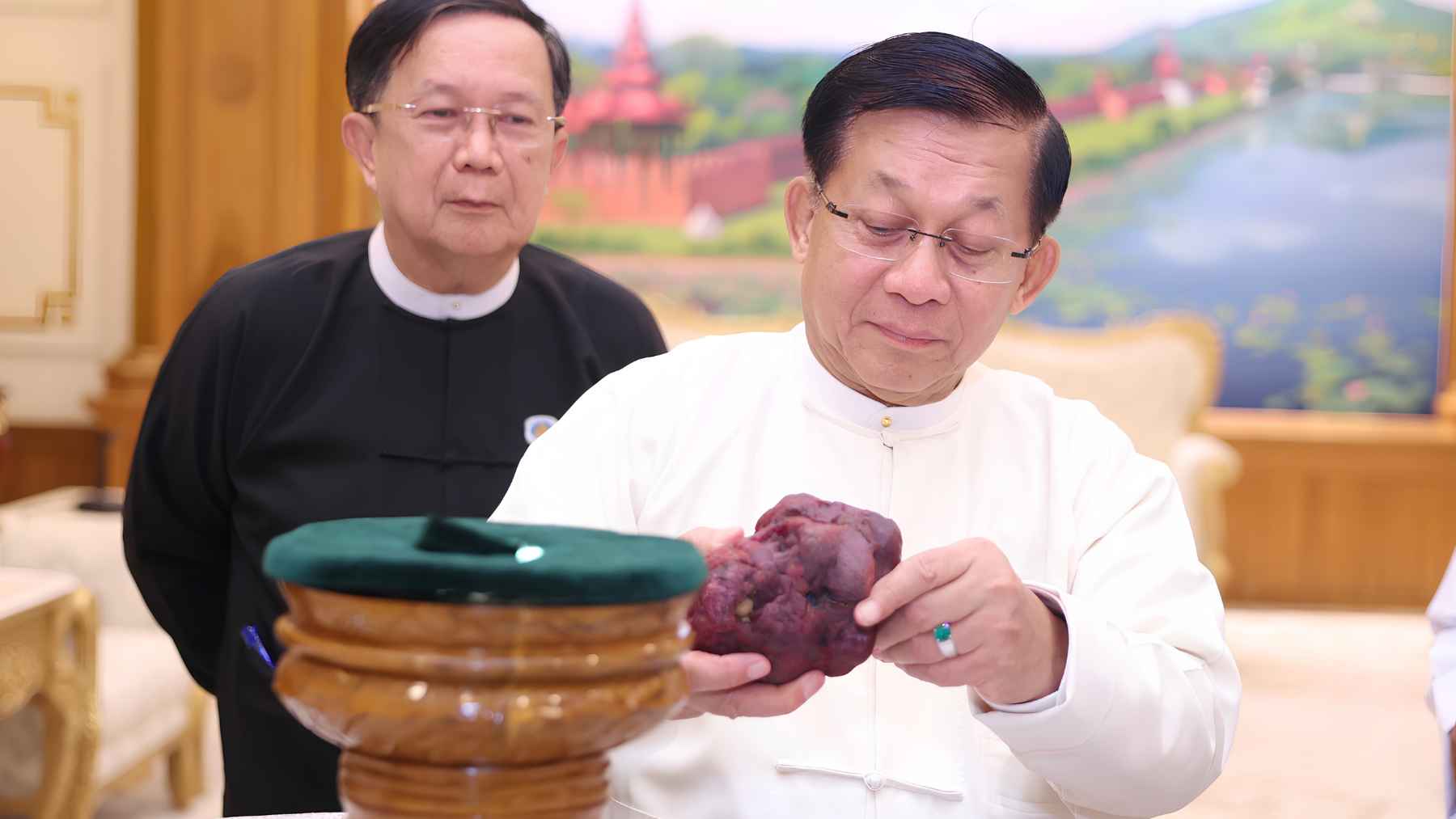
Still, bigger is not always better. Myanmar’s official account said the newly found ruby may be more valuable than the heavier 1996 stone because of its color, clarity, and overall quality. President Min Aung Hlaing and senior officials examined it at the President’s Office in Naypyitaw.
Why color matters
So what makes one ruby more valuable than another? For the most part, color carries the heaviest weight. The Gemological Institute of America says color is the most important factor in a ruby’s value, with the finest stones showing pure red to slightly purplish red tones.
The official description of the Mogok stone points in that direction, though it also adds nuance. The ruby was described as purplish red with yellowish undertones, moderate transparency, and strong glass-like shine. It was also reported to be natural, without treatment or enhancement.
That last part matters. A rough ruby is not yet cut, polished, or shaped into jewelry, so experts still have work to do before anyone can know its true market potential.
Myanmar’s ruby economy
Myanmar produces as much as 90 percent of the world’s rubies, mainly from Mogok and Mong Hsu. That is a staggering share for one country, and it explains why a single discovery there can echo through the global jewelry market.
The same industry that produces coveted gems, however, also carries heavy political baggage. Gemstones are traded through legal channels and smuggling networks, both of which can generate money in a country where state forces and armed groups have fought for decades.
For miners, the work can mean a paycheck in a region with few easy options. For political and military actors, it can mean something much larger. A ruby is not just a stone here. It is also a source of influence.
A minefield of politics
The discovery comes from a region where control has shifted in recent years. The Ta’ang National Liberation Army, known as the TNLA, captured Mogok in July 2024 and operated mines there before control returned to Myanmar’s army under a China-mediated ceasefire agreement concluded late in 2025.
That makes the timing sensitive. A new, nominally civilian government was installed in 2026 after elections that human rights and opposition groups described as a sham, according to the Associated Press. The result kept the army chief behind the 2021 military takeover in power.
This means the ruby is being viewed through two lenses at once. Gem experts see color, weight, and transparency. Political observers see territory, legitimacy, and revenue.
The traceability question
Traceability is the paper trail that shows where a gem came from, who handled it, and whether its sale helped fund abuse or conflict. It sounds dry, but it matters at the jewelry counter. A ring can look beautiful under bright store lights and still raise hard questions about its journey.
Global Witness has warned that Myanmar rubies can help fund military abuses and has urged jewelers to stop buying gems sourced from the country. The group’s Myanmar work has focused on how resource wealth can feed conflict, corruption, and human rights violations.
The U.S. Treasury also sanctioned Myanma Gems Enterprise in 2021, saying the state-owned entity was responsible for gemstone activities including licensing, permits, royalties, and marketing. That move underlined how closely the gem business is tied to the machinery of the state.
What happens next
No official value has been announced for the 11,000-carat ruby. That is not surprising. A rough stone still has to be studied, authenticated, and assessed before experts can judge how much finished gem material it may yield.
The next test may be less about sparkle than trust. International buyers will want proof of quality, but they may also want proof of origin and a clean chain of custody. Without that, even an extraordinary ruby can become difficult to sell in cautious luxury markets.
For Myanmar, the find offers a rare chance to show the world something stunning from Mogok. The trouble is, beauty alone will not answer the bigger questions about conflict, labor, and transparency.
The official report on the discovery has been published in the Global New Light of Myanmar.