Ghana plans to take full control of the Damang gold mine on April 18, 2026, ending foreign-led management at the open-pit site. The government has selected local mining services company Engineers & Planners to take over the lease after it showed access to $505 million in financing, and officials say the aim is to keep the mine running and protect jobs.
Why does a single mine matter so much? Because gold is the country’s economic heartbeat, and the rules around who gets to dig it up are changing fast.
Figures shared by the Ghana Chamber of Mines show the country produced a record 6 million ounces of gold in 2025, while officials also weigh a new royalty system, a per-ounce payment to the state that rises when gold prices rise.
A handover date that changes the story
Gold Fields says the Damang transfer is scheduled for April 18, 2026, after a 12-month lease extension meant to support a “safe and orderly” transition, and CEO Mike Fraser said the company “has had the privilege of operating in Ghana for more than 30 years.”
The company says it restarted mining in May 2025 and delivered a feasibility study to the government in December 2025 that maps out how the operation could continue.
It also reports more than 7,000 employees in Ghana, 99% of them Ghanaian, and says it has invested about $5 billion in the Damang and Tarkwa mines since 2000.
A feasibility study is basically a detailed “can this mine keep paying for itself” report. It looks at the amount of mineable ore, the cost of fuel and equipment, and what upgrades might be needed to keep workers safe.
What Ghana’s mining law says in plain English
Under Ghana’s Minerals and Mining Act, minerals in their natural state belong to the republic and are held in trust for the public, with the minister able to grant, suspend, revoke, or renew mineral rights on the president’s behalf.
The same law sets a typical mining lease term of up to 30 years, allows applications to extend that term, and gives the government a 10% free carried interest in large mining projects.
In everyday terms, a mining lease is a long-term permit, not a forever deed. When it expires, the government gets to decide what happens next, and that can include a new operator or a new deal.
That is the legal foundation behind the Damang handover. It also explains why companies now treat renewals as negotiations, not routine paperwork.
Damang’s output and its end-of-life challenge
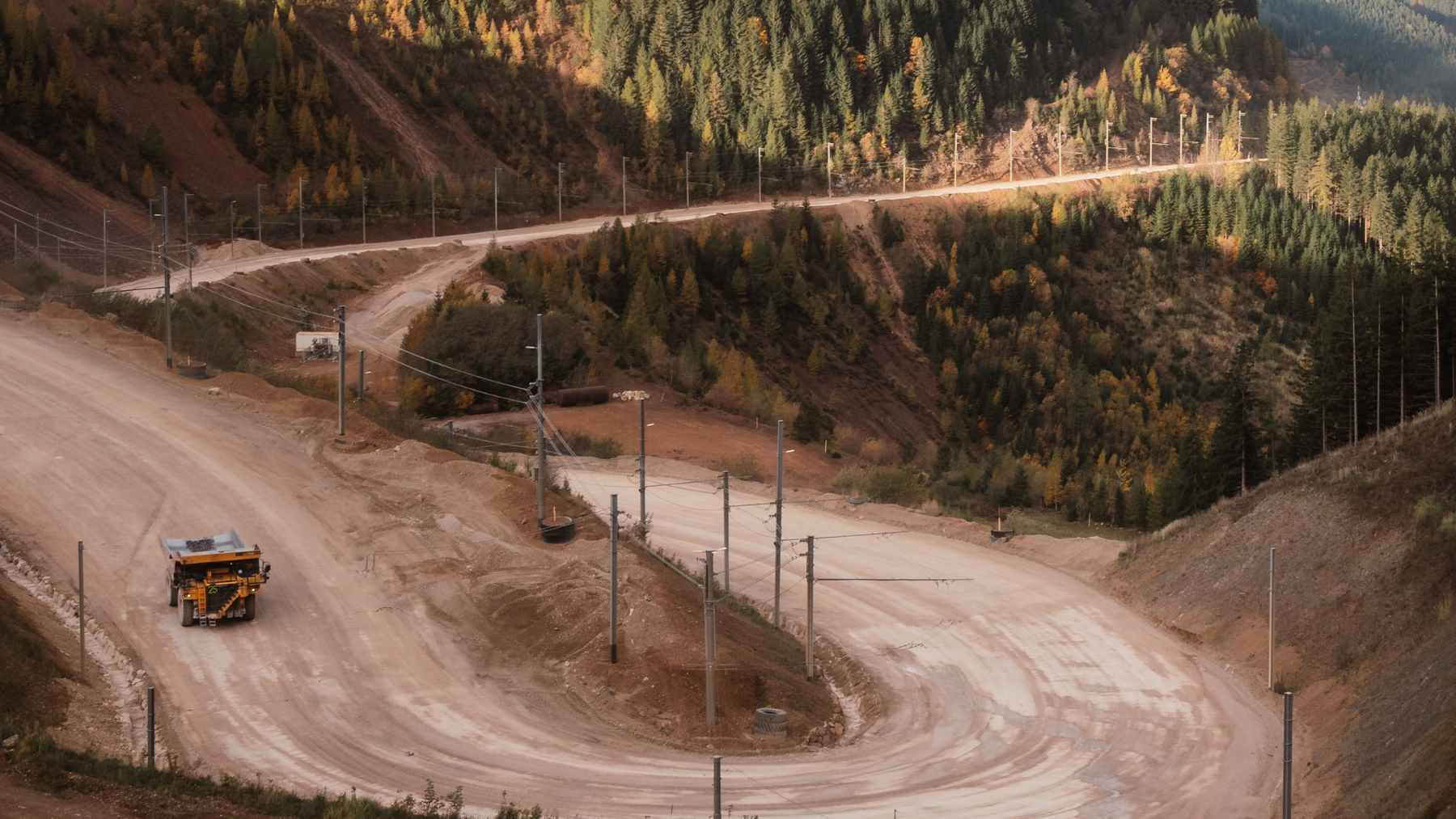
Damang is in Ghana’s Western Region and is mined in the open, using large trucks and terraced pit walls rather than deep tunnels. In 2024, it produced about 135,000 ounces of gold, roughly 6% of the operator’s total output, even though mining had stopped in 2023 and the site was mainly processing stockpiles.
When Ghana rejected the lease extension in April 2025, the company said it had been instructed to cease operations and vacate the lease area when the lease expired.
Stockpiles are pre-dug rock that has already been blasted and moved, waiting to be processed for any gold still inside. They can keep a plant busy for a while, but they do not replace the need for fresh mining if a company wants years of production.
That is why the question of “reserves” keeps coming up. Reserves are the part of a deposit that engineers believe can be mined profitably, not just gold that might exist somewhere underground.
Choosing a new operator is the easy part
Before Ghana picked a successor, the regulator said it was assessing three local bids and that reviving Damang could require between $600 million and $1 billion in investment. Isaac Tandoh, the acting head of the Minerals Commission at the time, said, “A decision is expected as soon as possible,” as the bidding process moved forward.
That price tag is not just a line in a spreadsheet. A mature mine may need more drilling to prove reserves, more waste rock removal to reach deeper ore, and sometimes a major refresh of trucks, pits, and processing gear.
So even after the paperwork is signed, the hard part begins. The new operator has to show, year after year, that it can fund the plan and keep production steady.
A broader push for Ghanaian control
The Damang shift is part of a larger policy push, not a one-off move. Reuters has reported that revised local ownership rules require surface mining to be carried out by fully Ghanaian-owned firms, while underground mining must be done by companies with at least 50% Ghanaian ownership, with a December 2026 deadline and possible sanctions for firms that miss it.
Supporters say this builds local capacity and keeps more money in-country, from wages to service contracts. Critics argue it could raise costs for some mines and reduce flexibility, especially when safety and efficiency depend on specialized teams.
What happens next for jobs and investors
When the transitional plan was announced in April 2025, Ghana’s presidency said a new 12-month mining lease would be issued to the operator’s local unit, pending parliamentary ratification.
The same statement said both sides would also advance talks on renewing the lease for the larger Tarkwa mine, due in 2027, while jointly supervising processing of existing stockpiles during the Damang transition.
For families near the mine, the details can feel very real. A steady operation usually means steady paychecks, busy roadside markets, and apprenticeships that lead to actual work instead of another dead end.
For investors, the key test will be predictability. If the rules are clear and consistently applied, companies can plan, but if they shift suddenly, even a high gold price may not be enough to justify long-term spending.
The main press release has been published on Gold Fields’ website.