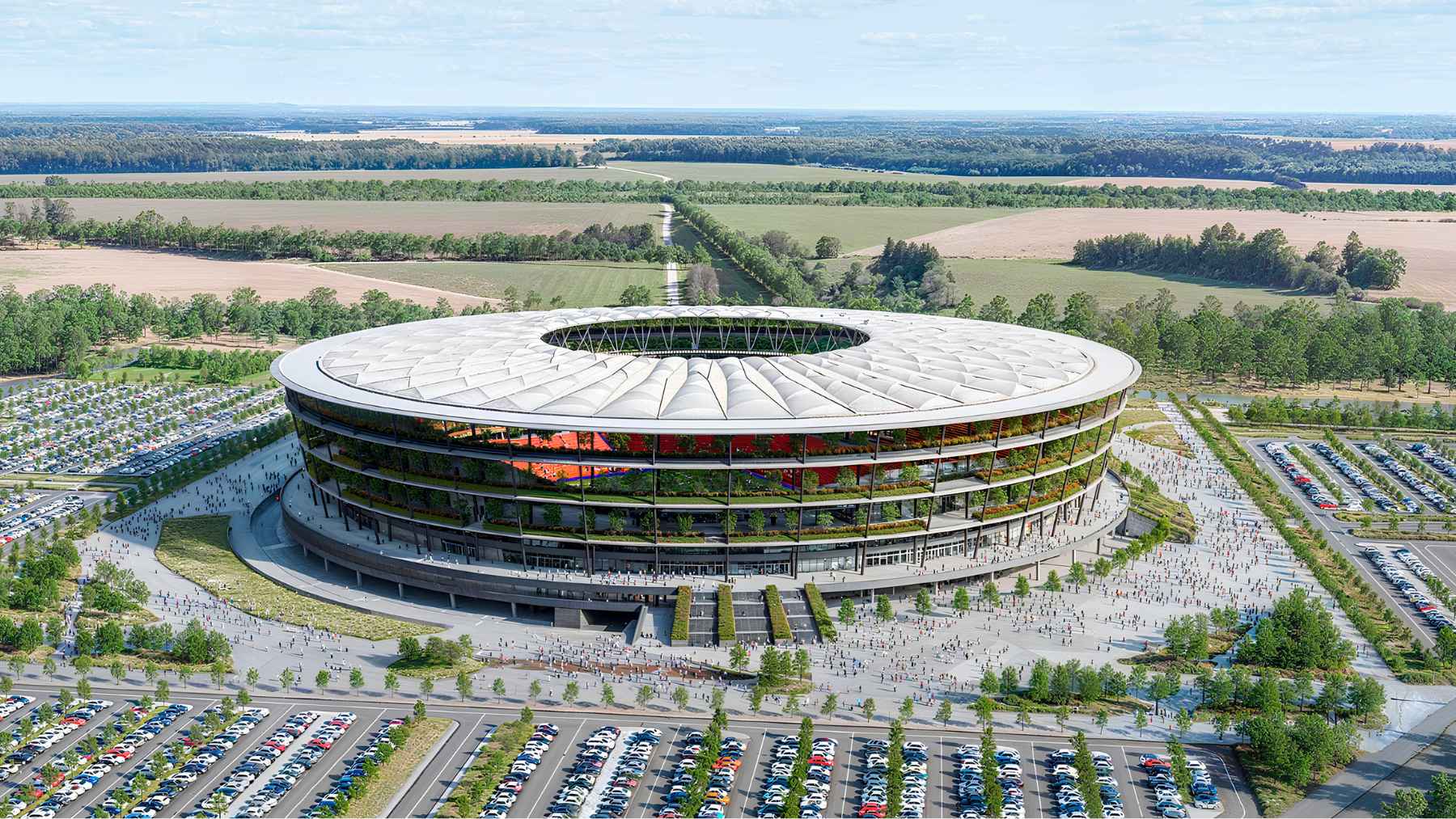
Have you ever walked into a stadium and felt more like you were entering a park than a sports arena? Serbia is betting roughly $1.2 billion that this is exactly what a national football venue can become, with a new arena in Belgrade that is being billed as the world’s first “garden football stadium.”
The Serbia National Football Stadium has now passed a visible construction milestone after China State Construction Engineering Corporation, known as CSCEC, completed the first lift of its steel structure. When finished, the venue is planned for more than 52,000 spectators, about 818,000 square feet of total floor area, and about 13,900 U.S. tons of steel.
A stadium wrapped in gardens
The big idea is simple, but the build is not. Instead of a normal concrete or glass shell, the stadium is designed with suspended green rings that wrap around the arena like a living balcony.
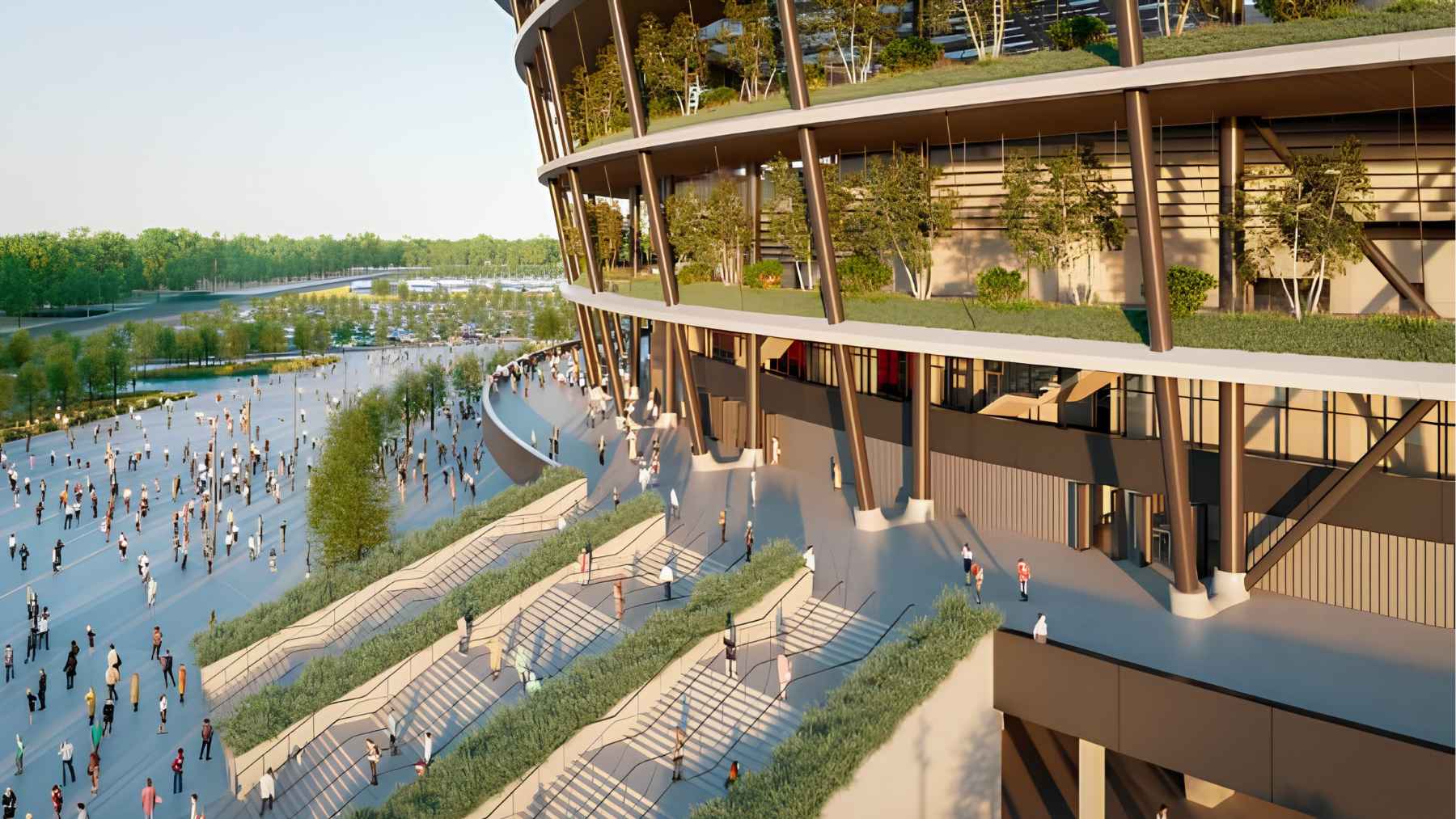
Fenwick Iribarren Architects, the Spanish studio behind the design, says the facade is made of four suspended rings connected by cables, with garden areas built into them.This means fans would move through terraces with trees and shrubs, not just blank walls and concession signs.
Cafes, kiosks, dining areas, and walkable outdoor zones are also planned around the venue. The idea is to make the stadium edge feel closer to a public park than a closed sports box.
Why the lift matters
A steel lift may sound like a dry construction update. However, in this case, it is the moment when the most unusual part of the building begins to move from drawings into real life.
The company said the first hoisting marks the start of the stadium’s steel structure construction, and that it is handling the design, fabrication, and installation of that steel work. For a cable-supported stadium, the steel frame is not only holding up seats and a roof. It is also carrying the garden terraces.
That matters because living greenery is heavier and trickier than it looks. Soil, irrigation water, plants, and maintenance access all add load, and that load changes as the gardens mature.
The numbers are big
The stadium’s scale is hard to miss. It is planned for more than 52,000 seats, and it will sit in Surcin, roughly 8.4 miles from central Belgrade and about 3.4 miles from Nikola Tesla Airport.
The full project area is about 79 acres, with 4,500 parking spaces listed in the design materials. That gives the venue room to become more than a football ground, especially because it is being developed near the future Expo 2027 site.
The price tag is just as large. StadiumDB reports that early planning discussed a cost near $290 million, but by the time construction began the amount had risen to around $1.1 billion for the stadium and accompanying facilities.
Why Serbia wants it
For Serbia, this is about more than building a pretty stadium. The country wants a modern home for its national football team that can meet the requirements for major FIFA and UEFA events from the beginning.
The finished venue is expected to be the only stadium in Serbia to meet both FIFA World Cup and UEFA European Football Championship standards. That is a major point for a football country that has often used Red Star’s Rajko Mitic Stadium for national team matches.
Could Serbia really fill a 52,000-seat arena often enough to make the investment feel worthwhile? That is one of the questions following the project. StadiumDB notes that critics have raised concerns about the high cost, regular attendance, and long-term profitability.
China’s role in the build
The project also shows how deeply Chinese state builders are involved in Serbia’s largest sports infrastructure push. Power Construction Corporation of China, known as PowerChina, is the main contractor, and the groundbreaking ceremony was held on May 1, 2024.
Serbian President Aleksandar Vucic attended the ceremony and called it a “significant construction endeavor.” The event also highlighted plans for Expo 2027 facilities, which are being built in the same wider development area.
A long road to 2026
The idea did not appear overnight. Planning for a national stadium began more than a decade ago, and in 2018, Serbian officials settled on Surcin as the location after years of debate over whether to build new or upgrade an existing club stadium.
The delay tells its own story. COVID-19, changing designs, inflation, and the decision to turn a normal stadium into a garden stadium all helped push the project into a much bigger category than first imagined.
The current schedule points to completion by the end of 2026. If that date holds, Serbia will not just gain a new football home. It will gain a landmark that tries to mix sport, public space, and greenery in a way few stadiums have attempted.
What fans may notice
For fans, the biggest difference may be the walk toward the seat. Instead of a hard outer wall, the stadium is supposed to offer a softer edge, with greenery filtering the experience before the noise of the crowd takes over.
Services engineers have also been studying how the open sides and membrane roof will affect sound and announcements. In plain English, that means the designers are trying to make the stadium feel loud for supporters while still making safety messages clear.
The result is still on paper and steel for now. If the gardens grow as planned, however, the Serbia National Football Stadium could feel less like a sealed arena and more like a civic gathering place with a pitch at its center.
The official announcement has been published by China State Construction Engineering Corporation.