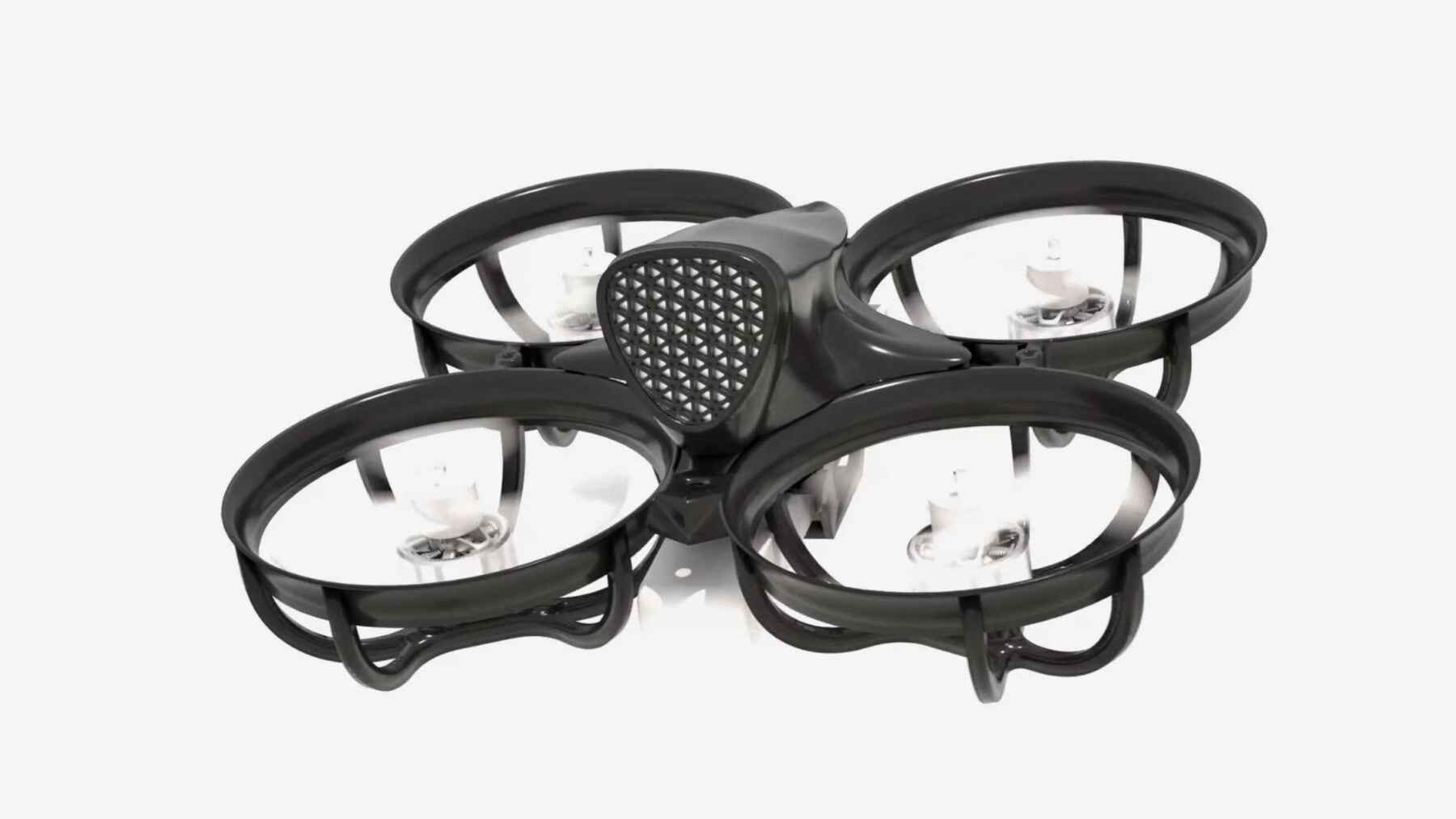
A palm-sized drone built to hunt mosquitoes has completed what its developer calls its first autonomous air-to-air insect kill. Footage released on July 14, 2026, shows the 1.4-ounce aircraft tracking and striking a flying moth without a person steering the final interception.
That is an eye-catching engineering step, but it is not yet proof that the machine can clear mosquitoes from a backyard, much less eradicate them from cities. The target was not a mosquito, and the public demonstration did not include independent data on accuracy, kill rates, safety, or performance in wind, rain, and crowded outdoor spaces.
A first kill with a catch
The machine is being developed by Tornyol Systems, a Paris-based startup founded by engineers Alex Toussaint and Clovis Piedallu and backed by Y Combinator. Toussaint described the moth interception as “a big step towards completely eradicating mosquitoes” while congratulating the engineering team behind the test.
The company has not publicly explained why it used a moth instead of a mosquito for the demonstration. Whatever the reason, the distinction matters because one successful interception is not the same thing as repeated mosquito control in the messy conditions of a real garden.
How the drone hears insects
The system does not depend mainly on a camera. Its ultrasonic phased-array sonar sends out sound pulses beyond normal human hearing, then studies the returning echoes to estimate where a small flying object is moving. It works like a tiny sound-based map that updates while the insect changes direction.
The LeSonar2 base station uses 380 smartphone-style microphones and an Artix-7 processor, together with ultrasonic parts similar to those found in car parking sensors. The company says the system can measure movements of roughly four-thousandths of an inch and recognize insects through patterns created by their beating wings, with detection reaching up to about 26 feet depending on the target.
Once the software identifies and locates the target, control algorithms guide the tiny quadcopter toward it while avoiding walls. The final method is direct and physical. The drone collides with the insect rather than spraying pesticide or drawing it into an electrified trap.
Built from an earlier experiment
The idea became public at Hackaday Supercon 2024, where Toussaint explained how commercially available electronics could detect and potentially kill mosquitoes. Since then, the team says it has miniaturized the sensing and control hardware enough to pair the base station with a fast, toy-sized drone.
The word “autonomous” needs a little context. The interception can be directed automatically, but reports on the current setup say a separate computer still sends commands and performs part of the processing. The company has said it is moving that work onto embedded hardware, which would make the product more self-contained.
Why mosquitoes are the target
The health case is serious. The World Health Organization says diseases carried by vectors such as mosquitoes account for more than 17% of infectious diseases and cause more than 700,000 deaths each year. Malaria, dengue, West Nile, Zika, and chikungunya are among the illnesses mosquitoes can spread.
The Centers for Disease Control and Prevention calls the mosquito the world’s deadliest animal and notes that more than 3,700 types exist. In the contiguous United States, West Nile is the leading mosquito-borne disease and causes about 2,000 illnesses in a typical year. This is about far more than itchy bites during those sticky summer evenings we all know.
Eradication remains a big leap
The startup has said that 10 drones could eventually suppress mosquitoes across about 0.39 square miles and dramatically reduce control costs. Those figures remain company projections, however, and its earlier public material described simulations, separate subsystem tests, and continuing work to combine the pieces into one functioning platform.
The moth video moves that story forward, but several questions remain unanswered. How many real mosquitoes can one drone identify and kill per hour? Can it avoid bees, butterflies, and other harmless flying insects while operating around trees, patio furniture, pets, children, and the noise of everyday life?
Chemical-free control could be valuable in places where residents or authorities want to reduce repeated insecticide spraying. But “chemical-free” does not mean impact-free, and eliminating every mosquito would be a far broader objective than targeting the species known to spread major human diseases.
A product is already being offered
U.S. customers can place a refundable $100 reservation for the drone and its base station. The company’s preorder page lists a $50 monthly subscription or a one-time purchase of $1,100, although a reservation is not the same thing as a field-proven product ready for immediate use.
For homeowners, that price puts the system closer to a premium smart-home device than a simple bug zapper. For public health agencies, the more important figures will be the cost per mosquito removed and the cost per infection prevented, supported by repeatable trials rather than one dramatic clip.
What must happen next
The next convincing milestone would be repeated autonomous interceptions of actual mosquitoes. Outdoor testing would then need to report species identification, accidental targeting, hourly kill rates, battery cycling, noise, safety, and measurable changes in local mosquito numbers.
Independent researchers would also need enough technical information to reproduce the results. That is how an intriguing prototype becomes reliable evidence and, eventually, a practical mosquito-control tool.
For now, the tiny drone has crossed one narrow but interesting threshold. It has shown that a small autonomous aircraft can find and strike a flying insect in midair. Turning that moment into safer evenings, fewer bites, and measurable disease prevention will be the far harder flight.
The demonstration was published by Tornyol Systems on X.