Open a beverage cooler on a sticky summer afternoon and the cold drinks inside seem almost effortless. Hidden between the hard outer walls, however, is usually petroleum-based foam, and a University of Maine graduate student is testing whether wood can do nearly the same job.
Quazeem Tiamiyu and his colleagues have created a lightweight insulation made from cellulose nanofibrils, wood fiber, finely ground wood flour, and a foaming surfactant. Early thermal-conductivity tests came close to polyurethane, but durability, manufacturing, and full ice-retention testing still stand between the laboratory prototype and the coolers people carry to beaches, ball games, and campsites.
The hidden layer inside a cooler
Conventional beverage and ice-chest coolers commonly rely on polyurethane or expanded polystyrene foam to slow heat moving through their walls. Tiamiyu’s project focuses on replacing that cavity insulation rather than redesigning the entire cooler.
The Occupational Safety and Health Administration (OSHA) notes that isocyanates are raw materials used to make polyurethane products, and hazardous exposure can cause skin irritation, breathing difficulty, occupational asthma, and other lung problems. The project’s worker-safety argument therefore concerns the raw chemicals and production stage, rather than claiming that normal use of a finished cooler creates the same exposure.
How wood becomes foam
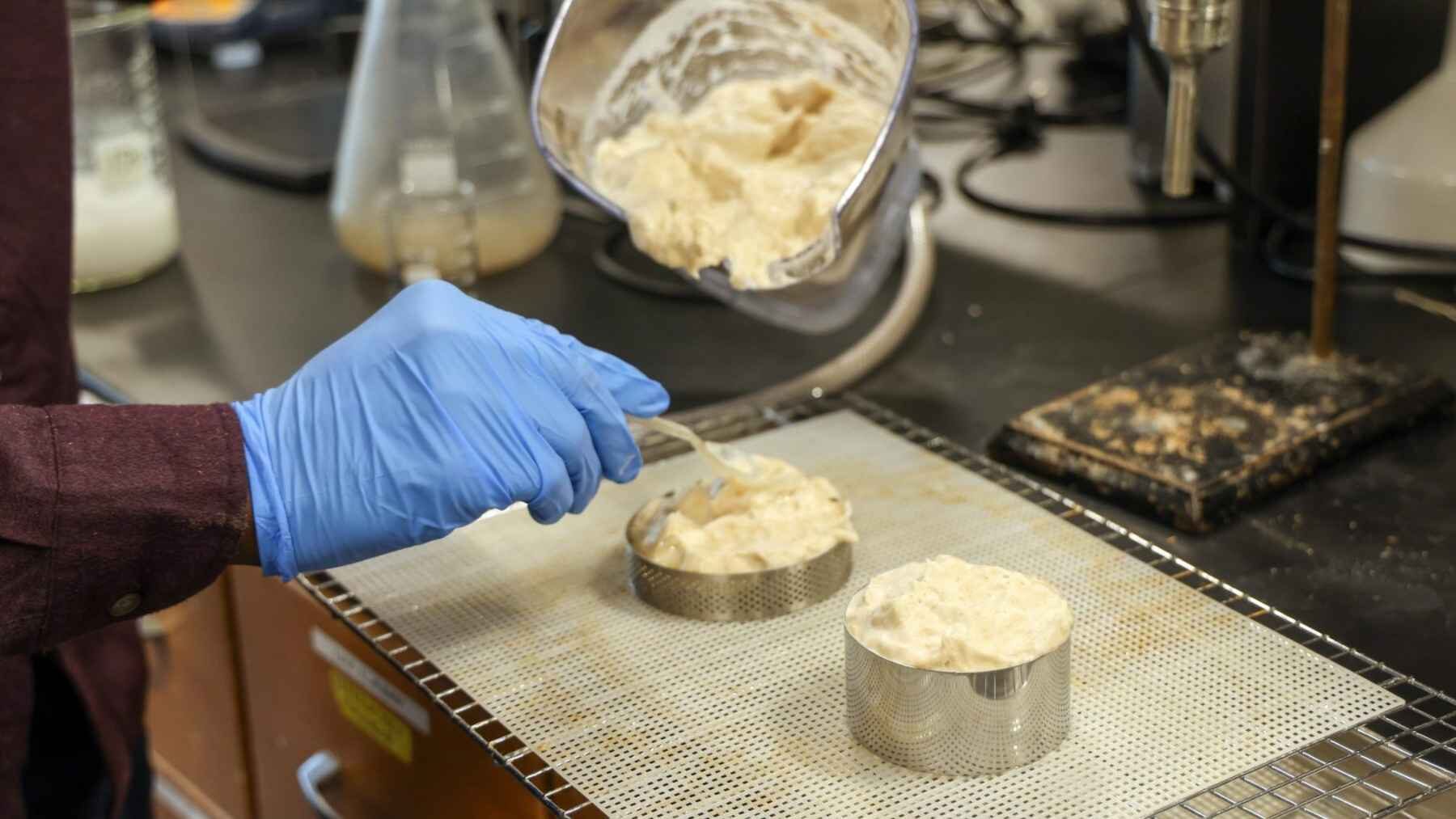
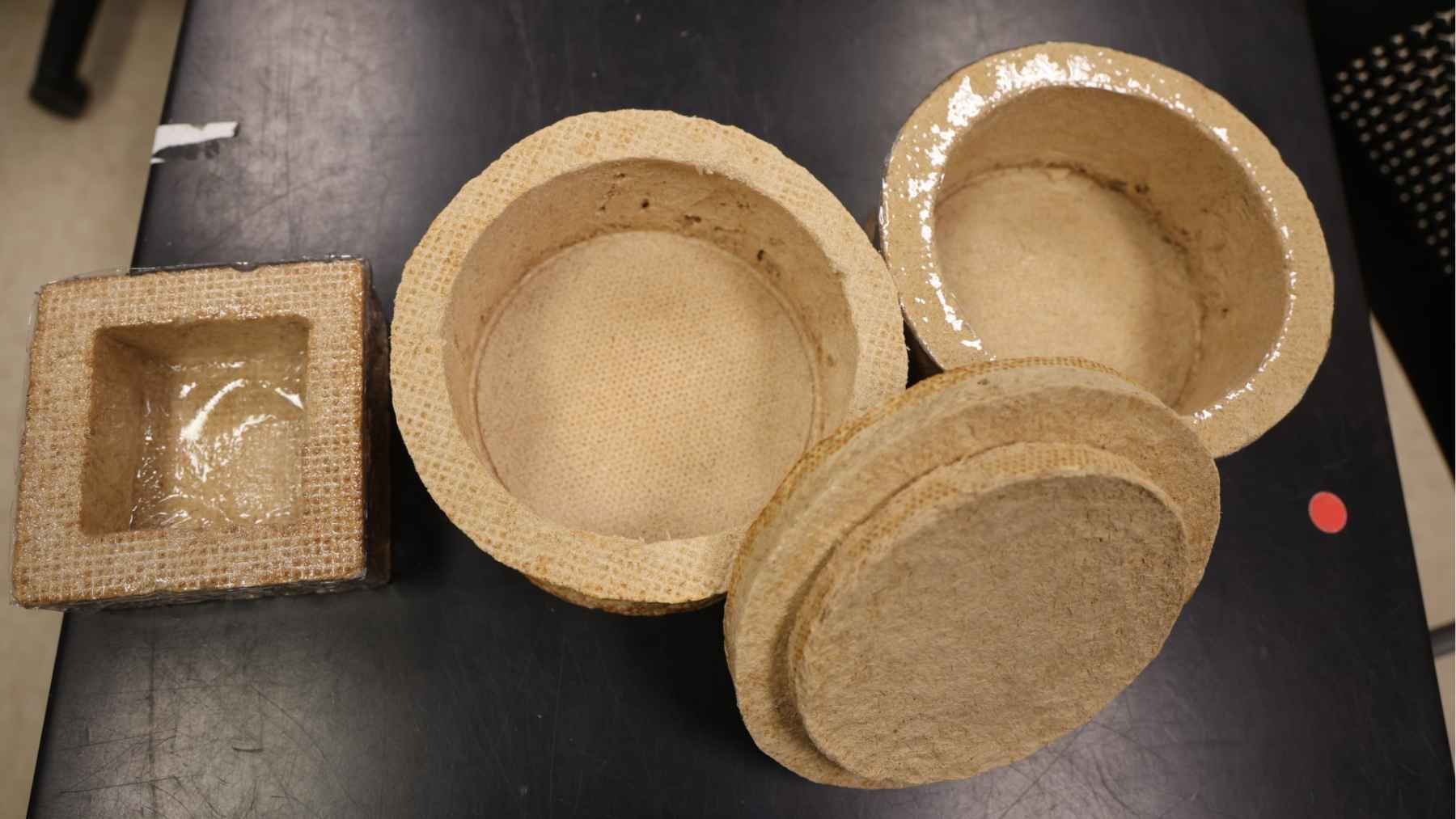
The recipe is easy to list, though not yet easy to manufacture. Tiamiyu blends cellulose nanofibrils with wood fiber, wood flour, and a surfactant, pours the wet foam into cooler-shaped molds, drains away water, dries the insert, and encloses it in a protective shell.
Cellulose nanofibrils are extremely thin strands separated from wood pulp. In this material, they act as both binder and stabilizer, building a web that holds the larger wood particles together while creating the light, porous structure needed for insulation.
Thermal performance is the breakthrough
The first major result is the one cooler buyers would care about most. UMaine reported that the wood foam’s thermal conductivity was nearly identical to that of polyurethane in early testing, and Tiamiyu said, “We actually found that we can compete with polyurethane foam.”
Neither the official announcement nor the available conference abstract gives a numerical conductivity value for this specific cooler insert. The March 2026 abstract describes the research as ongoing and says the team is still optimizing thermal performance, mechanical strength, and compatibility with cooler cavities, so the result is promising without yet being a finished-product guarantee.
The harder problem is making it tough
A cooler gets dropped, squeezed into a packed trunk, and sometimes used as a makeshift seat. If this wood foam is crushed or structurally damaged, its insulating ability can fall, which is why the team is working to improve its mechanical performance and long-term durability.
Tiamiyu also plans ice-retention tests to compare how long the prototype keeps ice against a conventional cooler. At the end of the day, that full-product test will matter more to most families than a laboratory conductivity reading because it recreates the lid openings, warm air, and summer heat of everyday use.
Manufacturing could decide its future
Polyurethane has a major industrial advantage because manufacturers can inject it as a liquid directly into a cooler shell, where it expands and hardens in place. The wood-based alternative currently requires wet processing, molding, water removal, drying, and separate encapsulation or fitting, which makes production more complicated.
UMaine does have unusual scale-up capacity. Its Process Development Center can continuously produce as much as four tons of cellulose nanofibrils per day at pilot scale, but that supply does not by itself solve the remaining drying, installation, and production-efficiency questions.
A remoldable foam could change the equation
Tiamiyu wants to learn whether finished foam can be dispersed in water and molded again into new shapes. Should that work, manufacturers could receive prepared material and reshape it for different cooler cavities instead of producing every insert from the original wet mixture.
For now, that idea remains a research objective rather than a proven recycling system. Remoldability could improve logistics and reuse, but it must work repeatedly without sacrificing strength or insulation.
Not a plastic-free cooler
The current prototype replaces the foam core, not every plastic component. UMaine says the dried wood insert is enclosed in a protective plastic shell, so the most accurate description is bio-based cooler insulation rather than a fully plastic-free cooler.
The public project materials cited here do not include a life-cycle assessment for the finished product. They support the goal of reducing fossil-derived foam and using wood-based feedstocks, but they do not yet establish the prototype’s total emissions, commercial recyclability, or behavior after years in real-world disposal systems.
Wood foam may have a bigger future
The cooler project sits within a broader field of lignocellulosic materials research. In a related 2024 peer-reviewed study, UMaine researchers produced low-density foams from wood-derived fibers and cellulose nanofibrils with thermal conductivity between 0.031 and 0.055 watts per meter-kelvin, pointing to possible uses in packaging, buildings, and acoustic insulation.
Still, the next milestone is refreshingly ordinary, with the foam needing to survive bumps, hold ice through a hot day, and fit a production line without making the cooler impractical or unaffordable.