Night falls, solar panels stop producing, and emergency crews often turn to fuel-powered generators and floodlights. A California startup now wants to offer another option by redirecting sunlight from orbit to a chosen place on Earth for a few minutes.
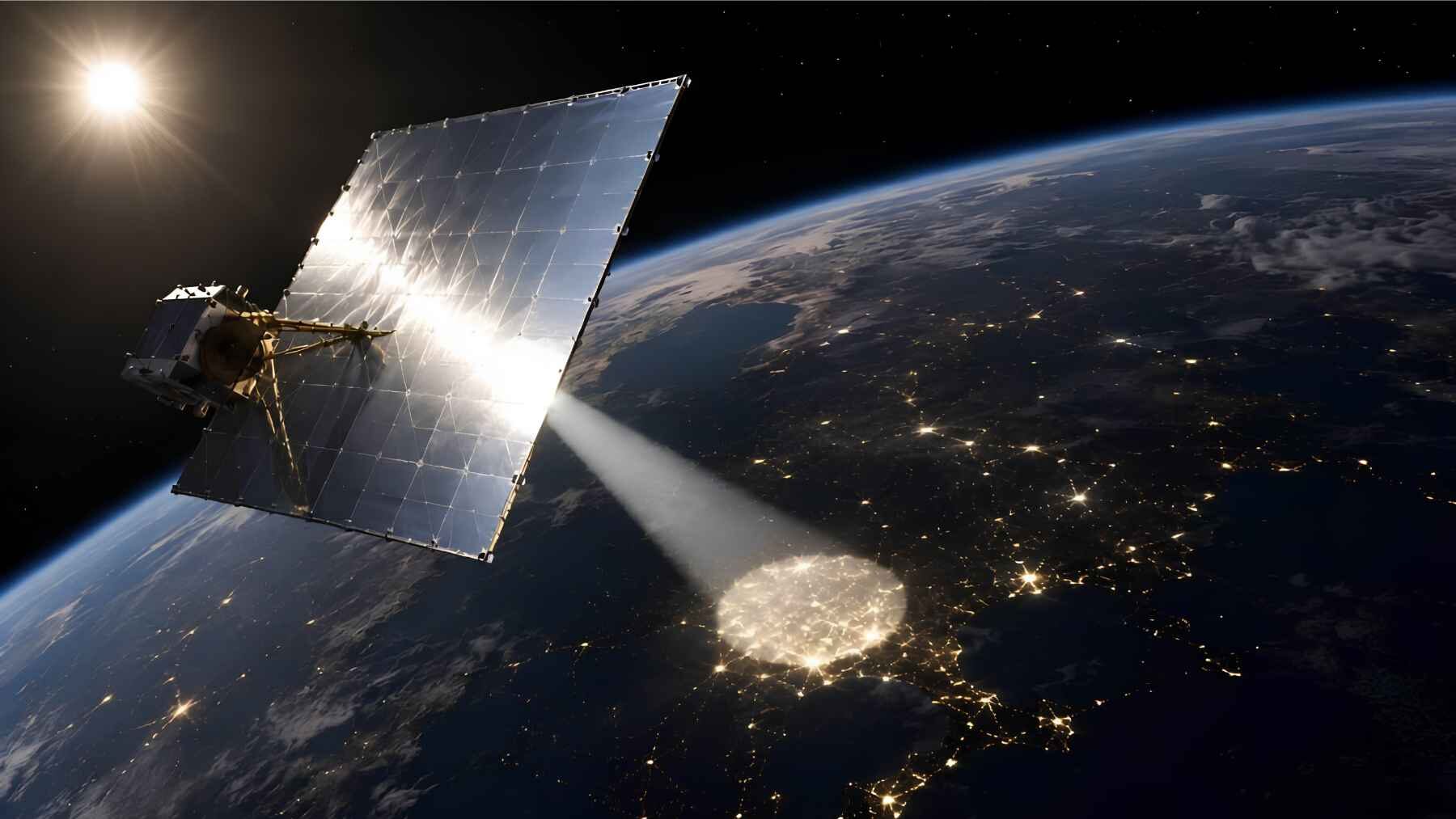
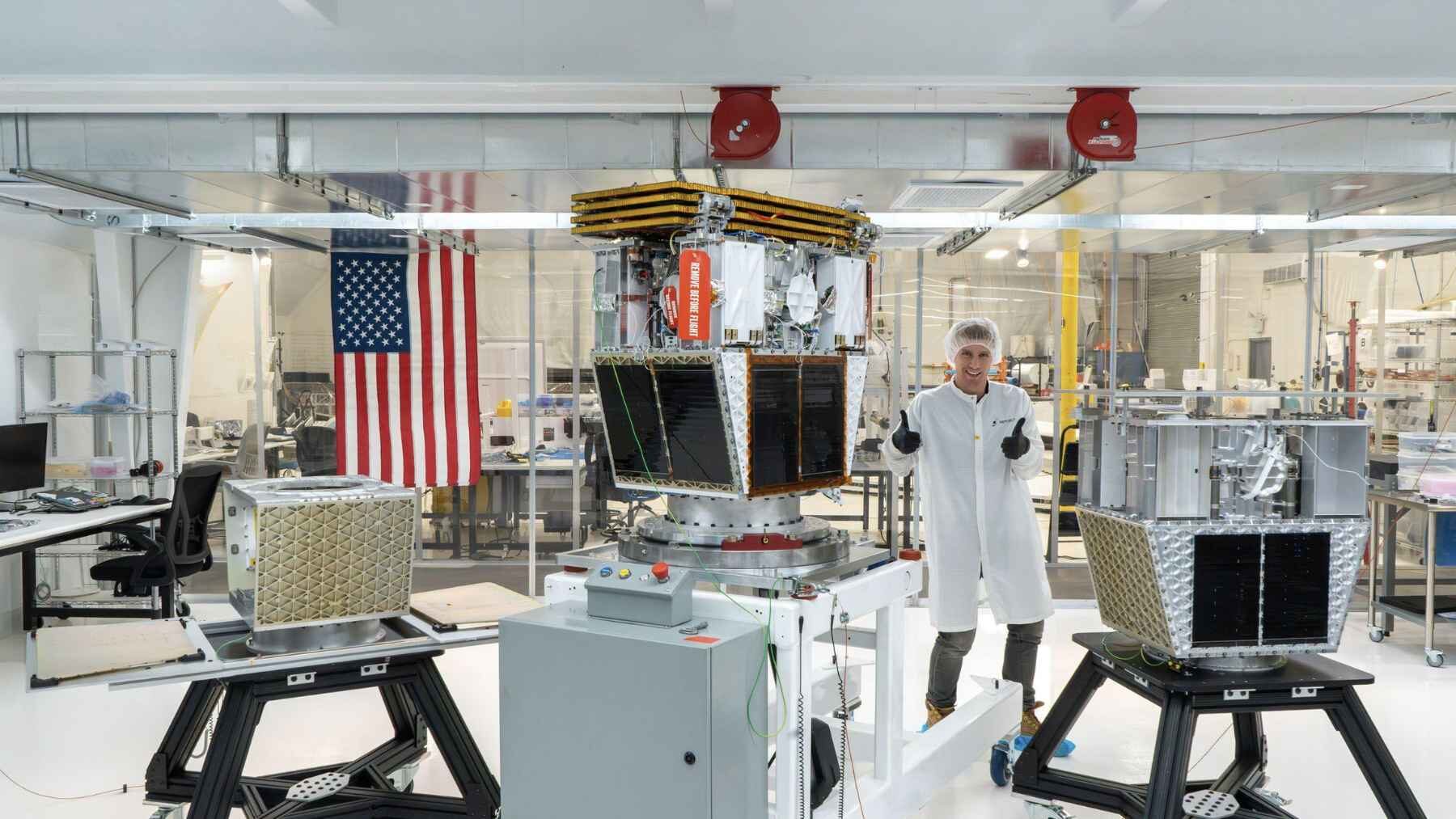
On July 9, 2026, the Federal Communications Commission authorized Reflect Orbital to deploy and operate Earendil-1, one experimental satellite carrying a reflector about 59 feet by 59 feet. From an orbit roughly 388 miles above Earth, the spacecraft is intended to create a moonlike patch of light about 3.1 miles wide while testing whether that footprint can be aimed and controlled accurately.
A mirror that follows the Sun
Earendil-1 will not make electricity or store solar energy. Its thin reflective film will act like a giant heliostat in space, turning so it can intercept sunlight while the satellite remains sunlit and redirect that light toward a location that has already entered darkness.
Because it moves quickly through low Earth orbit, a single pass would illuminate a target only briefly. Reflect Orbital says its planned 2026 demonstration is designed to provide around 0.1 lux for up to five minutes, equal to roughly 0.009 foot-candles and comparable to a clear night under a full moon.
The light can be removed from the ground by changing the spacecraft’s orientation. That steering ability is at the heart of the mission, since the test must show that the reflector can unfold, point accurately, hold its footprint, and turn away when service ends.
The first test is about control
Reflect Orbital’s biggest commercial pitch is straightforward. Shine additional sunlight onto photovoltaic plants after sunset, and panels could keep producing when households are cooking dinner, air conditioners are still running, and the electric bill often feels most painful.
But the first mission is not expected to prove that business case at a useful scale. The company’s own roadmap labels its 2026 energy service as “Testing,” while the FCC calls Earendil-1 a “limited, short-duration technology test.”
Moon-level illumination may help people see, but it does not represent the much brighter future service the company describes for energy production. The early mission is a test of deployment, guidance, and measurement. The power promise comes later, provided stronger systems can be shown to work safely.
Where orbital light might help
The company also points to disaster zones, search-and-rescue missions, remote industrial sites, nighttime construction, and critical infrastructure. In places where roads are blocked or the grid is down, temporary light without trucks, cables, or diesel generators could sound appealing.
Still, an orbital spotlight cannot be summoned without limits. Coverage would depend on the satellite’s path, cloud cover, atmospheric conditions, and whether the mirror can stay precisely aligned as it crosses the sky. A five-minute window may help a planned operation, but it is not the same as dependable all-night lighting.
That distinction matters. The concept could become a useful emergency tool, or it could remain a technically impressive service with narrow operating windows and uncertain economics. Earendil-1 is supposed to provide the real-world data needed to tell the difference.
Astronomers see a different risk
The approval followed comments from more than 1,800 people and a formal petition from the American Astronomical Society. Astronomers worry that direct reflections and light scattered through the atmosphere could brighten the background sky, cross telescope images, interfere with sensitive instruments, or create eye-safety concerns for people observing through large telescopes.
The AAS said it was “dismayed” by the ruling, but the FCC denied its petition. The commission concluded that the risks from one short-duration satellite were unlikely to justify blocking the mission, and it also said that most optical and environmental effects fell outside its authority because the license primarily governs radio communications and orbital debris.
That is the unusual part of this decision. The government approved the communications needed to fly and steer the spacecraft, but it did not treat the order as a full environmental endorsement of shining sunlight onto Earth’s night side.
Darkness is part of the ecosystem
DarkSky International and other environmental groups argue that nighttime darkness is not empty space waiting to be used. Artificial light at night can affect navigation, migration, feeding, reproduction, and circadian rhythms across many species, although the exact impact of one brief moon-level pass has not yet been established.
The FCC found that the existing record did not demonstrate a significant environmental effect from a single limited test. But this is where the experiment becomes more than an engineering exercise. Researchers will need data on skyglow, beam spill, brightness outside the target, and any response from nearby wildlife.
Reflect Orbital says it will avoid observatories and sensitive habitats, publish orbital positions, limit the duration of service, and turn the light off by rotating the mirror. The license also holds the company to commitments to coordinate with NASA, the National Science Foundation, and the wider astronomy community.
One satellite is not 50,000
The FCC order applies only to Earendil-1. It does not authorize the commercial constellation on Reflect Orbital’s public roadmap, which grows from two satellites in 2026 to more than 50,000 by 2035, and any future application would face a separate review.
Scale changes the equation. One moving patch of full-moon-level light for a few minutes is different from fleets handing targets from one satellite to the next, potentially extending illumination for hours. That is why this first flight will be watched as closely for its side effects as for its engineering success.
Earendil-1 has been approved, but it has not yet proved that sunlight on demand is practical, economical, or environmentally acceptable. The real question is whether rules and safeguards can keep pace should the idea succeed.
The order was published by the Federal Communications Commission.