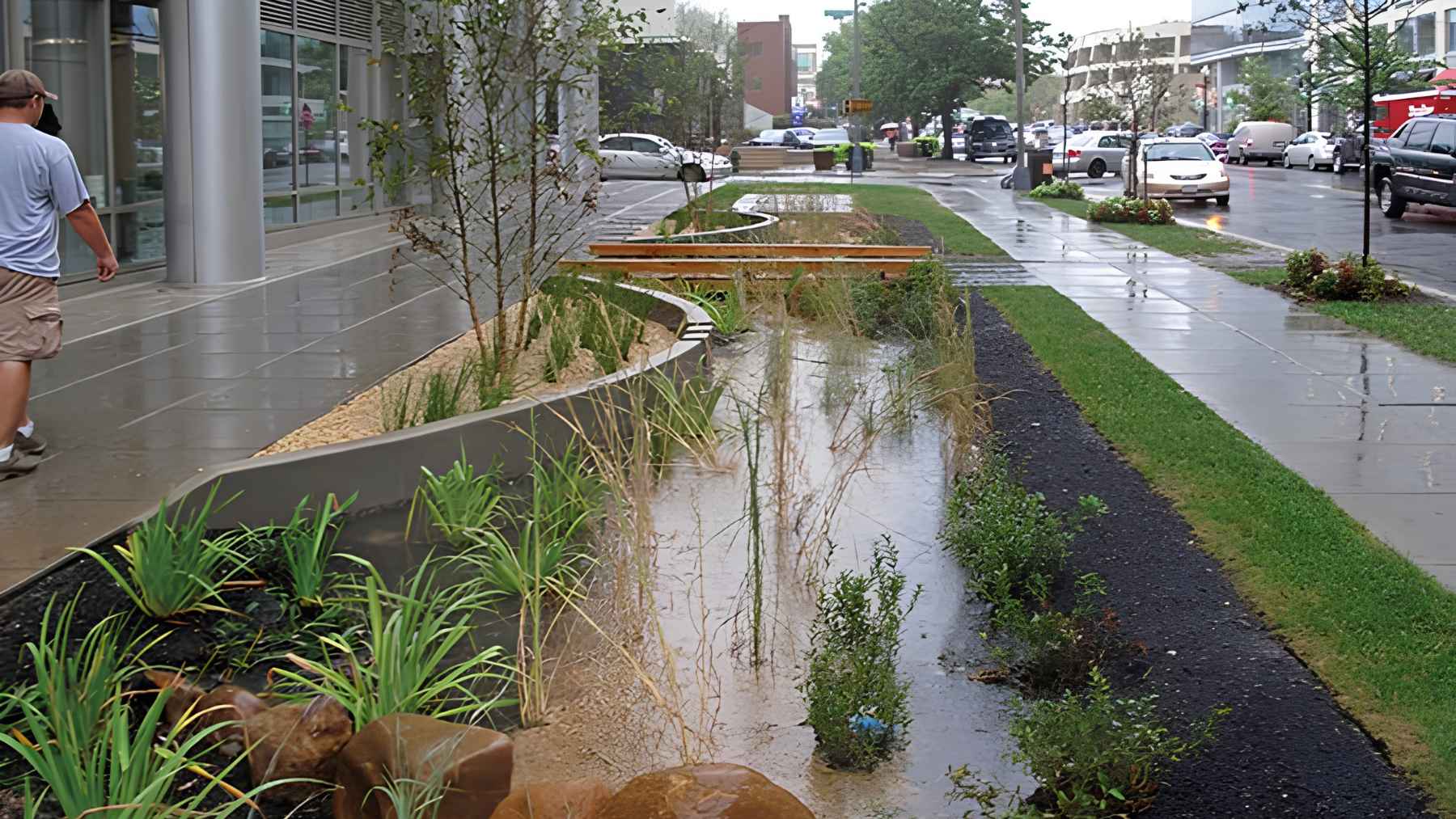
Cities around the world are trying to become more like sponges. The idea sounds simple enough, with more parks, rain gardens, green roofs, wetlands, porous soil, and smarter drains helping streets soak up stormwater before it floods homes, subways, and highways.
However, a growing body of research points to a harder truth. Sponge cities can reduce flooding and make urban life healthier, but they are not magic, especially as climate change helps turn ordinary rainstorms into sudden, high-volume downpours.
Why cities flood
Most modern cities were built to move water away as fast as possible. Roads, sidewalks, parking lots, and rooftops are usually made of concrete, asphalt, and other hard surfaces that do not let much water sink into the ground.
That is why a heavy storm can turn a street into a stream in minutes. Drexel University civil engineer Franco Montalto has described the problem as cities having “essentially sealed the surface of the landscape,” leaving rain with fewer places to go.
Older sewer systems add another layer of risk. In New York City, about 60% of the city uses a combined sewer system, meaning stormwater and sewage flow through the same pipes toward treatment plants. During heavy rain, that mix can overflow into local waterways.
What sponge cities do
A sponge city tries to slow water down instead of pushing all of it into pipes at once. This means rain gardens along curbs, green roofs on buildings, artificial wetlands, tree-lined medians, and basins that temporarily hold water.
Can a park really help during a storm? Yes, to a point. Soil, roots, and vegetation can absorb water, filter pollution, and reduce the amount of runoff rushing into streets and sewers.
The U.S. Environmental Protection Agency says green infrastructure can capture and absorb stormwater while filtering pollutants that would otherwise wash into streams, lakes, and beaches. Urban trees can also reduce stormwater runoff by absorbing a share of annual rainfall.
Copenhagen’s warning
Copenhagen became one of the best-known examples after a devastating cloudburst in July 2011. More than 5 inches of rain fell in parts of the Danish capital, causing damage estimated at more than $1 billion and pushing officials to rethink flood planning.
The city responded with a cloudburst management plan built around a mix of gray and green infrastructure. That includes engineered drainage, redesigned streets, and public spaces that can store water when storms arrive.
The lesson was not that pipes no longer matter. It was that pipes alone are often not enough, especially when a city also needs safer streets, cooler neighborhoods, and public spaces that work on dry days too.
A patchwork problem
In the United States, many sponge-style projects are still scattered rather than fully connected. One neighborhood may have rain gardens, another may get porous pavement, and another may still depend mostly on old drains and hard surfaces.
Los Angeles shows both the promise and the challenge. City officials said they captured more than 13.5 billion gallons of stormwater during historic February 2024 rainstorms, enough to serve nearly 165,000 households for a year.
That is a serious amount of water. Still, scattered projects cannot always protect an entire city from a storm that drops rain faster than the ground, basins, and sewers can handle it.
Nature has limits
A May 2026 study adds an important twist to the sponge city conversation. Dartmouth College climatologist Justin Mankin and Corey Lesk of the Université du Québec à Montréal analyzed global rainfall records from 1980 to 2022 and found that annual rainfall is becoming more concentrated in heavy bursts.
That matters because land cannot always absorb water quickly enough when rain falls all at once. More water can pool on the surface, run off, or evaporate, leaving the ground drier over time than it would be if the same rain had fallen more evenly.
The study also projected that, with around 3.6 degrees Fahrenheit of warming, concentrated rainfall could push land surfaces toward abnormally dry conditions for 27% of the global population. That is not a small warning sign.
When storms overwhelm
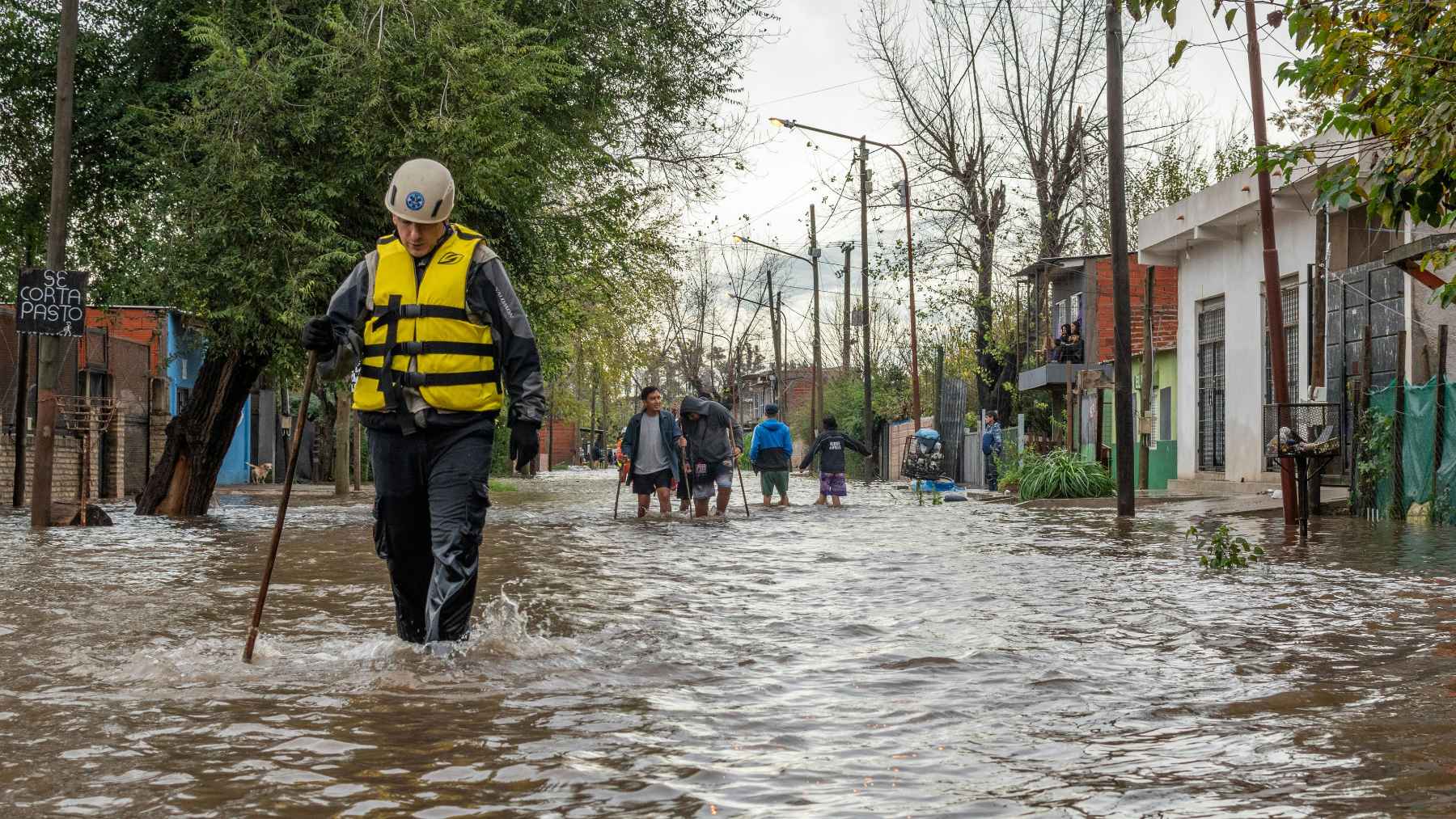
China’s Zhengzhou offers a sobering example. The city had invested in sponge-city features, but in July 2021, extreme rainfall hit the city, exceeding what green infrastructure could realistically manage.
Reuters reported that Zhengzhou saw more than 7.9 inches of rain in just one hour during that event. Experts cited by the news agency said sponge-city systems are unlikely to handle the most extreme downpours on their own.
Too much rain can also damage the sponge itself. Long droughts can dry out some soils so much that they start resisting water, a little like a bone-dry potted plant where water beads up before slowly sinking in.
Green space still matters
None of this means sponge cities are a failed idea. Boise State University climatologist Jen Pierce has emphasized that green space brings benefits beyond flood control, including cleaner waterways, more trees, cooler streets, and better conditions for people living with heat and stress.
Even during severe storms, green areas usually absorb more water than pavement. They also make neighborhoods more livable when it is not raining, which matters on ordinary days filled with traffic, noise, exhaust fumes, and that sticky summer heat city residents know too well.
At the end of the day, the point is not to choose between nature and engineering. The stronger approach is to use both, with parks, wetlands, and trees working alongside pumps, tunnels, drains, alerts, and evacuation planning.
The future of sponge cities
Sponge cities are best understood as a defense layer, not a shield that can block every flood. They can buy time, reduce damage, and turn stormwater into a resource, but they need to be planned as citywide systems rather than decorative patches.
That means designing new neighborhoods with water in mind from the start and retrofitting older ones where possible. It also means being honest about the storms that are already outgrowing yesterday’s infrastructure.
So, will sponge cities survive the age of stronger storms? For the most part, yes, but only if cities stop treating them as a nice add-on and start treating them as one piece of a much larger climate safety plan.
The main study has been published in Nature.