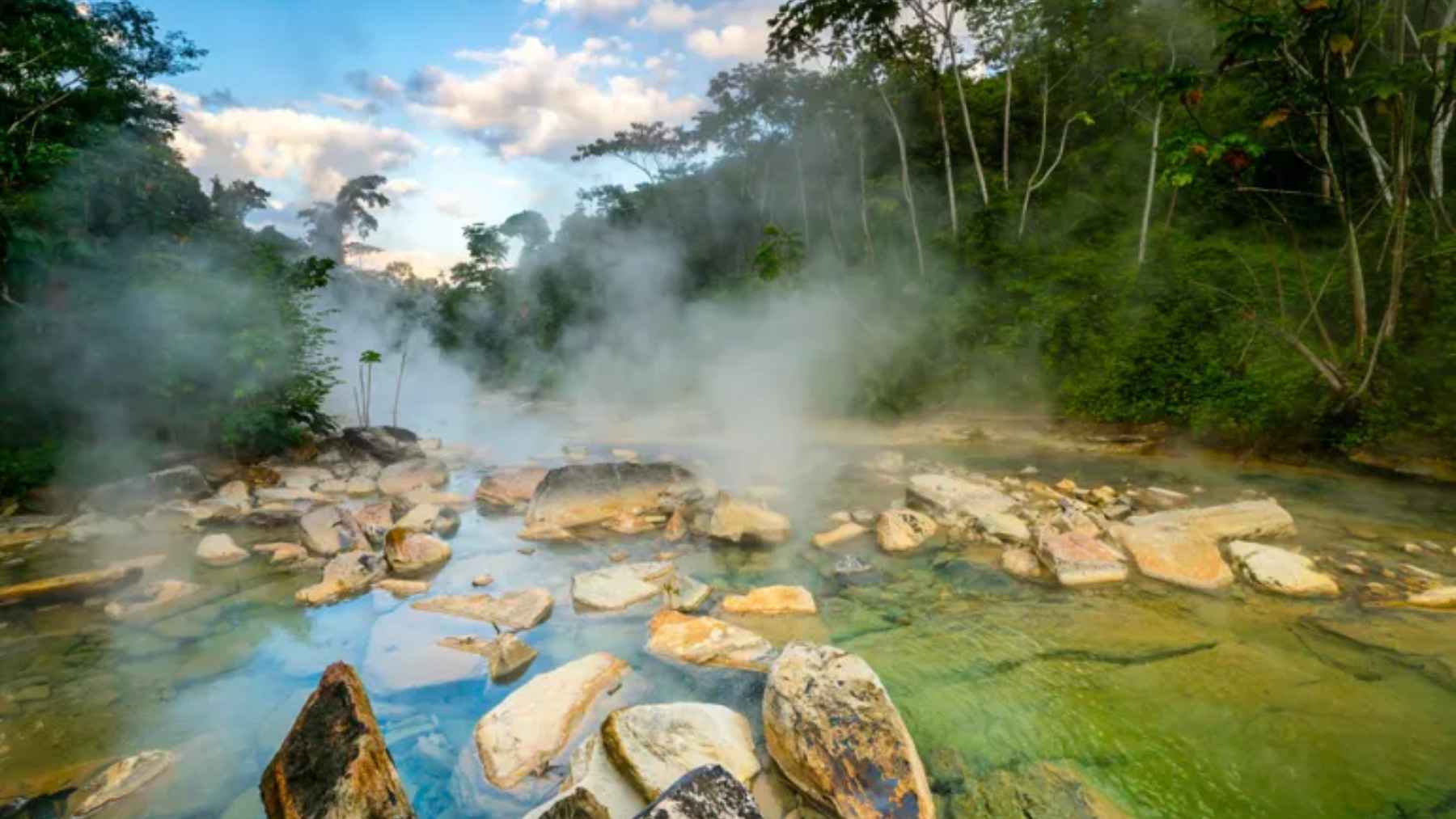
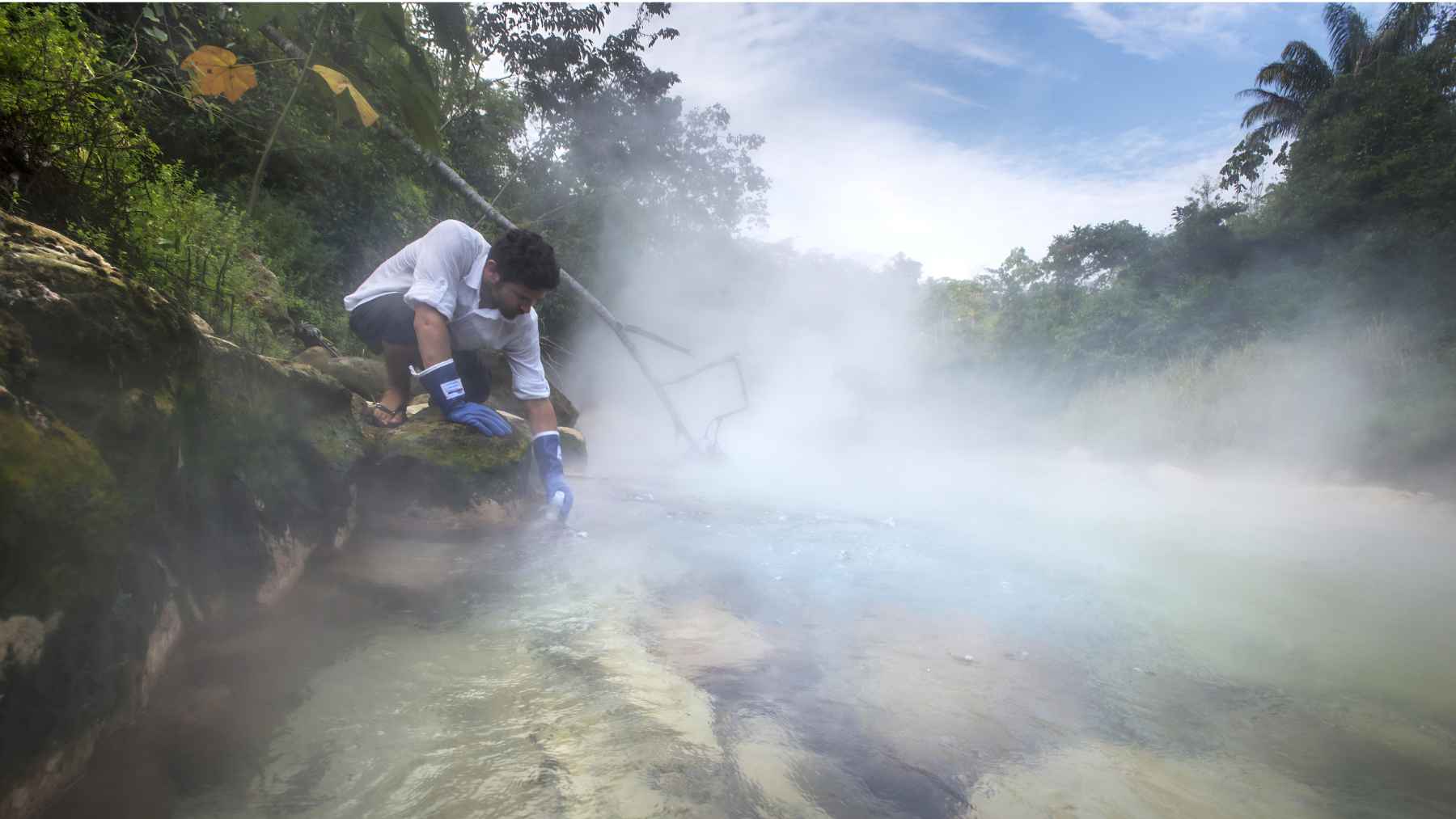
Although it can seem quite impossible to have extremely high temperatures without having volcanoes nearby, let me tell you the context deep in the Peruvian Amazon, where the Shanay-Timpishka average temperature is about 86°C (187°F). This is such a high temperature that it can kill small animals by causing severe burns in a matter of seconds. The average temperature still can still rise up to 98°C (208°F) as said before with not any single volcano nearby.
This turns out to be more thana geological curiosity for researchers. They investigated 70 plots near the riverbanks and they discovered that for every 1°C increase in mean annual air temperature, 11 percent of local tree diversity declined. These temperatures definitely make us think that a hotter Amazon could begin to reorganize.
How can a river get this hot without a volcano?
All this thing with the river is not something new. Local communities have labeled the river as Shanay-Timpishka and this means “boiled with the heat of the sun.” So it is that this place started to have different ideas or theories of what could be happening here. Geoscientist Andrés Ruzo started to measure the waters after he listened to stories of the place when he was a child. One story was that the temperatures were comparable to the ones used for brewing very hot coffee.
And supposedly, the leading explanation is a fault-fed geothermal system. It seems rainwater tends to filter through fractures in the earth, until it goes deep underground, absorbing heat from the surrounding rocks and rising back up again like hot springs that warm the river. What is still missing is the study related to the exact route, depth and the time that the water takes in doing all that journey.
Tree diversity drops as the forest gets hotter
As was said before, an estimated 11 percent decline in local tree diversity was associated with each increasing 1ºC every year. And at the same time, the hottest plots ended up dominated by species that normally are found in the warmer parts of the Amazon.
Also, these tree communities resistant to heat started to become very similar to one another. And this suggests that the constant heat drastically reduced the opportunity for other species to survive. This can be quite dangerous, not because the biodiversity will disappear from one day to the next, but because it can become “simpler” if only heat-tolerant trees keep on gaining space and the sensitive ones disappear.
Some trees adjust, but not enough to erase the risk
Another more specific work related to the trees tested if six common Amazonian woody species could adapt to hotter conditions. Although three of them could increase their photosynthetic thermal tolerance between the different seasons, the response differed a lot depending on the species.
Another study found that the thermal safety margins generally shrink at hotter sites. In this case, the researchers explained that this was because some trees are working closer to temperatures that damage their photosynthetic machinery.
What this river can and cannot tell us
Shanay-Timpishka is definitely not a perfect model of the entire Amazon and strangely, this small riverside forest is facing conditions that are really different from an enormous basin undergoing rapid climate change.
The river’s forest may have had many years to adapt, while the climate change caused by us is going much faster. In this case in Peru these are the results… in other places, the responses to climate change could be different.
Why the Boiling River matters far beyond Peru
Even with all that said, there is still something that concerns scientists even more: the warmer areas already hold less variety of trees and are surrounded by species of warmer climate. And here is the key: these increasing temperatures can bring local extinctions and a progressive and gradual thinning of biodiversity in tropical lowlands, known as “biotic attrition.”
That makes the river both a natural wonder, and a climate lab that really needs to be studied and protected,together with the Indigenous collaboration and knowledge.
The study was published in Global Change Biology.