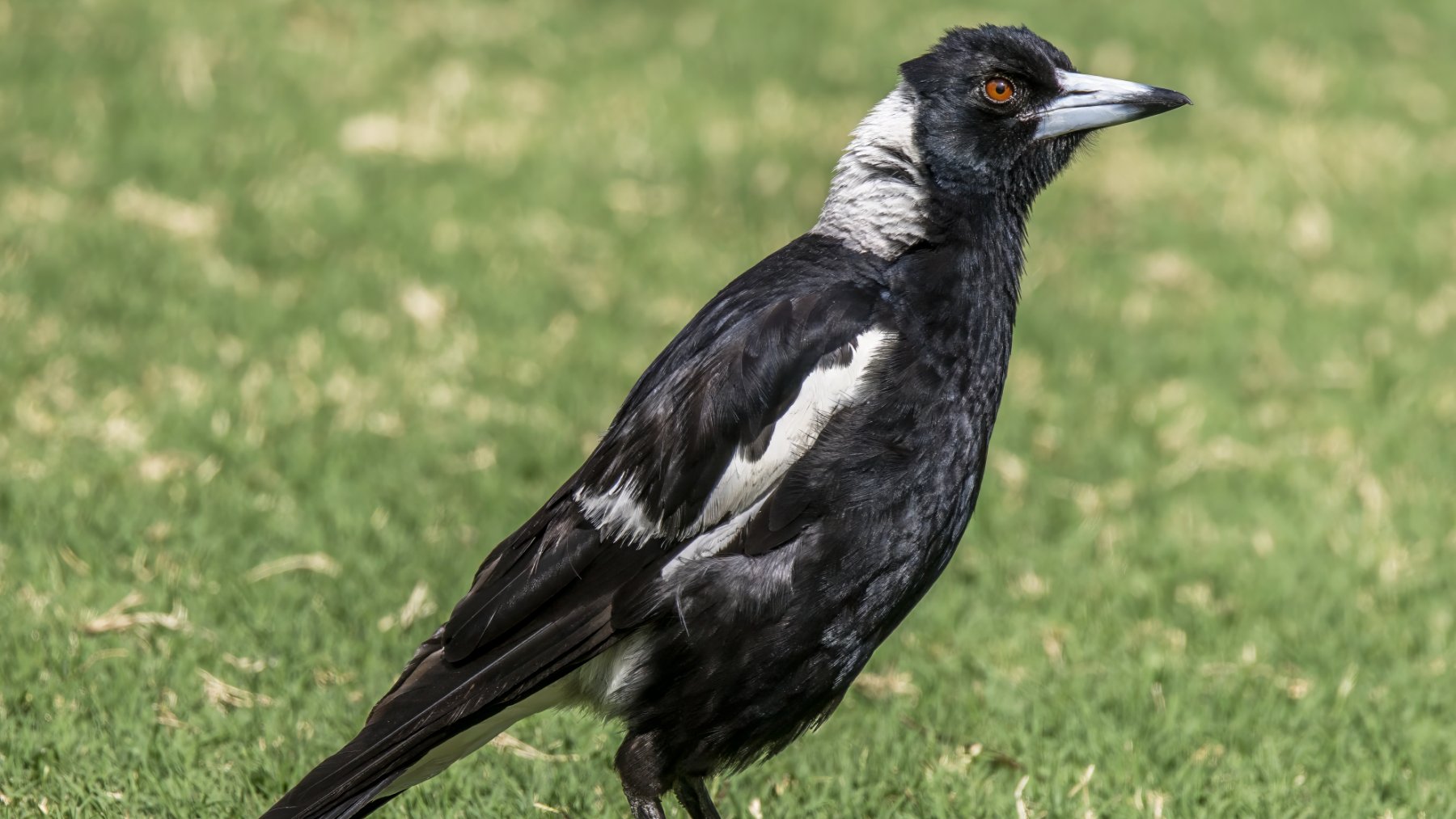
Researchers hoping to map the movements of five Australian magpies watched their experiment unravel when the birds began helping one another remove their tracking harnesses. The equipment came off, but an unexpected observation of cooperation took its place.
The pilot study, published in 2022, involved birds at Pacific Paradise on Queensland’s Sunshine Coast. Its surprising lesson went beyond clever beaks and missing GPS data, showing why wildlife researchers must consider how an animal’s companions might respond to the equipment it wears.
A safety feature became an escape route
Joel Crampton, Celine Frère, and Dominique Potvin described a project that began with weeks of getting the birds accustomed to a feeding station. The team then captured one adult male, two adult females, and two juveniles in a single morning. They also wanted to explore whether wireless charging could make longer tracking studies possible.
Each bird received identification bands and a GPS tracker with a harness weighing about 2.7 grams combined. The harness had one deliberately weak point, designed to release when the bird approached a magnet at the feeding station, allowing researchers to retrieve the device without another capture.
The design had passed strength tests, but those tests could not anticipate everything a flock might do. “We didn’t count on them asking for help from each other,” Potvin said in a University of the Sunshine Coast announcement.
The first tracker came off within an hour
One juvenile initially tried to reach its own harness, before another young bird approached and pecked at it without success. An untagged adult female then worked at several points until the device detached, about 10 minutes after she began and within an hour of the youngster being fitted.
Nearby, another adult was helping a tagged bird on a power line. The pair fell from the wire during the attempt, then moved into a nearby tree and continued working on the harness.
The following day, researchers saw only two birds still wearing trackers, and later visits found identifiable banded birds without them. Four magpies were directly observed participating in removal attempts, but the team did not witness every release or establish whether one especially capable helper did most of the work. With just five tagged birds, this was a descriptive pilot, not a controlled test of how commonly magpies help one another.
Cooperation does not reveal every motive
Why does the helping matter? Think of a fastening at the back of a jacket, awkward to reach alone but accessible to someone else. A flockmate could similarly reach difficult parts of the harness, while the wearer tolerated the contact and the helper received no obvious immediate reward.
The researchers interpreted the behavior as cooperation and a moderate level of problem-solving. They also discussed possible “rescue” behavior, with one bird helping another escape its harness without an obvious immediate benefit.
But the study did not establish what the helpers understood or whether the harnesses caused distress. The authors also acknowledged that they could not tell whether the birds deliberately identified the weak point or simply kept pecking until something broke. Removing an unfamiliar object during social grooming remained another possible explanation.
Bigger groups offer useful context
Separate research led by Benjamin Ashton and published in Nature in 2018 examined cognitive performance in wild Australian magpies in Western Australia. The researchers tested 56 birds from 14 groups on self-control, learning associations, adjusting to changed rules, and remembering locations. Birds from larger groups performed better across all four tasks.
Repeated testing of young birds found that the relationship between group size and performance emerged as they developed. That does not explain the Queensland harness removals, but it offers context for studying problem-solving in a species whose daily life involves other birds.
Why the failed trial still mattered
A GPS tracker is meant to reveal an animal’s movements, not change them. Yet a device adds weight and a new object to the animal’s body, and its presence can affect both the wearer and nearby companions. A sturdy attachment is not automatically an unobtrusive one.
For a highly social species, that makes equipment testing a group-level challenge rather than simply a question of whether one bird can carry the load. The magpies’ response exposed a limitation before the same design could be used in a larger project. The challenge is to collect reliable data without disrupting the behavior researchers hope to understand.
The planned movement study did not deliver what the researchers wanted, but it revealed something worth investigating in its own right.
The study was published in Australian Field Ornithology.