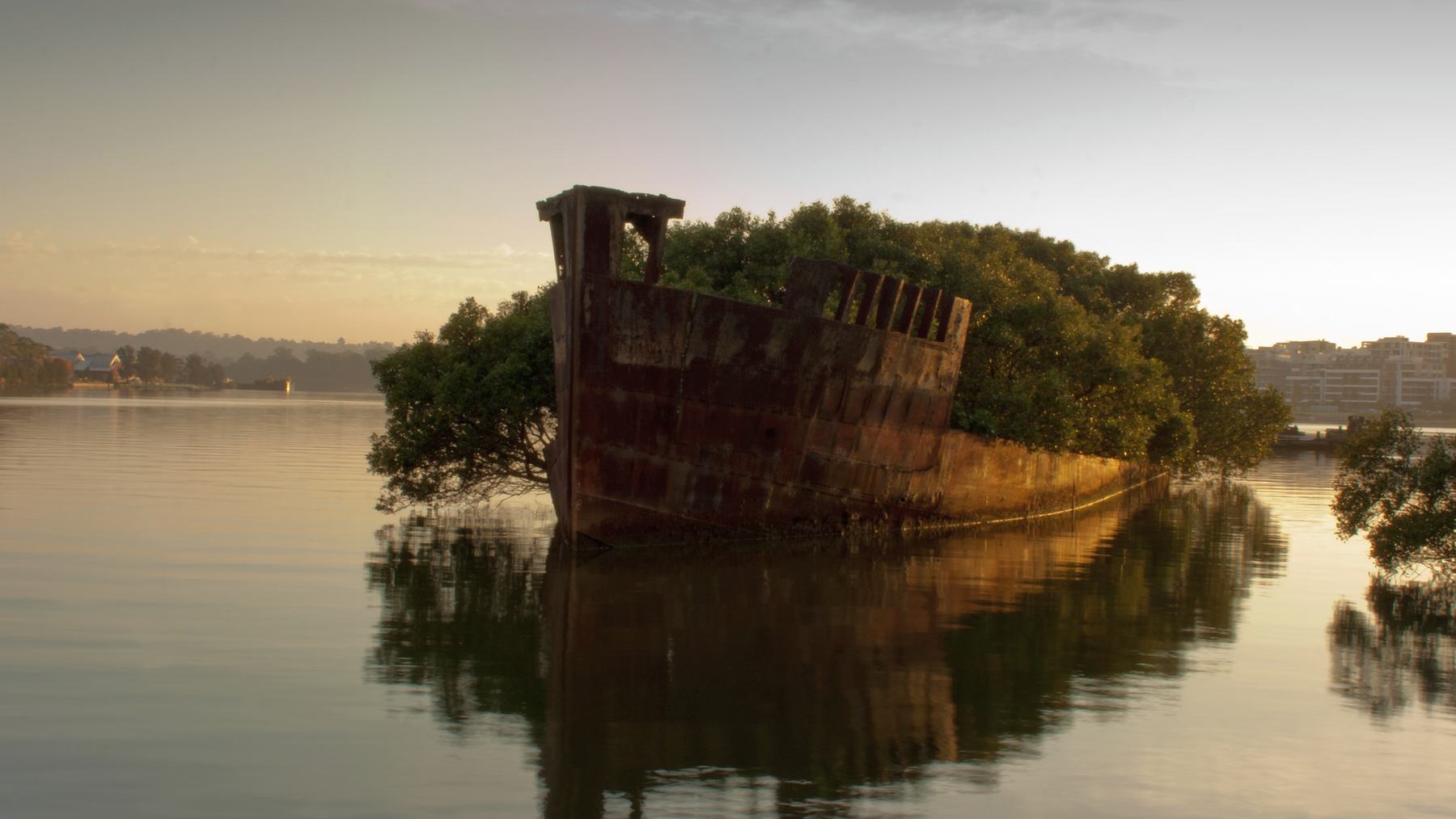
The SS Ayrfield, a 1911 collier abandoned at a scrapyard in Sydney’s Homebush Bay has become a floating forest, with mangrove trees growing out of its rusted hull. Sydney Olympic Park Authority, which runs the parklands on the shore, calls it a floating forest shipwreck.
The bay around it has a rougher past. It soaked up pesticide waste, earned a fishing ban and needed a dioxin cleanup that ran until 2010, a decade after the 2000 Olympic Games.
A collier on the 60-miler run
According to a June 2014 journal of the Maritime Heritage Association, the ship was built in Scotland in 1911 as the Corrimal for a Sydney shipping company and ran 230 feet (70.1 meters) long. In November 1942, during World War II, the Australian Government requisitioned it to carry supplies to US bases in the Pacific, then bought it in December 1944 and laid it up in 1949.
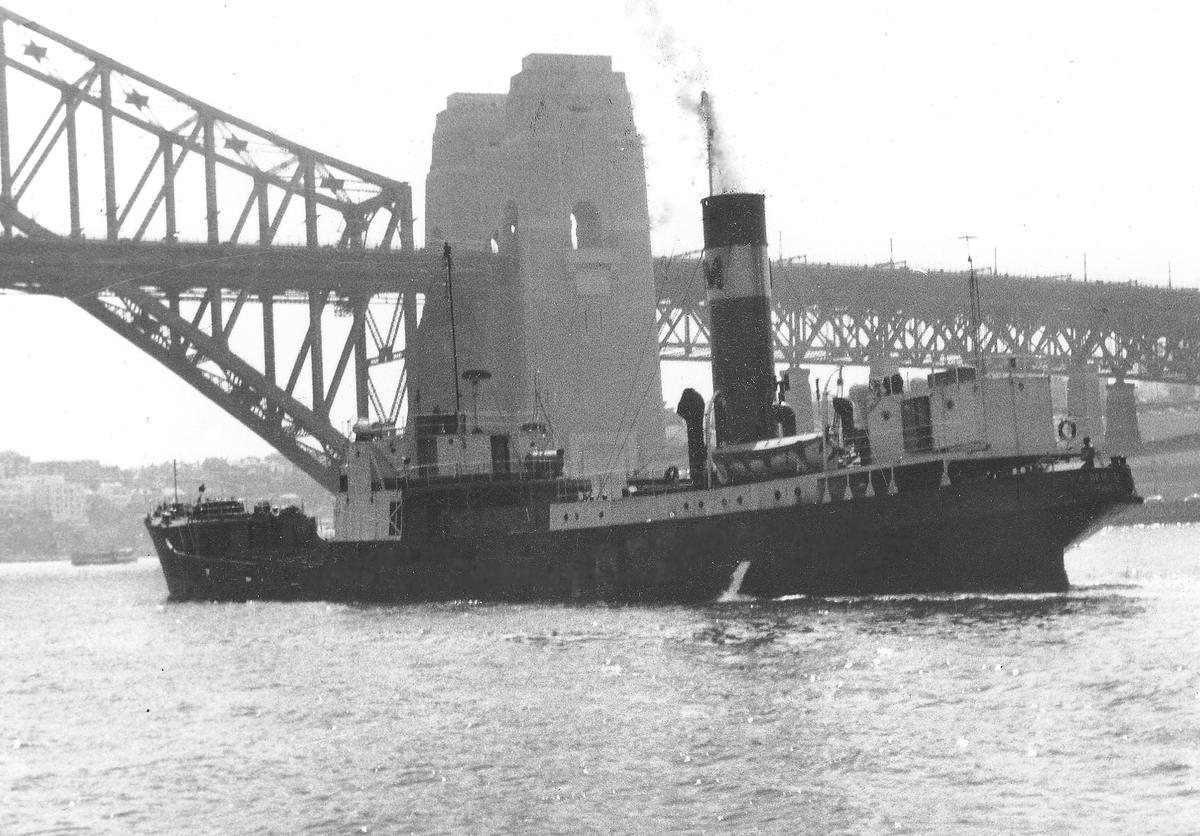
Around 1954, R.W. Miller and Co. took it over and had it refitted at Mort’s Dock in Sydney for use as a collier on the Sydney to Newcastle “60-milers” route. It was renamed the Ayrfield. In March 1969, Graeme Andrews photographed it passing the Sydney Harbour Bridge.
In 1969 it was sold for demolition and taken to Homebush Bay, the journal says, but the ship wrecking yard closed down and the rusty hull filled with vegetation, including full-grown mangrove trees. The park’s guide says the ship was decommissioned in 1972 and counts it as “one of seven rusted shipwrecks” in the harbor’s waters. Old hulls turn into habitat in other places too, from a Queensland wreck ringed by holes that fish may have dug to the plan to sink the SS United States as an artificial reef.
How gray mangroves got aboard
No record says when the first seedling rooted in the hull. Gray mangroves, Avicennia marina, line the bay’s southern shore, and the park calls the stand there the largest of its kind in Sydney.
According to the Field of Mars Environmental Education Centre, a New South Wales public school site, each fruit holds one seed that begins to germinate while still on the parent tree. When the fruit falls, it can float on the tide until it settles in soft mud and grows. A hull resting in the tidal shallows is one such place.
These habitats are salty, wet and low in oxygen, the centre writes. Gray mangroves cope with pencil-like breathing roots called pneumatophores that poke up from the mud, roots that keep out some of the salt and leaf glands that release the rest. In New South Wales the trees usually stand 10 to 33 feet (3 to 10 meters) tall.
The largest mangrove forest left on the river
Between the southern shore of Homebush Bay and Bicentennial Park lies the 161-acre (65-hectare) Badu Mangrove, “the largest mangrove forest remaining on the Parramatta River,” according to the park. It holds protected mangrove forest and coastal saltmarsh, an endangered ecological community. Its mud banks stay put partly because of the trees, a job New Orleans now hands to crushed glass to rebuild a shrinking wetland.
Red-fingered marsh crabs and semaphore crabs eat the fallen leaves, as do prawns and snails, and young fish hide among the roots, the Field of Mars fact sheet says.
Panels along the Badu Mangrove Boardwalk carry Muru nanga mai, the Dreaming Track, by Lorna Munro, a freshwater Wiradjuri poet, who describes it as a conversation between saltwater and freshwater.
A dioxin cleanup that ran until 2010
According to a remediation fact sheet from the park authority, legal and illegal landfilling went on for several decades on land now inside Sydney Olympic Park, with few if any environmental controls. In 1991, boreholes showed that about 395 acres (160 hectares) held ash, rubble, asbestos, industrial hydrocarbons, household garbage and dredged river mud.
From 1992 to 2000, the state put 137 million Australian dollars into the job, and crews contained about 11.8 million cubic yards (9 million cubic meters) of waste on site, the largest remediation project of its kind in Australia, the fact sheet says.
Across the water, the Rhodes Peninsula was the birthplace of Australia’s chemical industry, according to the council’s history of the Rhodes cleanup. From 1928, plants there made paints, solvents and pesticides. The pesticide makers Timbrol and Union Carbide left wastes holding dioxins, toxic chemicals that last for decades, and chemical waste was used to fill in the mudflats of Homebush Bay.
Planners left Rhodes and Homebush Bay out of the Olympic zone because they could not be cleaned in time for the Games, though the council says the Olympics created the momentum for a cleanup. In 1999, the state agency Maritime NSW bought the old Union Carbide site for 1 Australian dollar and pledged 20 million Australian dollars. The plan was later widened to clean more of the bay floor, and the work was completed in 2010.
Fish west of the bridge stay off the menu
Commercial fishing in the harbor has been banned since 2006, after tests found elevated dioxin levels in fish and crustaceans, according to the state’s fisheries department. Its current advice is blunt: “No fish or crustaceans caught west of the Sydney Harbour Bridge should be eaten.” East of the bridge, the limit is generally 5.3 ounces (150 grams) a month.
The department traces the dioxins in harbor seafood to contaminated sediments in or near Homebush Bay and to fish migrating from polluted areas into cleaner water. Swimming and boating are fine, and the department says the harbor’s water is the cleanest it has been in decades.
What the records leave open
Nobody has dated the first mangrove on the Ayrfield. The heritage journal puts the sale and tow in 1969, and the park says 1972.
The fact sheet, marked as correct as of January 2014, lists ten engineered landfills covering about 259 acres (105 hectares) that are still in the authority’s care, with leachate from the waste that must be contained and treated. That is a quieter reuse than New Haven’s old trash hill, now covered in solar panels.
The wreck can be seen from a viewing platform reached from Parklands Circuit, off Bennelong Parkway at Wentworth Point. Sydney Olympic Park Authority publishes its account of the Ayrfield on its lookouts and views page and suggests a visit at sunset.
Photo: Jason Baker / Wikimedia Commons, CC BY 2.0