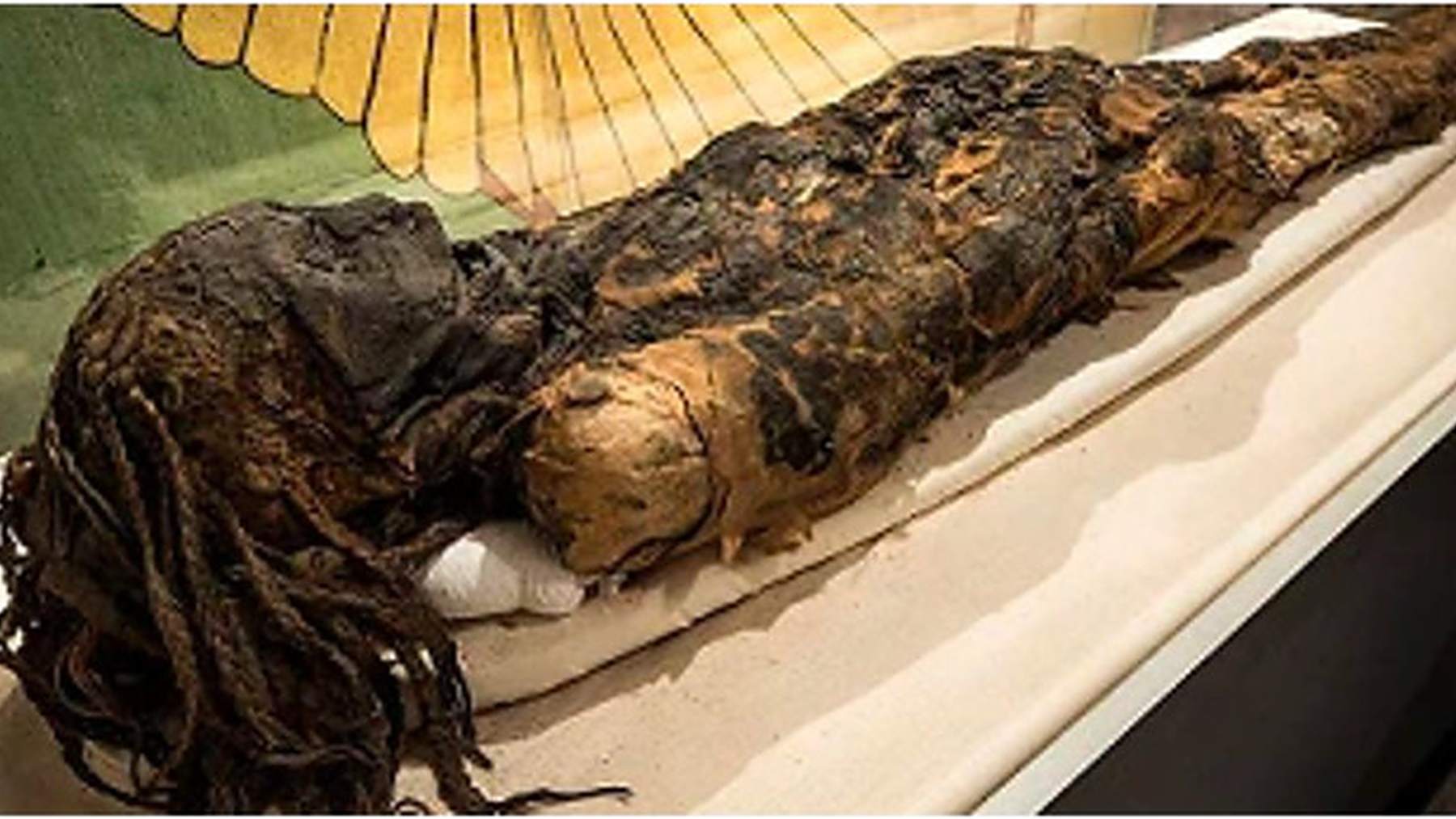
Her braids survived for thousands of years, but her name did not. Now, a detailed CT analysis of an Egyptian mummy known as the “Braided Lady” has revealed clues to her dental health, social standing, and the way her body was prepared for burial.
The findings suggest she belonged to a comfortable social class outside the royal family, although that interpretation remains uncertain. Preserved organs and damaged teeth help reconstruct parts of her story, while her identity and cause of death remain unknown.
Looking inside an ancient body
The study’s first author, Max J. Goodman of the University of Michigan, worked with colleagues at the Medical College of Wisconsin and Western University in Canada. They analyzed existing images from the IMPACT Radiological Mummy Database, which brings together scans for research.
CT, short for computed tomography, combines X-ray images to show cross sections of a body. Here, the image slices were about one-fortieth of an inch thick, allowing researchers to examine bones, teeth, and dried tissues in three dimensions without cutting into the remains.
What the embalmers left behind
One of the clearest findings concerned organs that had stayed inside the body. The scans showed remnants of the liver and other tissues, along with dried brain matter and no evidence that embalmers had attempted brain removal.
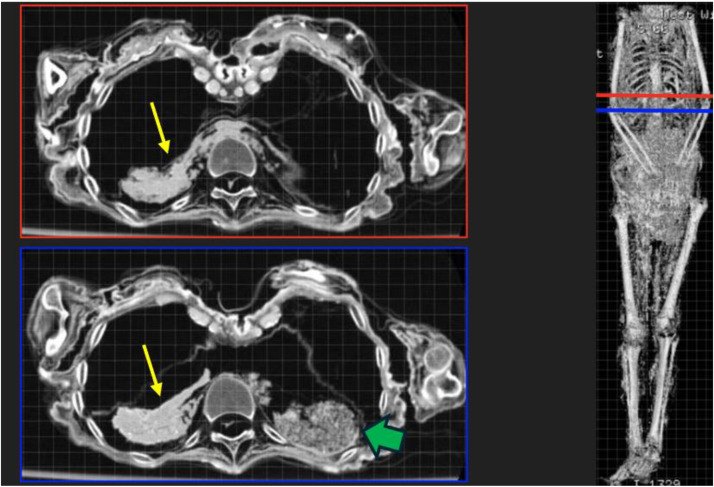
Mummification was the process of preserving a body for burial and the afterlife, often by drying it and removing internal organs. The researchers interpreted incomplete organ removal, together with previously recorded features of the body and wrappings, as consistent with an elite woman who was not royal.
But can an embalming technique reveal someone’s social rank? A 2013 study cited by the authors found that three royal mummies had received no brain treatment, showing that practices varied even among rulers. Retained brain tissue alone therefore cannot prove that a family chose a cheaper burial.
Teeth tell an everyday story
Her mouth offered a different kind of evidence. The researchers described worn, flattened teeth and signs of periodontal disease, which affects the gums and tissues supporting teeth, as well as a broken tooth and another displaced toward the throat.
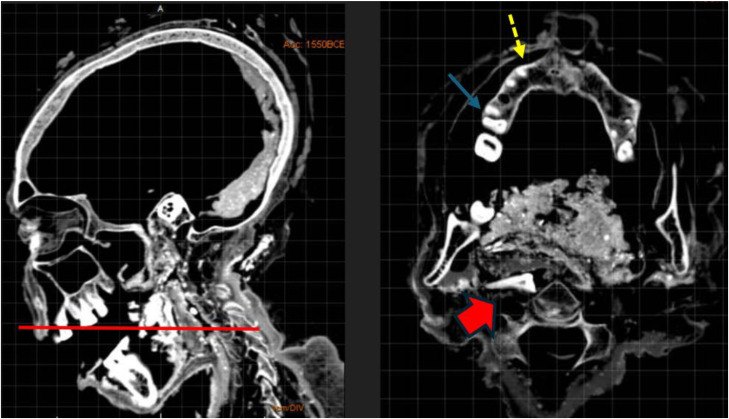
For someone eating bread every day, tiny particles of grit could gradually wear down chewing surfaces. The authors considered abrasive food contamination a likely explanation for the wear, but they lacked the chemical tests needed to reconstruct this woman’s particular diet.
Related research shows why worn teeth should not automatically be confused with cavities. A 2019 study of two Egyptian mummies known as the “Two Brothers” found extensive tooth wear but little evidence of decay. Teeth can be badly worn even when cavities are scarce.
A funeral ritual under debate
The displaced tooth raised a more difficult question. The team suggested it might be connected to the “Opening of the Mouth,” a funeral ceremony intended to restore a dead person’s ability to breathe, speak, and eat in the afterlife.
The Metropolitan Museum of Art describes ritual equipment being touched to the mouth to symbolically restore those abilities. That description helps explain why finding dental damage does not, by itself, establish exactly what happened during a ceremony.
Historian Bassam Al-Shammaa disputed the proposed connection in an interview with Al Jazeera, emphasizing the ritual’s symbolic nature. He argued that other explanations for the damage were possible. The study itself also acknowledges that the displaced tooth could have resulted from an accident.
A timeline with missing pieces
The mummy is now housed at the Museum of World Treasures in Wichita, Kansas, where her hairstyle inspired her familiar nickname. An institutional account describes a journey from Egypt to Canada in 1860, followed by transfers between collections before she reached Kansas.
Pinning down when she lived is harder. The museum says she has not undergone radiocarbon dating and lacks securely associated burial objects, although her hairstyle and embalming features have prompted estimates spanning the New Kingdom and Third Intermediate Period. Her precise place within those centuries remains unsettled.
Why her death remains a mystery
The examination found no skeletal evidence of major trauma or advanced bone disease that could explain her death. That narrows the visible possibilities, but an intact skeleton cannot rule out illnesses that mainly affect organs or other soft tissues.
Those tissues have changed greatly through drying, embalming, and the movement of the body over time. Without medical records or additional testing, the researchers could not reconstruct her final illness. As they wrote, “the exact cause cannot be determined.”
This limitation extends well beyond one mummy. A review of earlier research, covering 47 publications and 189 Egyptian mummies, found that CT scans rarely established a cause of death, even when they revealed dental disease, injuries, or changes caused by embalming.
Preserving a life’s remaining clues
The value of this investigation lies in connecting physical evidence with a person whose written history has been lost. Her teeth preserve traces of daily life, while the tissues left inside her body document the choices made after her death.
Further testing and better information about her original burial could help distinguish among competing explanations. The full study was published June 30, 2026, in Radiology Case Reports.
Photo: Goodman et al. / Radiology Case Reports, CC BY-NC-ND 4.0