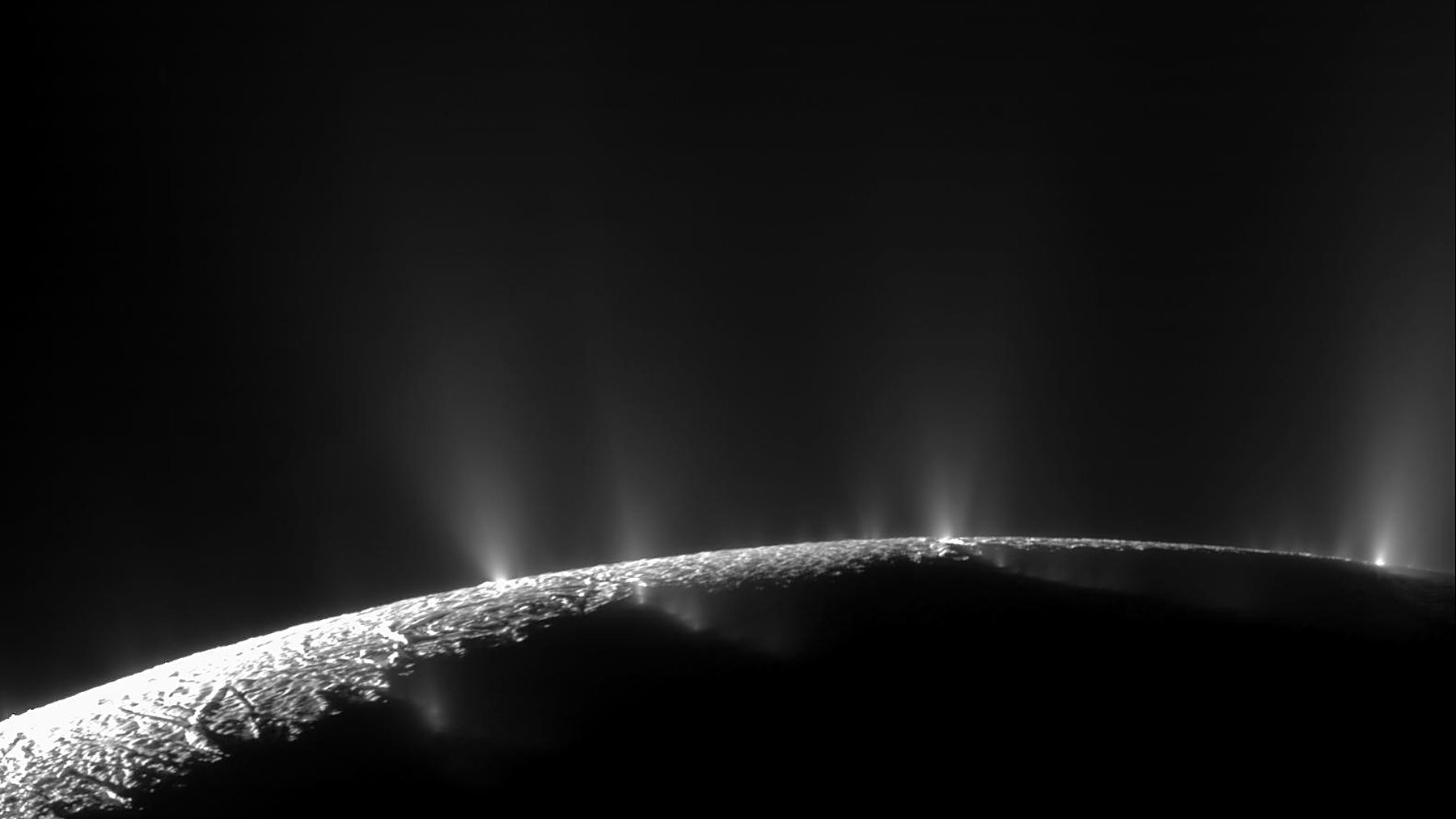
Saturn’s moon Enceladus may sort its own ocean into tiny ice grains before they reach space. A Berlin-led team reported this in Science Advances on September 25, 2026, using old Cassini data and new freezing tests. If microbes exist there, their remains could sit in a small share of those grains.
A second paper, out the same day, shows that a methane-making microbe from Earth’s deep sea can grow in a lab copy of the moon’s seafloor. Neither study shows that anything lives on Enceladus, but both feed into plans for a European probe in the 2040s.
Plumes from a 310-mile moon
According to NASA, Enceladus is only about 310 miles (500 kilometers) across. Under its ice shell lies a global ocean of salty water. Cracks near the south pole vent water vapor and ice grains hundreds of miles into space.
Freie Universität Berlin calls it the only extraterrestrial ocean that scientists have sampled directly. NASA’s Cassini spacecraft flew through the plumes several times and found salts and organic compounds in the ice of Enceladus.
Earlier Cassini data also pointed to hot water reacting with rock on the seafloor. On Earth, deep hydrothermal vents like these feed whole communities with no sunlight.
961 grains with mismatched salts
From 2004 to 2017, Cassini’s Cosmic Dust Analyzer logged single ice grains in Saturn’s E ring, which is built from Enceladus material. Frank Postberg, a planetary scientist at Freie Universität Berlin, led a team that went back to 961 readings from salt-rich grains.
Grains from one ocean were expected to carry roughly the same salt mix. Instead, the team found at least five groups, each dominated by a different salt, such as table salt, sodium carbonate or potassium chloride.
Chloride and carbonate rarely turned up together in the same sodium-rich grain. A smaller set of phosphate-rich grains never showed any trace of either one, the authors write.
Slow freezing, then a crash
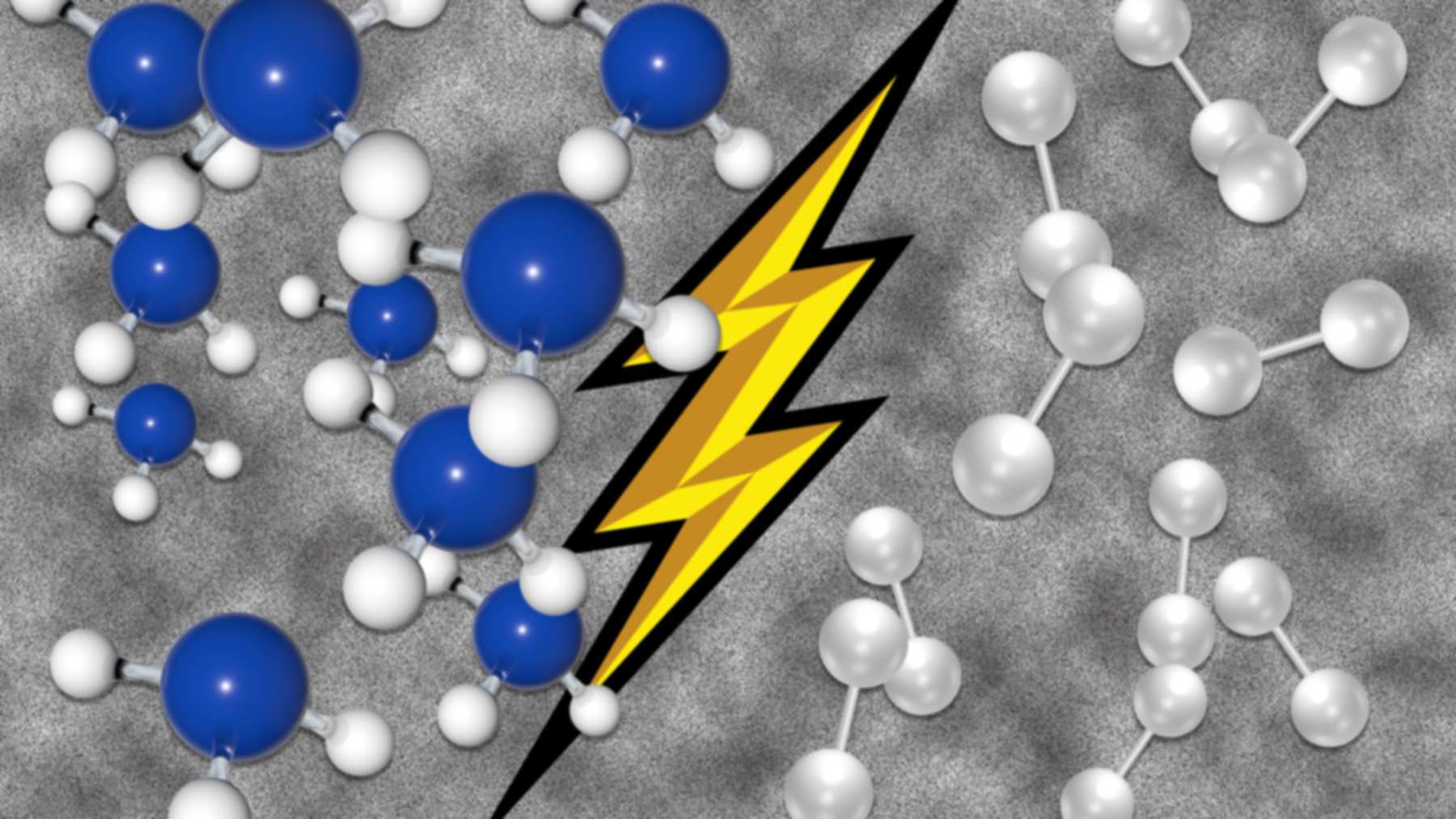
To explain this, Yasuhito Sekine and colleagues in Tokyo froze lab droplets that matched the moon’s main salts. In droplets about 200 micrometers wide, the salts pulled apart when freezing was slow. Fast freezing kept them mixed.
“What surprised us was that the diversity seen by Cassini could emerge from droplets originating from essentially the same ocean water,” Sekine said in the Institute of Science Tokyo release.
The proposed journey starts at the ocean surface, where gas bubbles burst and throw up droplets. These drift slowly through the deep vents. As they freeze, salts and organic matter settle into different spots inside each one.
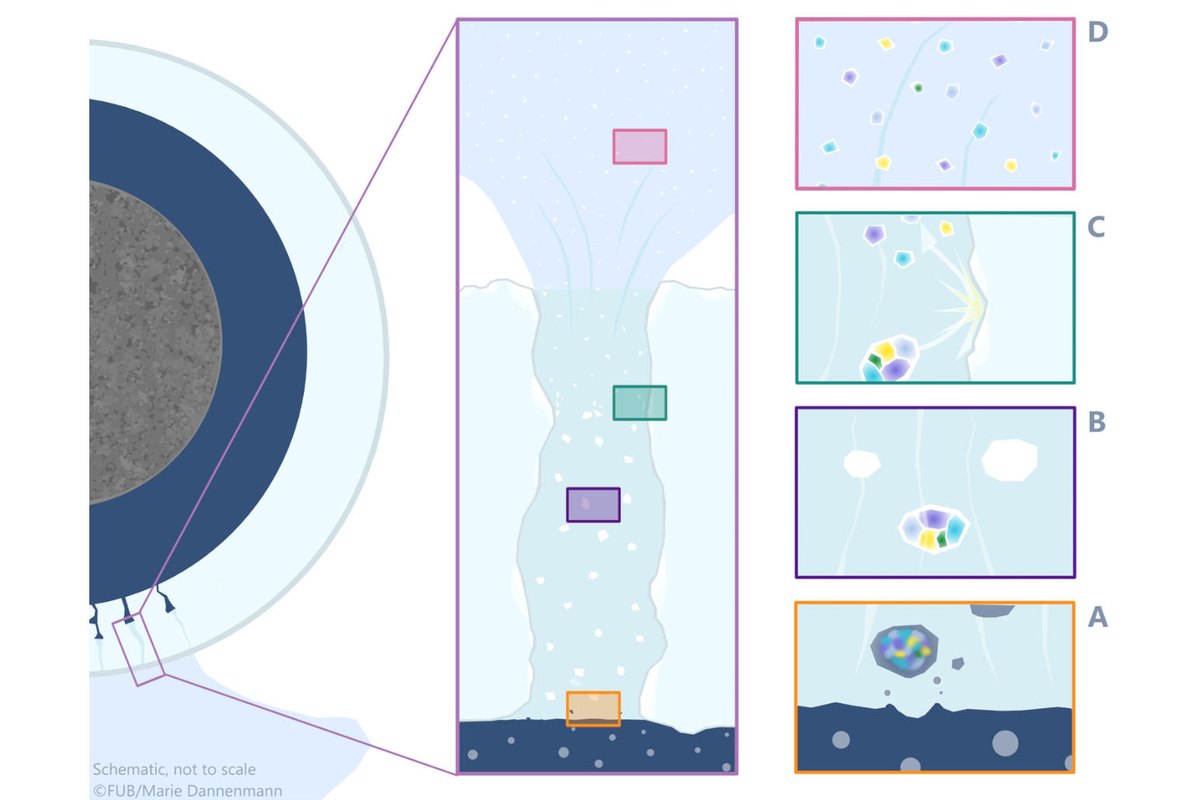
Nearer the surface, the gas flow speeds the frozen droplets up to about 620 mph (1,000 kilometers per hour), according to Freie Universität Berlin. They smash into the walls of narrow ice channels. The fragments are a few micrometers across, and many carry a single ingredient.
“Enceladus actually does a lot of the work for us in preparing samples for analysis that usually take a lot of effort in chemical labs on Earth,” Postberg said. Microbial material in a droplet would end up in only a few grains, but there it would be concentrated and fairly pure.
A vent microbe at pH 11
The second study came from LMU Munich. Vanessa Helmbrecht led it, and William Orsi, a professor of geomicrobiology, supervised. They tested Methanothermococcus okinawensis, an archaeon (a single-celled microbe) from deep-sea vents that makes methane from hydrogen and carbon dioxide.
Inside a sealed chamber, oxygen stayed below 1 part per million. The team mixed a salty, soda-rich fluid with simulated Enceladus rock powder. Runs lasted 48 hours at 149°F (65°C), at pH 9 to 11.
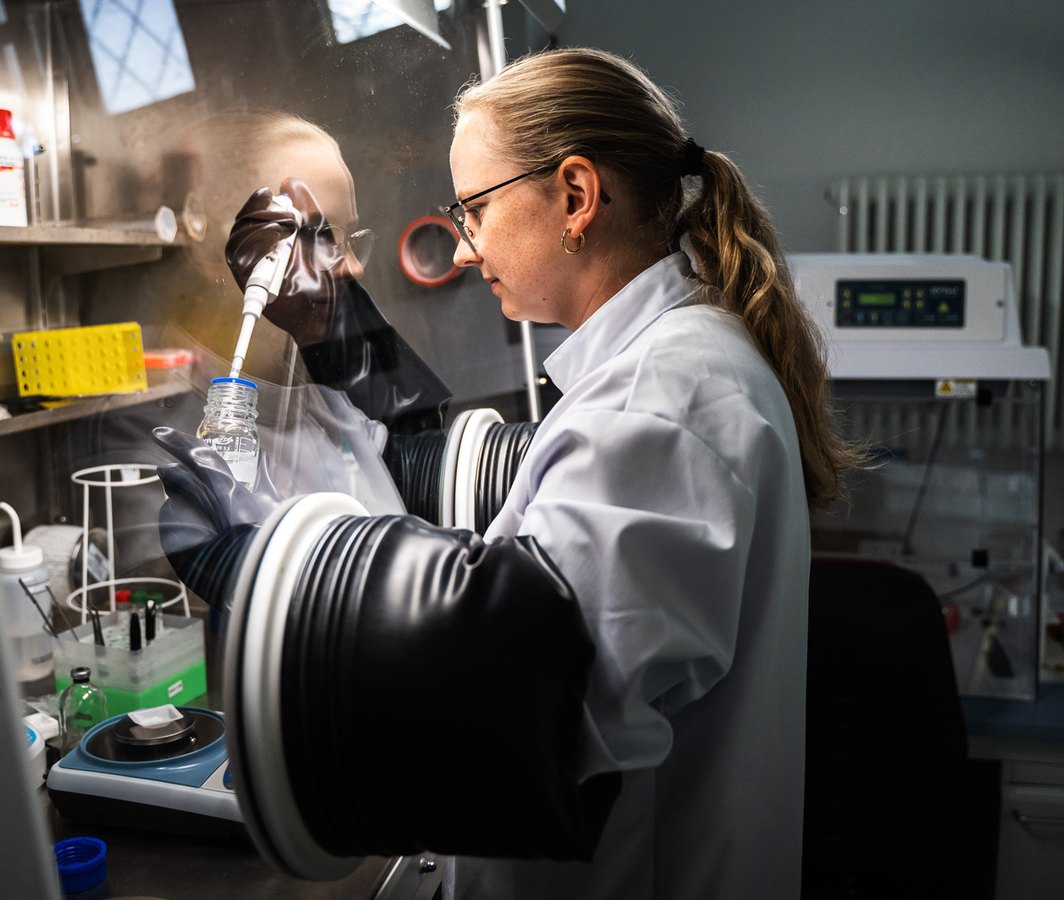
At pH 11, the microbe did not grow in a standard lab medium. In the Enceladus mix, it kept growing and making methane. Its only energy source was hydrogen from reactions between minerals and water.
The authors credit about 10 times more dissolved carbon in their mix. Gene data showed the cells ramping up an ancient carbon-fixing route to grab scarce carbon dioxide. “This was really a surprise to us,” said Nozair Khawaja of the DLR Institute of Space Research and Freie Universität Berlin.
ESA’s L4 mission and single grains
The European Space Agency is planning a large mission, called L4 for now, to look for life at Enceladus. According to LMU Munich, launch is foreseen for 2042.
For such a probe, the sorting cuts both ways. Chemical signs of life might hide in a tiny share of grains. Postberg put it plainly: “Future spacecrafts will have to analyze many individual ice particles in the plume.”
Postberg’s lab has already shown that such instruments can spot traces of microbes in single grains. The Tokyo team adds that slow freezing may also trap salts and organics in tiny pockets of brine.
Iron levels ran higher than Enceladus
The microbe test copied parts of a seafloor vent, not the whole ocean, and left out the ice crust. The team added iron chloride to speed up hydrogen output. The authors note that their hydrogen rates may exceed those on Enceladus.
Real vents, like the alkaline vents at Lost City in the Atlantic, work over geologic time, and no one has watched droplets freeze and break inside the moon. “Our study doesn’t prove that life exists on Enceladus,” Orsi said.
The full studies were published in Science Advances, one on ice grain sorting and one on methane-making microbes.
Whether the ocean holds microbes remains open. The answer will take a spacecraft that samples many grains, one by one.
Image: NASA/JPL/Space Science Institute