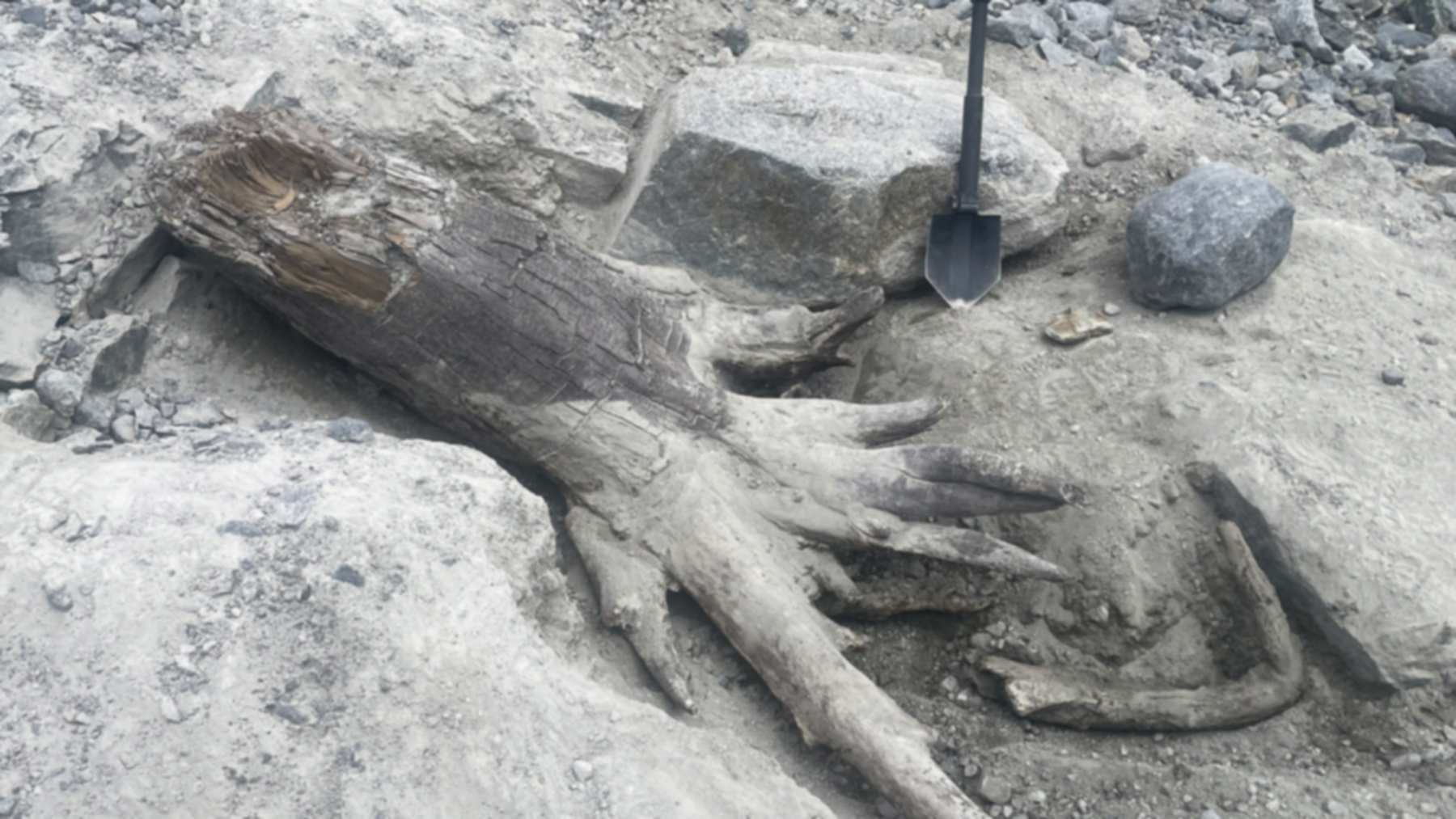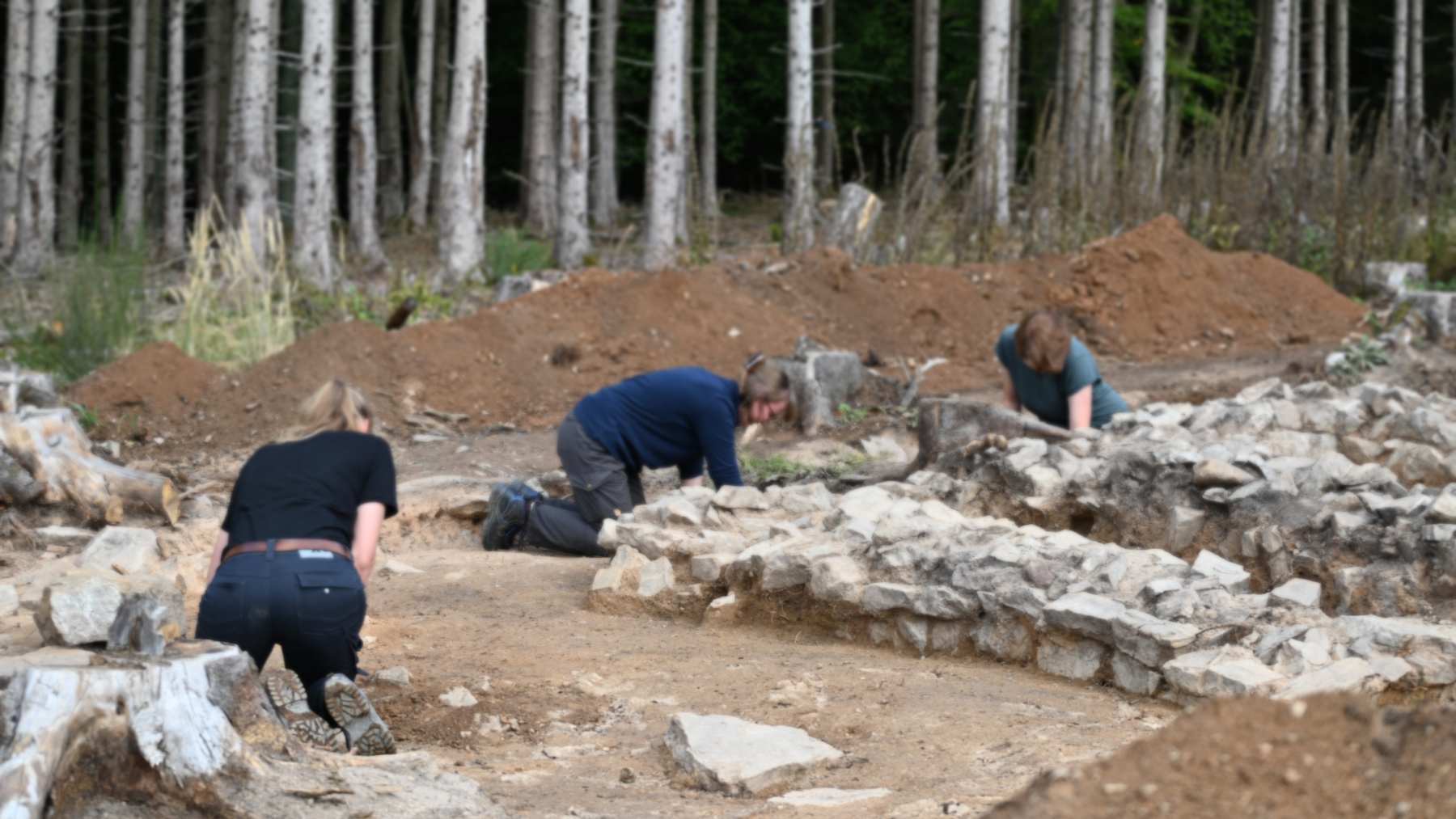
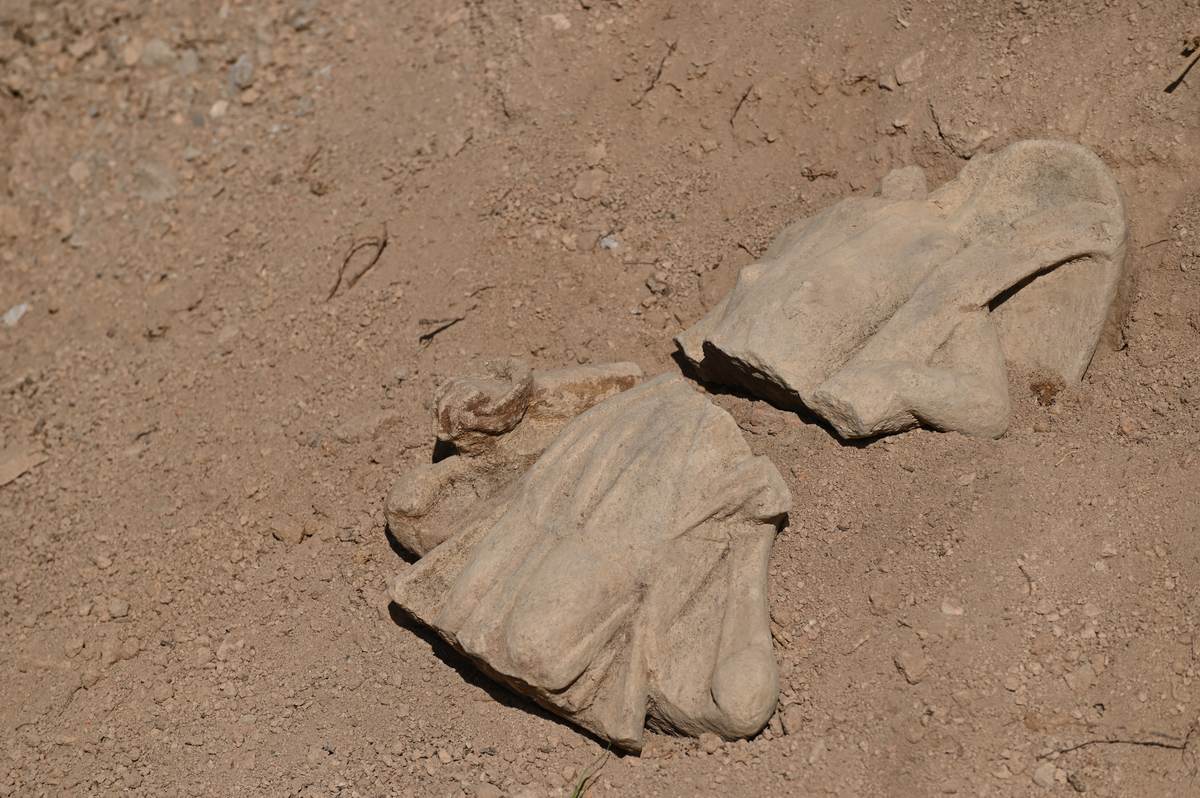
Archaeologists in the wooded eastern Taunus hills of Germany have uncovered a Roman temple of Mars, the god of war. It stood in the civilian settlement beside the Kapersburg fort. Inside, the team found two votive stones, a statuette of the goddess Victoria and pieces of a statue that probably shows Mars himself.
Hesse’s State Office for Monument Preservation (LfDH) announced the finds on September 25, 2026, in a report on the third season of digging. Many Roman remains lie just a few inches below the forest floor. A small brooch found near the temple may also show that people used the place after the Roman army had gone.
A village beside the fort
Kapersburg is one of the best-preserved forts on the Upper German-Raetian Limes in Hesse, the office says. For about 150 years it housed an auxiliary unit called the Numerus Nidensium. The unit took its name from Nida, the Roman town under today’s Frankfurt-Heddernheim.
The Limes was the fortified frontier of the Roman Empire in this part of Europe. It runs for about 342 miles (550 kilometers) through four German states, according to the LfDH page on the frontier. UNESCO added it to the Frontiers of the Roman Empire World Heritage site in 2005.
Louis Jacobi and the Reich Limes Commission dug at the fort more than 125 years ago, and later work also focused on the fort. Since 2024, hessenARCHÄOLOGIE and Goethe University Frankfurt have been studying the vicus instead. That is the civilian village that grew up a few yards farther into the woods.
Votive stones and Victoria
The temple turned up at the edge of the current excavation area. Archaeologists from the Saalburg Roman Fort museum uncovered its walls. Katharina Grieshaber of the Saalburg later explained to a television crew how the team came across the building.
Besides the walls, the excavators found two more votive stones. Worshippers set up these carved blocks for a god, often to fulfill a vow. Their inscriptions can name the person who paid for them.
One of the key objects from the temple is the small statuette of Victoria, the goddess of victory. The broken pieces of a second statue probably belong to Mars, the god of the temple, the LfDH says.
Professor Markus Scholz of Goethe University Frankfurt is already studying the inscriptions on the new stones. He also translated a votive stone found during the previous season. That stone is now on display at the Wehrturm Museum in nearby Rosbach vor der Höhe.
Layers the forest kept
The temple survived in such good shape largely because nobody farmed above it. Plowing breaks up shallow archaeological layers and mixes objects from different periods. Untouched woodland can keep them in order.
District archaeologist and Limes coordinator Kai Mückenberger leads the team with excavation director Manuel Pieper. “We have layers of preservation here that are unmatched elsewhere in Hesse, because no farming has gone over them,” Mückenberger said in remarks translated from German.
He added that “the forest has preserved everything over the past centuries.” As a result, the team finds layers that are usually gone at other sites.
The woods also make the work slow. The forest setting rules out heavy machinery, so the digging is done almost entirely by hand, according to the office.
A smithy turned into homes
Away from the temple, the excavators found extensive traces of ancient craft workshops. They include the area of a blacksmith’s forge. Leveling layers suggest the Romans flattened the workshop while reorganizing the village and later built houses there.
Pieper has pointed to burn marks in one of the craft buildings. For the office, they mark a planned rebuild of part of the vicus while people still lived there. An amphora, a clay jar for food or liquids, ended up set into the foundation of a building.
Traces of Roman roads and terraces cut into the slope also help the team map the size of the village.
A late Roman brooch
The textbook date for the end of Kapersburg is the mid-third century. That is when the frontier fell apart, an event German historians call the “Limesfall,” and the garrison pulled out. Jacobi’s early digs seemed to back that up.
Near the temple, however, the team recovered a fibula from late antiquity, a metal brooch for fastening clothes. Fragments of handmade pottery lay nearby. According to the LfDH, this would be the first archaeological evidence that the area was used after the Limes period.
Based on the finds, the office links that later use to the Alamanni. These Germanic groups had already settled in the nearby Wetterau region. Whether more traces of the village’s late history survive remains to be seen, the announcement says.
New inscriptions await translation
Several key questions remain open. The office has not yet released the texts of the two new votive stones, so the people who made the offerings are still unnamed. The second statue is also only probably Mars.
Carved texts like these can keep a name alive for many centuries, much like a Greek decree set into a Romanian monastery floor. At Kapersburg, Scholz’s work may tell whether a soldier, an officer or a villager paid for each stone.
A single brooch and a handful of potsherds prove someone was there after the Romans. How long they stayed, and whether anyone still prayed in the temple, is unknown. Mückenberger hopes to continue the dig with Goethe University students next year, according to the office.
The full announcement was published by the Hesse State Office for Monument Preservation on September 25, 2026.
Photo: Lars Görze / Landesamt für Denkmalpflege Hessen