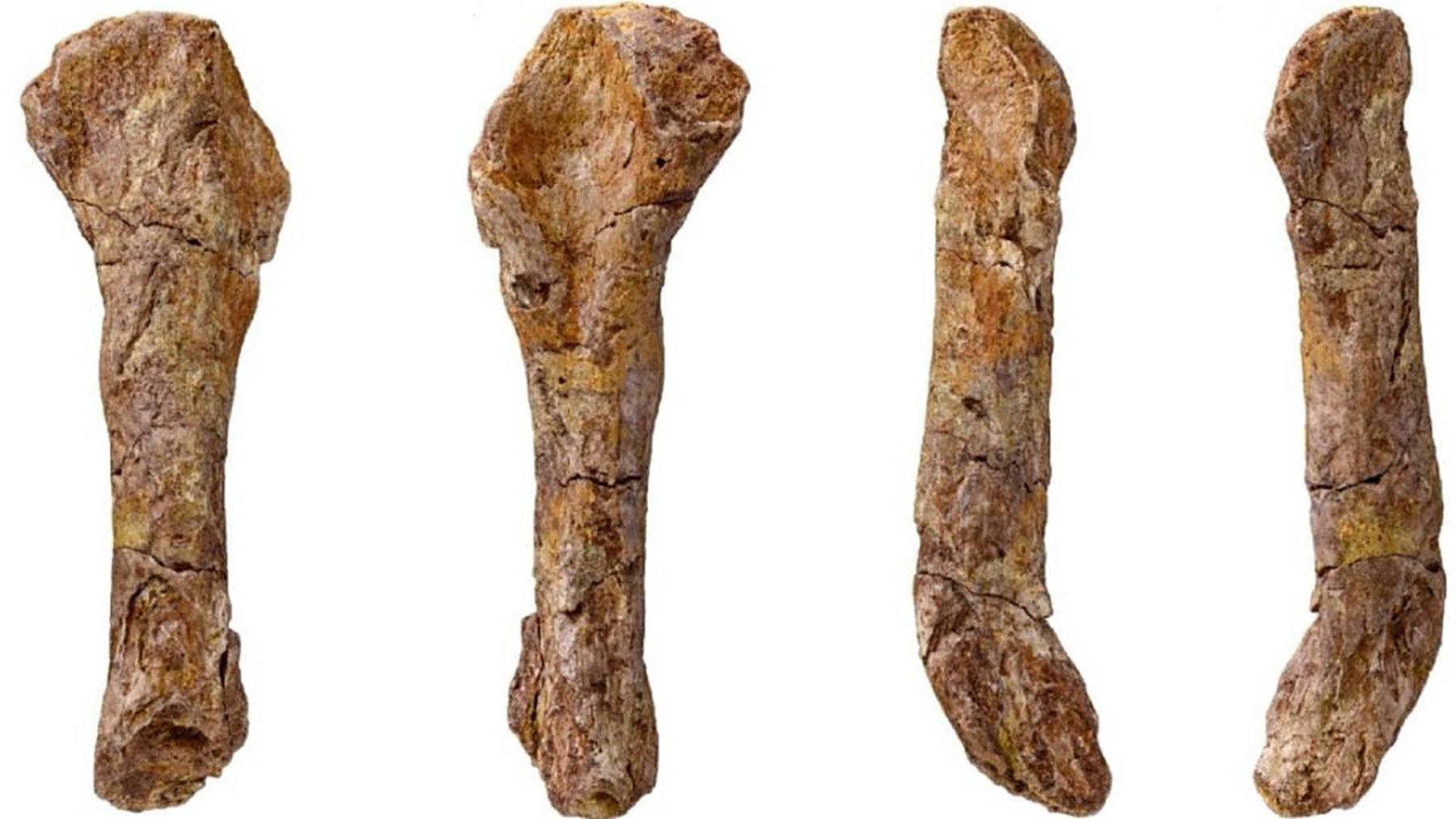
A freshwater mosasaur about 8.2 feet (2.5 meters) long lived in a lake in southern France roughly 84 million years ago, a new study of fossils from near Aix-en-Provence reports. The species, named Garamaudo bauciensis, had leglike limbs and bones so dense that walking on land would have been risky.
Most mosasaurs were ocean predators with flippers, at home in Cretaceous seas like the one over South Dakota. The biggest reached about 49 feet (15 meters). This one belongs to a small branch of the family that stayed in inland waters.
A roadside dig at Bouc-Bel-Air
Staff from the Natural History Museum of Aix-en-Provence excavated the bones in 1997. The site is a small outcrop along a departmental road in Bouc-Bel-Air, between Aix and Marseille.
About 20 bones came from a single animal. They include part of a lower jaw, seven vertebrae, six ribs and a partial pelvis.
Two other bones from the same layer belonged to a larger and a smaller individual. In 2018, a rescue dig turned up one more vertebra about 66 feet (20 meters) away. The site may therefore hold at least four of these reptiles.
Nathalie Bardet and Alexandra Houssaye, both at France’s National Museum of Natural History in Paris, led the description. Bardet works at the Paris Paleontology Research Center, and Houssaye at the Adaptive Mechanisms and Evolution laboratory.
Like an Antarctic bone that spent 40 years in a museum drawer, these fossils waited a long time for a name. Four co-authors from museums and a nature reserve in Provence joined the two Paris researchers.
Leglike limbs on an 8-foot hunter
Ocean-going mosasaurs had paddles, and their spine no longer locked onto the hips. Garamaudo kept the older layout. Its limbs looked like those of land lizards, and a true sacrum joined its backbone to the pelvis.
Mosasaurs were not dinosaurs but squamates, the reptile group that also includes snakes and lizards. Garamaudo’s lower jaw is long and slender, a shape the team links to the earliest members of the family.
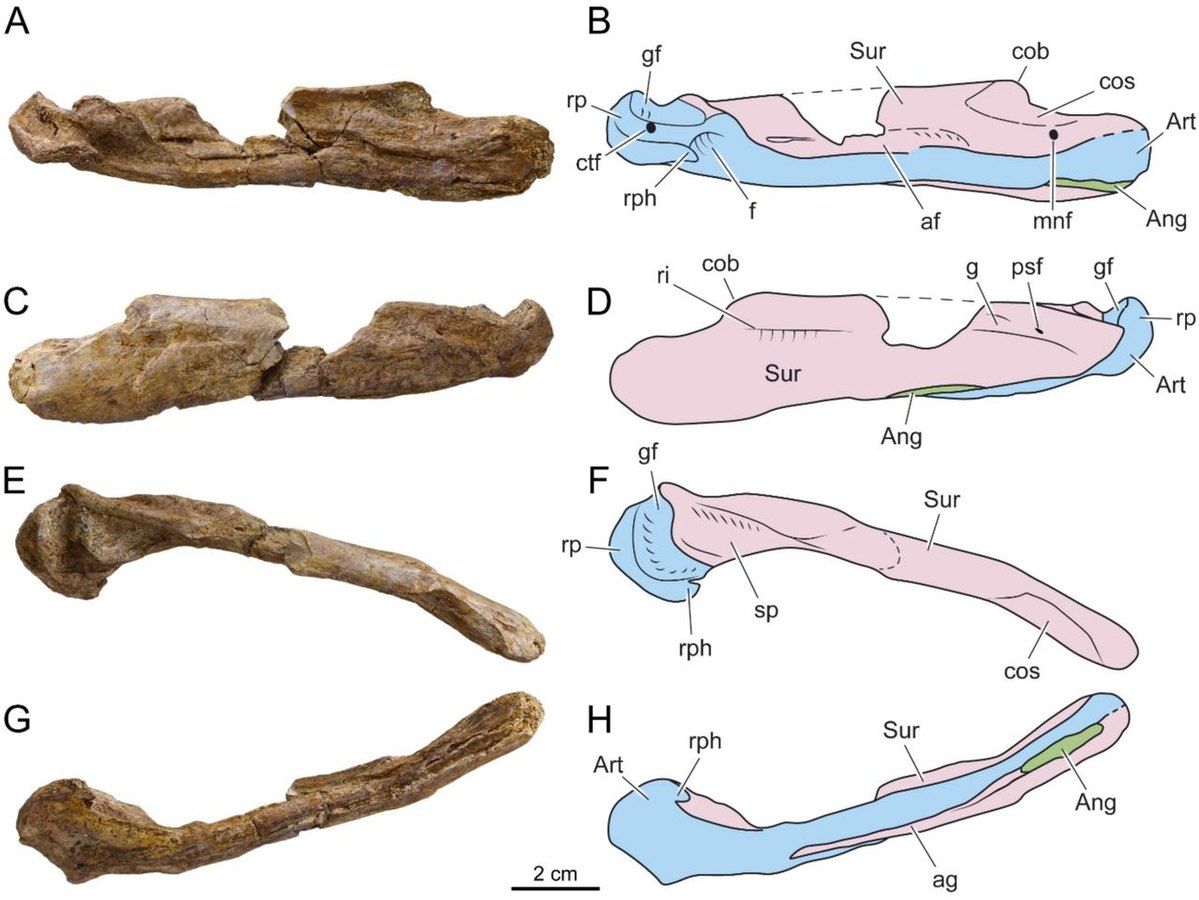
Its long, nearly straight ribs point to a body deeper than it was wide. A small upper arm bone suggests reduced front limbs, and barely visible sutures on the jaw and pelvis point to an adult.
Bones packed too tight for land
To look inside, the researchers scanned three vertebrae, a rib and the upper arm bone with high-resolution CT at the University of Montpellier. The technique builds cross sections from X-rays. Scientists can then measure how solid a bone is without cutting the fossil.
Every scanned bone showed osteosclerosis, a buildup of compact bone that makes a skeleton heavier. The authors read that extra weight as ballast against buoyancy, the upward push of water, which also helped keep the body level.
According to the paper, such bones are “incompatible with terrestrial locomotion, because of the high risk of fracture.” The team pictures an animal that “probably hovered at shallow depth” and swam with eel-like waves of its body.
Possibly limited acceleration and maneuverability point, in the authors’ words, to “ambush predation.” Blood vessel channels in the bone suggest Garamaudo was more active than modern lizards, though less so than the large open-sea mosasaurs.
Frédéric Mistral’s 1859 poem Mirèio supplied the genus name. In Provençal, “Gara au maudo” means “beware the cursed one,” and the Garamaudo of local lore was a serpent-like thing lurking in fresh water.
Snails and clams in the marl
Thierry Tortosa of the Sainte-Victoire National Nature Reserve, a co-author, took part in the fieldwork at the outcrop. The bones lay at the base of limestone beds, against marls packed with freshwater snail shells and the clam Corbicula concinna.
Snails such as Viviparus bosquiana lived along plant-lined lake margins in clear, bicarbonate-rich water, while Corbicula clams preferred quiet, sometimes oxygen-poor ponds. Several bones snapped yet kept crisp surfaces, which the team blames on a flood that moved them only a short way.
Garamaudo shared the lake with a gar-like fish about 6.6 feet (2 meters) long, a coelacanth, turtles and small crocodile relatives. With no large crocodiles around, the mosasaur and the gar ranked among the top predators.
Hungary’s Pannoniasaurus came first
Freshwater mosasaurs are not new to science. In 2012, a Hungarian-led team described Pannoniasaurus inexpectatus as the first known mosasauroid that lived in fresh water. Its remains ranged from small juveniles to large adults.
That animal could reach about 20 feet (6 meters). Another freshwater form from Villeveyrac, also in southern France, grew to roughly 10 feet (3 meters). Isolated teeth from Austria add further cases.
All of them belong to the tethysaurines, the only mosasaur subfamily known to have produced several freshwater species. Europe was then a scatter of islands. A single invasion would have forced these reptiles to travel between distant lakes by sea, so the team leans toward several separate ones.
Inland waters may also have kept these smaller reptiles away from marine mosasaurs longer than 16 feet (5 meters). Those giants were growing common in European seas at the time. Taken together, the finds suggest “a richer evolutionary history of mosasauroids than is currently assumed,” the authors write.
Diet and skull still missing
Most of the skull is gone, along with the teeth that would show what Garamaudo ate. Some fossils keep stomach contents, like a Queensland ichthyosaur that preserved its last meal. These bones do not.
The authors suggest small fish, reptiles or amphibians, caught alive or scavenged, but call its precise diet unknown. The 8.2-foot length is an estimate from partial bones.
Even the humerus is tricky, since it came from a smaller animal than the main skeleton. Its length relative to the jaw, 0.55, may partly reflect that size gap.
The full study was published on September 28, 2026, in Peer Community Journal, after review and a recommendation by PCI Paleontology.
Image: Bardet et al. / Peer Community Journal, CC BY 4.0