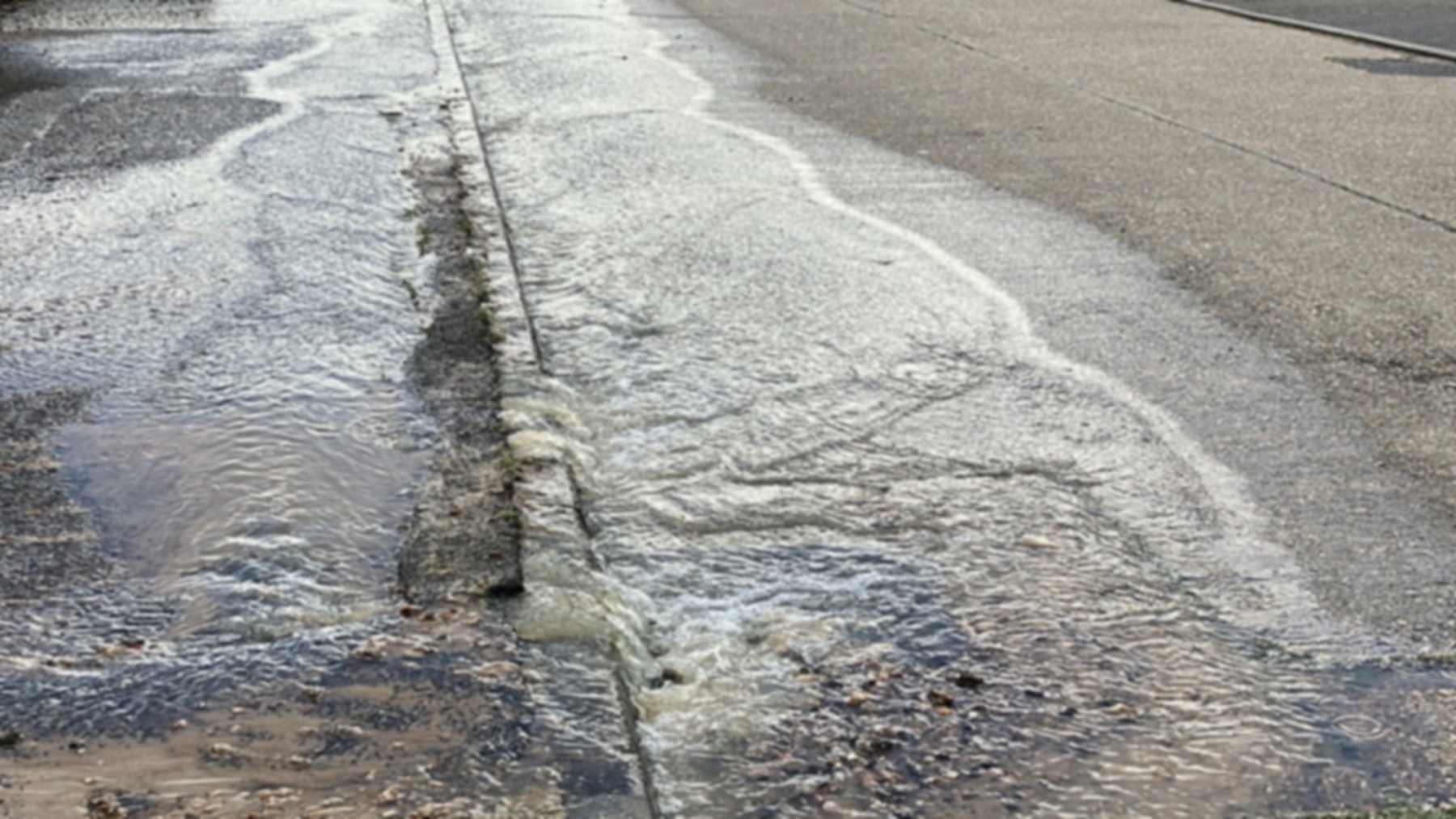
Southern Water has been ordered to pay £525,000 after a sewer pipe burst under a street in Herne Bay, Kent. Sewage was forced up through the pavement, past houses and into the sea, England’s Environment Agency said on November 19.
The pollution lasted about eight hours on March 23, 2024. The beach was effectively closed, with warnings to stay out of the water left in place for two days.
Sewage past the houses
Environment Agency officers sent to Fairfax Drive found sewage running past homes and into surface drains. All day, the effluent then flowed down a stream and out to sea.
An estimated 7 liters (almost 2 gallons) of sewage a second poured from the pipe. It started shortly after 10 a.m., and Southern Water finally stopped it at 6 p.m. By our own arithmetic, that rate over eight hours comes to roughly 200,000 liters, or about 53,000 gallons.
Tests of the polluted water showed levels of toxic ammonia significantly higher than elsewhere in the stream. Canterbury City Council put up temporary signs telling people to stay out of the sea.
The same pipe burst in 2022
“Yet again, this was avoidable pollution by Southern Water, which was negligent in not learning from history,” said Lindsay Faulkner, the agency’s environment manager in Kent. “The same underground pipe burst in 2022 and taught them nothing about a speedy, thorough response the second time.”
Sewers burst, Faulkner said. But the company should have responded faster, with a proper contingency plan after the incident 15 months earlier.
According to the agency, Southern Water failed to send enough tankers and temporary pipework until well into the evening. These were needed to divert sewage from the local pumping station and would have stopped the discharge sooner.
Parked cars or pumping?
Southern Water claimed that cars parked on the pavement in Fairfax Drive had put pressure on the pipes below. Investigators believed the force of sewage pumped through the sewers caused the burst.
The penalty is a variable monetary penalty, an alternative to prosecution. The agency first set it at £1 million in December 2025. The company appealed, a first-tier tribunal heard the case on September 30, and the penalty was cut to £525,000 on November 17.
Southern Water also paid £11,152 to cover the agency’s full costs.
Weeks after almost £10 million
The penalty follows a £7.1 million fine in July, after sewage incidents between 2019 and 2021 closed beaches in Thanet for days. It also follows a £2.4 million fine in September for pollution around Faversham and Whitstable.
Together, those two court fines come to almost £10 million, all for pollution in Kent. The July case came almost exactly five years after a record £90 million fine for nearly 7,000 illegal sewage discharges, the agency says.
In September, Faulkner said that pollution could have been avoided if Southern Water had managed its operations better. So could the disruption to local businesses and to people wanting days out. Water companies must learn to fix problems before the environment pays the price, Faulkner added.
A record of Kent spills
The July case covered five major incidents. Around the August bank holiday in 2020, a failed pump at the Margate pumping station sat out of order for weeks. After a second pump failed too, at least 16 million liters of sewage went into the sea across two days.
On that same day, between 1.6 million and 3.2 million liters of untreated wastewater left a pumping station at Broadstairs for more than two hours. Southern Water told the agency only weeks later, so the local council could not warn the public.
The September case included diesel that leaked from a generator into Swalecliffe Brook in Whitstable in July 2019. It also covered three days of untreated sewage released into Faversham Creek in March 2020. When that case was decided this September, Faulkner said the agency had carried out 700 inspections of Southern Water sites in the past year.
The agency has been busy in recent days. As we reported, it brought the case against a chemical plant in County Durham that was fined after phenol scorched a patch of its ground. On a brighter note, it also released 400 young barbel marked with blue dye into the Thames.
Elsewhere on the north Kent coast lies the SS Richard Montgomery, a wartime wreck off Sheerness that still holds about 1,400 tons of explosives, which we covered in October.
Photo: Environment Agency