A sudden vinegar smell next to a garden tree can mean a goat moth caterpillar has spent years tunneling through the trunk, and the wood can end up snapping

Adrian Villellas
Published On: September 29, 2026 at 4:54 PM
Follow Us
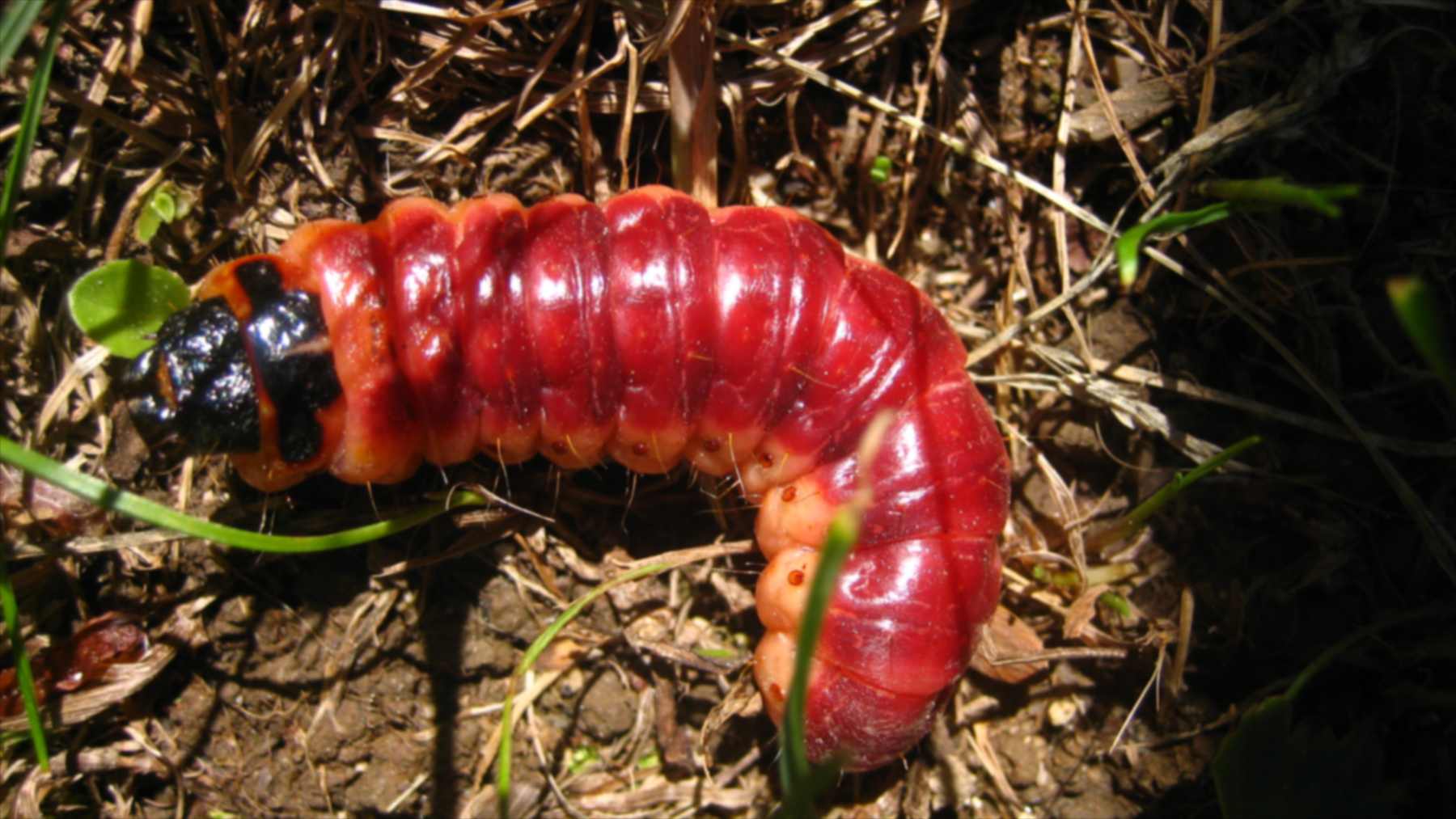
Goat moth caterpillar (Cossus cossus) on the ground

An unusual smell coming from a tree trunk puzzles many gardeners. The reason is deep in the wood.

All of a sudden there is a strong smell of vinegar in the garden, right next to the tree, and for no obvious reason. The culprit is hiding in the wood: the caterpillar of the goat moth, up to four inches long and as thick as a finger, with a striking red and yellow color. Week after week it eats its way through the trunk.

Goat moth: these signs give away the tree pest

People who notice the smell will often find the second clue right on the trunk, which is big round holes in the bark. The culprit is probably the goat moth, a night moth from the family of the wood-boring moths, the Chamber of Agriculture of Lower Saxony says. The moth itself is rarely seen, its gray, mottled wings give it perfect camouflage on the bark.

Most of the time you only see the infestation through the caterpillar, and the caterpillar is easy to identify. The back is dark red, the underside has a yellow shine and the body, according to the gardening site Mein schöner Garten, looks shiny like it was lacquered. You should still handle it carefully though. It is not poisonous, but it can bite hard.

Why goat moth infestations often go unnoticed for years

A lot of gardeners are surprised by the vinegar smell, but the infestation usually started years before that. The females lay up to 700 eggs in cracks in the bark of trees that are already weak. When the young caterpillars hatch they first eat through the bark as a group, and after that each one goes deeper in on its own, so nobody sees them anymore.

That can take two to four years, says the Chamber of Agriculture, and the caterpillar eats tunnels in the wood that are up to three feet (one meter) long during that time. Mein schöner Garten says the vinegar smell and fine reddish wood shavings at the bottom of the trunk are signs of what is happening inside the tree. Ignore them and the infestation can go on for years and nobody notices.

When the goat moth puts the tree at risk of breaking

If nobody notices the infestation for a long time, the tree is in more and more danger. The more tunnels there are, the less stable the wood is, and then wind and snow break branches more easily, the Chamber of Agriculture of Lower Saxony warns. The old and weak trees in a garden are the ones most at risk, because the goat moth prefers to lay its eggs there.

On top of that, fungi that rot wood spread more easily through the feeding tunnels, and they make the trunk even weaker from the inside, according to the Chamber of Agriculture of Lower Saxony. In the worst case the whole tree dies.

Photo: Alfried h.
Adrian Villellas

Adrian Villellas

Adrián Villellas is a computer engineer and entrepreneur in the fields of digital marketing and advertising technology. He has led projects in data analysis, sustainable advertising, and solutions for new audiences. He also contributes to scientific initiatives related to astronomy and space observation. He writes for science, technology, and environmental media outlets, where he makes complex topics and innovative advances accessible to a broad audience.

Related Post

Crown-of-thorns starfish on a coral reef

The crown-of-thorns starfish is blamed for ravaging the Great Barrier Reef, but a University of Sydney study found coral survived almost 75% of its bites on a protected reef and it may boost diversity

September 29, 2026 at 9:14 AM
Cattle grazing in a green field beside rows of solar panels

A Tennessee solar farm is testing cattle beneath moving panels, using a special “grazing mode” to create safer clearance for cows and calves while still generating enough electricity for roughly 500 homes, a commercial test of whether farming and solar power can truly share the same land

September 27, 2026 at 6:35 PM
Cluster of invasive zebra mussels attached to the shell of a native mussel

Three intake gates at South Dakota’s Gavins Point Dam emerged from the Missouri River carrying about 75,000 pounds of zebra mussels and debris, revealing how a tiny invasive species can clog cooling systems and threaten hydropower serving roughly 68,000 homes

September 27, 2026 at 5:02 PM
Adult greater flamingo feeding a grey fluffy chick with crop milk

Nine flamingo chicks at the Smithsonian’s National Zoo are revealing one of bird parenting’s strangest sacrifices: both mothers and fathers produce nutrient-rich red “crop milk” that can drain so much pigment from their bodies that the famously pink adults temporarily fade to nearly white

September 27, 2026 at 10:14 AM
Old mattresses dumped on a street pavement next to a wall

Americans throw away an estimated 50,000 mattresses every day even though more than 75% of their components can be reused, and Oregon’s first full year of statewide collection kept 134,000 mattresses and box springs out of the waste stream while recovering 5.9 million pounds of material

September 27, 2026 at 6:29 AM
Green algal bloom along the shore of Lake Erie near Kelleys Island

Scientists found fish crowding along the edges of Lake Erie’s oxygen-starved “dead zones,” creating unusually large catches that can make populations look healthier than they really are and potentially distort estimates used to prevent overfishing

September 26, 2026 at 6:31 PM

Leave a Comment