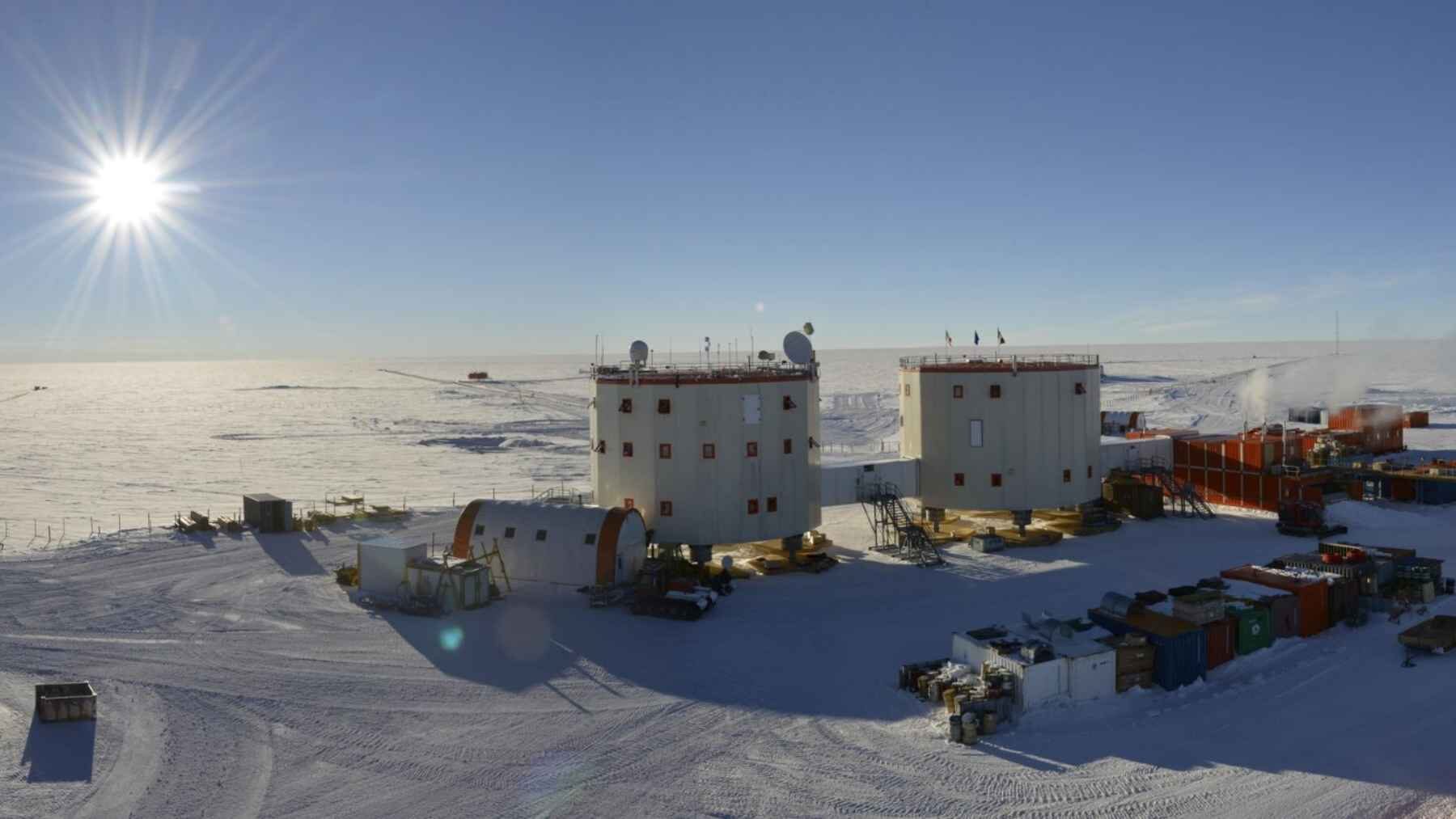
The Northern Hemisphere is not the only place in the world dealing with strange, and let’s say also extreme, temperatures. Let’s go now deep down to Antarctica. A thermometer deep inside said maybe quite the opposite. Concordia Research Station fell to minus 119.4 degrees Fahrenheit on July 18, 2026. And you know what? Since 2012 there has not been a temperature this low recorded in any part of the Earth. The same reading appeared twice, only nine minutes apart.
I think that most of us can not even imagine these extreme temperatures, but let me tell you that this is not a world record and, as controversial as it may sound, it does not mean that global warming has reversed. In fact, a few weeks earlier, another Antarctic station got close to 60 degrees during winter.
Cold struck twice at Concordia
It was first at 6:25 and again nine minutes later that in Concordia recorded minus 119.4 degrees. This station operates together with Italy’s National Antarctic Research Program and the French Polar Institute Paul-Émile Victor. It is a very small but important and brave crew working through months of darkness and isolation.
Gabriele Carugati, an atmospheric chemist, glaciologist and station leader, described temperatures at that level as “remarkable.” This is because at Concordia the temperature often drops to around minus 112 degrees. Although its station record remains minus 120.5 degrees from 2010.
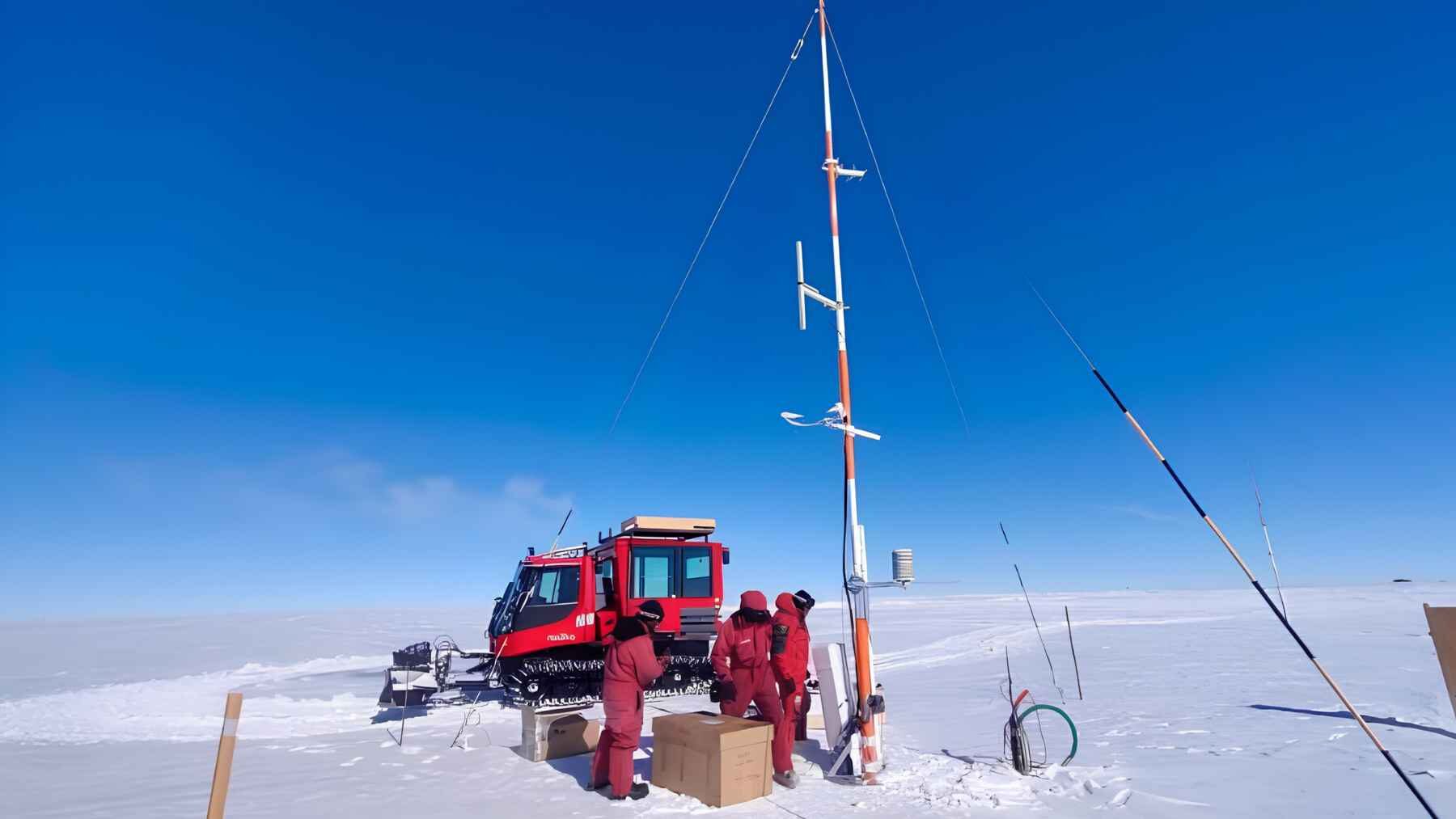
Why this place gets so cold
As you can imagine, this is mostly because of the location. Concordia is more than 10,500 feet above sea level on the high Antarctic Plateau, over 600 miles from the coast and on ice approximately 10,800 feet thick. It is during winter that the Sun disappears for months and that the air turns completely dry and stable.
Clouds can act like a blanket by absorbing part of the heat leaving the surface, but it is important to say that often that blanket is missing. So with that happening, the heat escapes into space, the snow surface cools, and dense cold air can settle into shallow dips in the ice. So yes, clear skies matter too.
What if I told you that between 2004 and 2016, a 2018 study led by Ted Scambos found that the surfaces covered with snow around in 100 sites in the East Antarctic reached about minus 144 degrees Fahrenheit? This was detected via satellites. With this study they could actually measure only the superficial layer of snow from the sky, and not the standard air temperature at a weather station.
Earth’s all-time low still stands
These low temperatures sound extreme, but still the first place is at Vostok Station on July 21, 1983. Can you imagine that the World Meteorological Organization recognizes minus 128.6 degrees Fahrenheit? Vostok is another high-altitude station in East Antarctica, and its mark shows that it was more than nine degrees colder than Concordia’s reading in July 2026.
That does not mean that Concordia’s result is not important. Remember that it is the lowest reported air temperature on Earth since 2012, and it was with this report that it was known that there was a clear but unusual cold snap.
Antarctica also neared 60 degrees
As researchers predicted, the cold snap arrived some weeks later to the opposite extreme. It was in Argentina’s Esperanza Base, on the northern tip of the Antarctic Peninsula, that the temperature reached 59.7 degrees Fahrenheit on June 6. Surprisingly, this was the station’s highest June temperature on record and about 36 degrees above its usual level for that time of the year.
But the warmth here was not just an afternoon thing. This means that temperatures stayed at this level for three consecutive weeks. It was such a phenomenon that Raúl Cordero, a climatologist at the University of Groningen, called this event an anomaly “absolutely crazy.”
Concordia and Esperanza are in completely different Antarctic settings.And why is this? This is because the first one is high, dry and deep in the continental interior, and the second one is low and close to the ocean. And this is the best evidence to show how geography and changing air patterns can produce sharp contrasts across a vast continent.
Extreme cold does not cancel global warming
Did you know that weather and climate are not the same thing? To keep it clear there can be a single cold day that can be isolated within a warming climate. Daily weather describes what happens over hours or days in one specific place and the climate on the other hand, shows a wider spectrum across decades and around the planet.
But here comes the bad news. Satellite gravity measurements indicate that Antarctica lost about 165 billion U.S. tons of ice per year between 2002 and 2023. That loss is not uniform, and that is important to highlight, since it clearly shows that one single event or specific case cannot be used as a veredict for the entire continent.
Recent research brought much concern and alarm because it shows how climate change is unfortunately making some Antarctic heat events stronger. Sergi González-Herrero at the WSL Institute for Snow and Avalanche Research led a study in 2026, where he found that today’s climate amplified the heat wave in March 2022 around Dome C by about 10 degrees Fahrenheit on average compared with a preindustrial climate.
Why Concordia’s measurements matter
Concordia is not just a station at the end of the world used as a thermometer.Why? Because there, researchers also study the atmosphere, glaciers, earthquakes and astronomy. It is also there that the European Space Agency studies in depth how the people that are there deal with isolation, darkness and thin air. Imagine the level of isolation, that once the winter starts there, airplanes can not reach the crew living there.
So, the key point here is not simply that the Antarctic is losing ice because it is warming or freezing. The main point is that the continent is capable of both profound cold and increasingly disruptive heat.
The original news report by Sarah Kuta was published in Smithsonian Magazine.