“Try not to become a man of success, but rather try to become a man of value.” The line has traveled far beyond science classrooms, graduation speeches, and quote calendars because it touches a pressure most people recognize.
Success often depends on applause, rankings, money, titles, or the approval of people who may change their minds tomorrow. Value is different. It asks a quieter question. What are you giving back?
A quote with a warning
The wording most often linked to Albert Einstein is generally traced to a 1955 LIFE magazine article by editor William Miller, published shortly after the physicist’s death. Quote Investigator notes that versions of the sentence changed over time, including modern versions that swap “man” for “person,” but the central idea remained the same.
That matters because famous names attract loose quotations. Einstein, more than most, became a magnet for wise-sounding lines. In this case, though, there is stronger evidence than usual that the remark came from a real exchange near the end of his life.
Success can be fragile
The emotional trap behind the quote is easy to miss. Success is often measured from the outside, by promotions, awards, followers, grades, or a résumé that looks impressive at a glance.
But what happens when that attention fades? A person who builds identity only on being admired can feel lost when the crowd moves on. That is why the idea of “value” feels steadier.
In practical terms, being valuable means helping, creating, teaching, protecting, or solving something that matters. It may be noticed by thousands of people, or by only one person who needed it that day. Still, it counts.
Who Einstein was
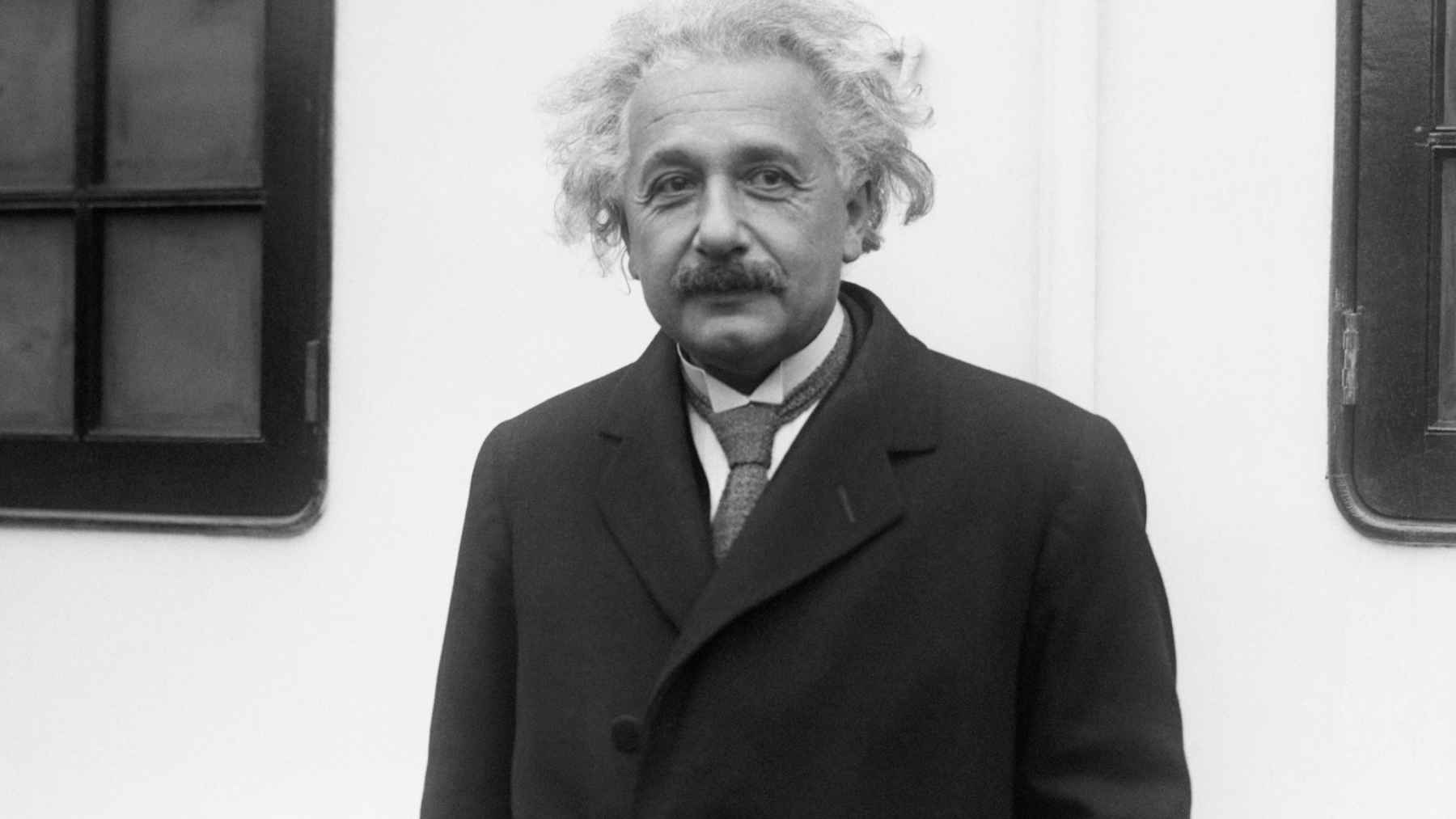
Albert Einstein was born in 1879 in Ulm, Germany, and became one of the most influential theoretical physicists of the 20th century. His work changed how science understands time, space, energy, gravity, and light.
His special theory of relativity appeared in 1905, a year when he produced several major papers while working outside the traditional academic spotlight. His general theory of relativity followed later and described gravity not as an invisible pull, but as a bending of space and time.
The Nobel Prize in Physics for 1921 was awarded to Einstein “for his services to Theoretical Physics,” especially for his discovery of the law of the photoelectric effect, a key step toward modern quantum physics. He received the prize in 1922.
The science behind the fame
Relativity may sound like a word made for textbooks, but its basic idea can be explained simply. Time and space are not fixed in the way everyday life makes them seem. They can shift depending on speed and gravity.
That sounds strange, but the effects are real. The National Institute of Standards and Technology explains that GPS satellites must account for relativity because their atomic clocks are affected by motion and by weaker gravity in orbit. Without those corrections, the blue dot on a phone map would not stay accurate for long.
So Einstein’s value was not only abstract brilliance. His ideas became part of the hidden machinery of modern life. Every time someone uses navigation to avoid traffic, find a hospital, or meet a friend, a piece of that legacy is quietly at work.
A complicated public life
Einstein’s life also shows why the quote feels more layered than a simple motivational poster. He was famous worldwide, but fame did not make his choices simple.
According to the Nobel Prize biography, he stayed in Berlin until 1933, then renounced German citizenship for political reasons and emigrated to America. He later became a U.S. citizen in 1940.
At Princeton, he joined the Institute for Advanced Study and continued working until his death in 1955. The institute notes that he also warned world leaders about German aggression and helped rescue Jewish and political victims of Nazism.
The nuclear shadow
One of the most difficult parts of Einstein’s public story is his indirect link to the nuclear age. In 1939, he signed a letter to President Franklin D. Roosevelt warning that uranium research could make extremely powerful bombs possible.
The U.S. Department of Energy’s history of the Manhattan Project says the letter was drafted with help from Leo Szilard and helped push the Roosevelt administration toward early government support for atomic research. Einstein did not build the bomb, but his signature carried weight.
This is where the idea of value becomes uncomfortable, and more human. Scientific knowledge can help society, but it can also carry consequences no one person fully controls. The trouble is, history rarely stays neat.
Why the quote still matters
For a teenager, the sentence can sound like advice about grades, college, sports, or popularity. For an adult, it can point to work, money, family, ambition, and the need to do something useful before the clock runs out.
The quote does not say success is bad. Einstein was successful by almost any measure. The deeper message is that success should follow contribution, not replace it.
At the end of the day, what it is trying to do is move the spotlight. Instead of asking, “How do I look?” it asks, “What good am I doing?” That is a harder question. It is also the one that lasts.