Big Thicket National Preserve in Texas is looking for volunteers of all ages to plant native species on December 5 and learn how restoration supports its longleaf pine savannah
Registered volunteers get the location and timelines; the park provides tools and lunch. Longleaf pine now covers about 3% of its historic range.

· 4 min read
Big Thicket National Preserve in southeast Texas is asking volunteers of all ages to help plant native species on December 5, at its annual winter planting event in the Big Sandy Creek Unit. Participants will work alongside park staff and partners, and learn how restoration supports the preserve's longleaf pine savannah. Sign up through Volunteer.gov, where registered volunteers will get the exact location, timelines and paperwork. The preserve provides tools, safety equipment, snacks and lunch, and American Sign Language interpreters will be on hand. Longleaf pine once dominated about sixty million acres across the Southeast, but today it survives on just over three million acres, about three percent of its historic range. For questions, call the Big Thicket Visitor Center at 409-951-6700.
Key points
- Big Thicket's annual winter planting is on December 5 in the Big Sandy Creek Unit; registered volunteers receive the exact location and timelines.
- The preserve provides tools, safety equipment, snacks and lunch, and ASL interpreters will be available throughout the event.
- Longleaf pine ecosystems now cover just over three million acres, or three percent of their historic range, according to the park.
A national preserve in southeast Texas wants help putting plants back in the ground. Big Thicket National Preserve invites volunteers of all ages to its annual winter planting event on December 5, according to a National Park Service news release. It takes place in the Big Sandy Creek Unit.
Volunteers can work alongside park staff and partners to plant native species. They can also learn how restoration supports the preserve's longleaf pine savannah and other Big Thicket ecosystems, the preserve says.
How to sign up
Volunteers can register through the event's page on Volunteer.gov. Registered participants will receive the exact location, timelines and pre-event paperwork before the planting, according to the release.
The preserve will provide all necessary tools, safety equipment, snacks and lunch. American Sign Language interpreters will be available throughout the event, the release says. More information is available from the Big Thicket Visitor Center at 409-951-6700.
"Restoration projects like this provide a meaningful way for community members to connect with Big Thicket National Preserve while helping protect and restore native habitats," said Megan Urban, the preserve's chief of interpretation and education.
"By volunteering alongside park staff, participants play a direct role in preserving the natural resources that make this place so special for future generations," she added.
The event has support from the Big Thicket Association, the Big Thicket Natural Heritage Trust, the National Parks Conservation Association, the Texas Conservation Alliance and Texas Master Naturalists.
A tree that needs fire
Two centuries ago, longleaf pine forests stretched across the southeastern United States, from east Texas to Virginia, according to the preserve's page on the species. Longleaf pine was the dominant tree on an estimated 60 million acres.
Today, longleaf pine ecosystems are found on just over three million acres, or three percent of their historic range, the park says. They survive mainly in scattered tracts on federal, state and conservancy lands.
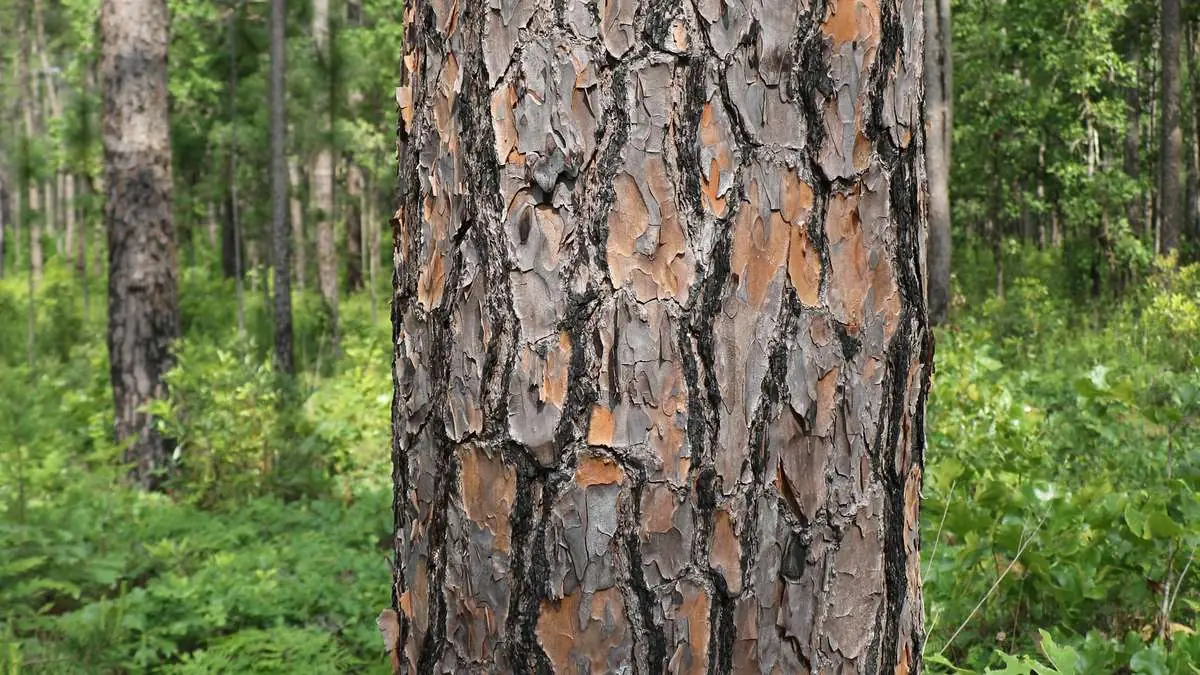
The species is very dependent on fire and highly resistant to wildfire, the page says. Historically it grew in large open stands. Below them grew grasses, forbs, scattered shrubs and oaks that also withstood frequent fires.
The trees reach 90 to 110 feet. Their extensive taproot anchors them during hurricanes, and they can grow on poorer and sandier soils than most other pines and hardwoods, the preserve notes.
Big Thicket takes part in the effort to restore longleaf pine habitat with active management. That includes prescribed fire and the planting of young longleaf pine seedlings on several thousand acres, the page says.
Visitors can follow some of that growth. In 2020, park staff installed a Chronolog photo station at a restoration site called the Centennial Forest. People can take photos with their phones and send them to Chronolog to help track the newly planted pines.
Burning to restore
The National Park Service calls longleaf pine savanna "an imperiled, highly fire-dependent ecosystem" in a project profile. It can support as many as 40 plant species per square meter. Big Thicket contains the largest historic tracts of it in the National Park System, the profile says.
A related Park Service article describes the Big Sandy prescribed fire in Polk County, on the park's northern boundary, aimed at restoring the savanna and reducing hazardous fuels near communities.
Fire managers waited several years for the right conditions. The area had too much rain in 2021, and fire danger was high to extreme in 2022 and 2023. In 2024, managers finally had favorable conditions and burned 4,000 acres, the article says.
Frequent, low-intensity fires remove fuels that can lead to catastrophic wildfires, according to the agency. The treatments also help prevent woody brush from building up and control invasive plants and insect pests. They recycle nutrients into the soil and encourage new plant growth.
A crossroads of forests
Big Thicket National Preserve lies near Beaumont, 75 miles northeast of Houston. According to the park's page on the unit, the Big Sandy Creek Unit sits in the northwest corner of the Big Thicket region, where the woods shift between upland pine forests, slope forests and floodplain plant communities. The preserve consists of nine land units and six water corridors covering more than 113,000 acres, according to the release.
The preserve is often called a biological crossroads, according to the release. It is a transition zone between four distinct vegetation types: moist eastern hardwood forest, southwestern desert, southeastern swamp and central prairies.
Anyone planning to explore the unit on another day should know that hunters use it in fall and winter. The season generally runs from October through February, and the park advises checking exact dates with visitor center staff.
National Park Service
Glossary for this story
- Ecosystem
- A community of living things and the environment they live in, together with the relationships between them.
- Floodplain
- Flat land beside a river that naturally floods when the water rises. It stores excess water and supports wetlands and wildlife.
Jordi Company
Writer at ECOnewsJordi Company is a well-known figure in Catalan publishing and a pioneer of the free press model, with 40 years of experience in television, radio and print. He has founded and led several media groups and today heads ECOticias.com, an environmental news outlet read in Spanish and English around the world and an audience leader since 2004. He is a member of the International Network of Writers for the Earth (RIET), among other organisations.
More from Jordi CompanyComments · 0
Rules ›No comments yet. Be the first to share your view.