Plants and fungi
Many surprising things are happening with plants. There is a flower that apparently produces energy and bison in Romania are changing local plant life. Research relating to plants is discussed, as well as highlighting when a plant headline seems more impressive than it really is.
81 stories · since 2024 · latest, 7 h ago

A lead azide detonation planned at an Iowa Army plant could send lead dust downwind, and Illinois officials are telling people in the plume’s path to stay inside for 24 to 48 hours
The US Army wants to destroy a stockpile of unstable explosives at an ammunition plant in southeast Iowa. The lead azide detonation could spread lead dust…
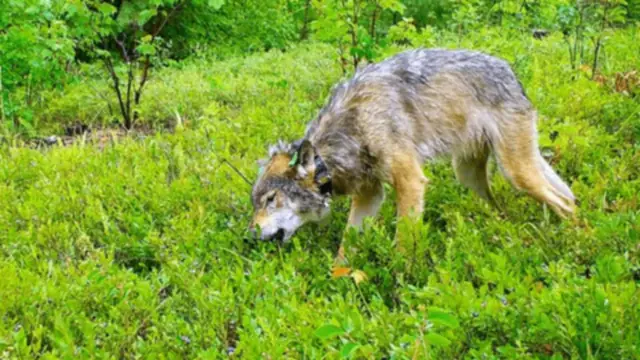
Wolves in northern Minnesota leave blueberry seeds in their scat, and when scientists planted them 96 percent sprouted, which hints at a job few people would expect from a predator

Australia planted 14,000 native plants around the solar panels on a rooftop in its first new city in a century, and the panels outperformed a conventional roof while a rare bee moved in
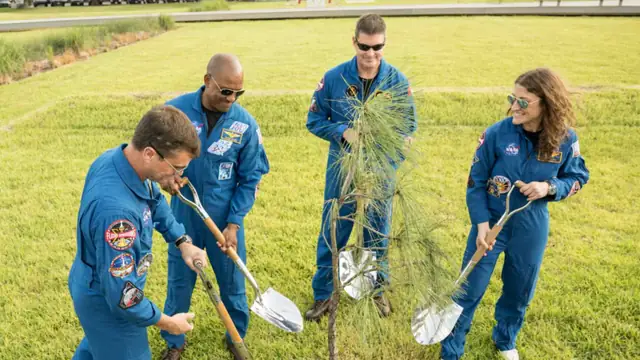
An astronaut carried tree seeds around the Moon in 1971 and the canister burst open back on Earth, yet Moon trees grew anyway and NASA still cannot say where they all are
Moon trees began with a small canister that astronaut Stuart Roosa carried around the Moon in February 1971. NASA’s current list files 63 U.S. sites under…
ECOnews Newsroom · November 13, 2026
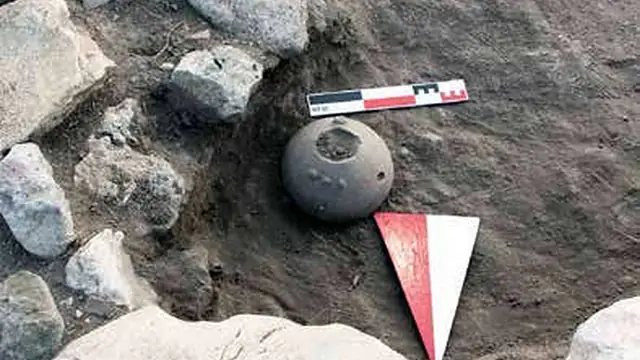
Archaeologists in Turkey found the oldest known seeds of a flower that grows only around one Ankara district inside a 4,000-year-old Hittite jug, and its survival may come down to when farmers plow
Archaeologists at Külhöyük, a mound in Ankara’s Gölbaşı district, found the oldest known seeds of Turkey’s “love flower” inside a Hittite jug about 4,000…
Adrian Villellas · November 11, 2026
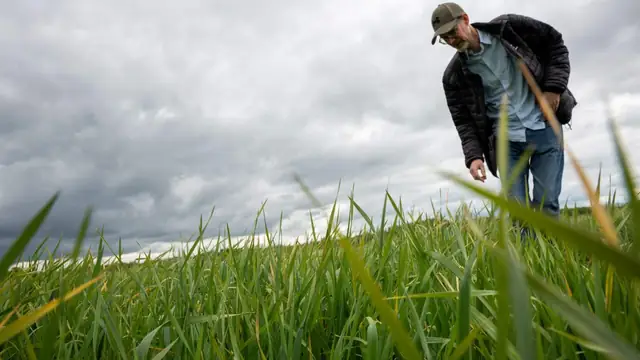
Farmers can plant this perennial grain once and harvest it for several years while its roots reach 10 feet deep, and researchers say the catch shows up in the grain bin after the second harvest
Kernza, a perennial grain that grows back after each harvest, can send roots about 10 feet (3 meters) into the ground. Researchers are testing it from…
Adrian Villellas · November 11, 2026
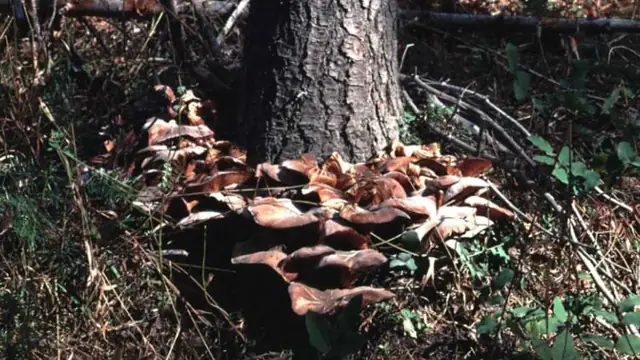
The Humongous Fungus has quietly spread through 2,385 acres of Oregon forest soil, and the honey mushrooms it pushes up each fall barely hint at the tree-killer hiding below
The Humongous Fungus is a single honey fungus living under the Malheur National Forest in eastern Oregon. It covers an estimated 2,385 acres, or about 3.7…
ECOnews Newsroom · November 9, 2026
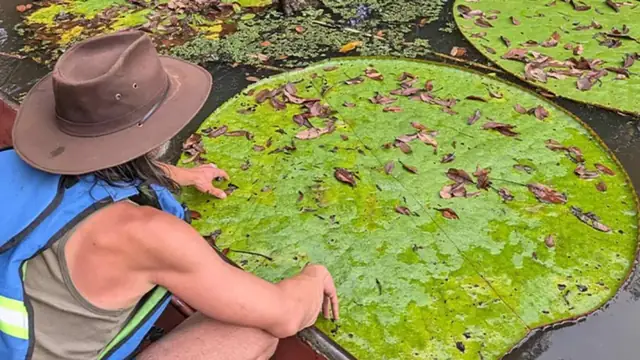
A single Instagram photo from Colombia has revealed a new giant water lily that can be seen from space, and researchers believe only 30 to 50 of these plants remain in the wild
A giant water lily that Indigenous residents of eastern Colombia already knew now has a scientific name, Victoria colombiana. Its pads grow up to 2 meters…
Adrian Villellas · November 6, 2026
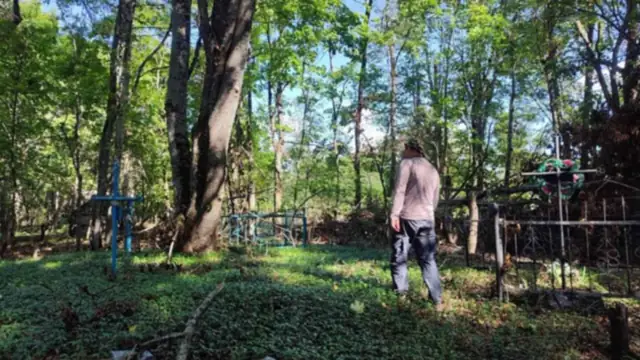
Botanists walking through Chernobyl cemeteries counted more than 400 plant species growing among the graves, and the giant oaks beside the crosses survived for a reason that has little to do with radiation
Two botanists surveyed 24 Chernobyl cemeteries inside the exclusion zone and counted more than 400 wild plant species growing among the graves. Their tape…
ECOnews Newsroom · November 4, 2026
NASA tomato seeds stranded in orbit after the Challenger disaster ended up with 3.3 million students, and the plants they grew were not the mutant tomatoes many of them hoped for
NASA tomato seeds, 12.5 million of them, went into orbit aboard the shuttle Challenger in April 1984. The trip was meant to take about a year. It took…
ECOnews Newsroom · October 30, 2026

A 60-megawatt wind farm is already running near Dakhla, and Morocco has offered 35 more farm projects that will depend on desalinated Atlantic seawater from a plant still under construction
Morocco’s Agricultural Development Agency (ADA) opened a third bidding round in late June 2026 for 35 farm projects near Dakhla. The land, about 2,694…
ECOnews Newsroom · October 26, 2026

In Corvallis, Oregon, chemists separated zirconium and hafnium in water with choline, a common food additive, reaching a separation factor of 33, and the solvent method used at two U.S. plants scores 6 to 7
Chemists at Oregon State University in Corvallis, Oregon, have patented a way to separate zirconium and hafnium in water, with no organic solvent, using…
ECOnews Newsroom · October 20, 2026

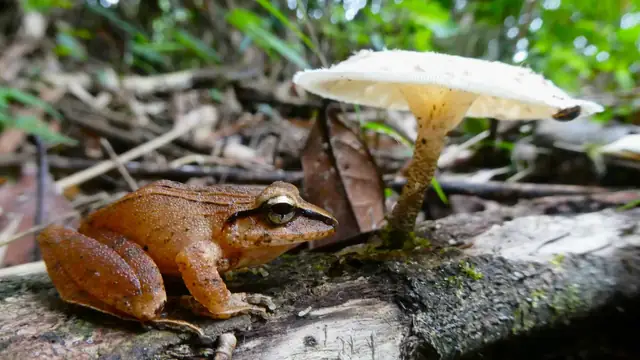
Smithsonian scientists swabbed 327 museum frogs and tied a mysterious die-off in Brazil’s Atlantic Forest to the chytrid fungus, but the declined species still common enough to collect tested clean
W. Ronald Heyer kept collecting frogs at Brazil’s Boracéia Biological Station after many of them stopped showing up, and his jars, stored for decades at…
ECOnews Newsroom · October 19, 2026
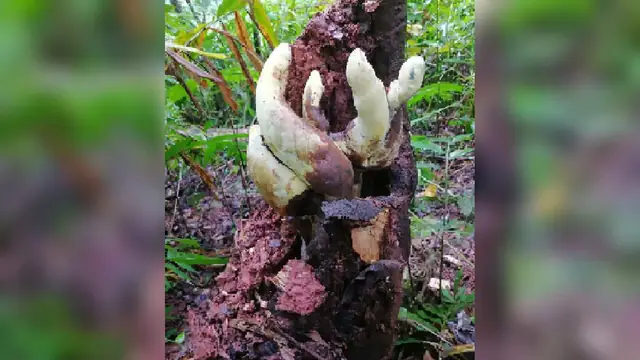
In China’s Yunnan Province, scientists found a giant fungus nicknamed D-rex that grows up to 20 inches tall, and its family likely arose about 65 million years ago, as the dinosaurs died out
Jing Song collected it on August 5, 2024, near Damaidi, a village in Luquan County, part of the city of Kunming, in China’s Yunnan Province. Pale, fleshy…
ECOnews Newsroom · October 19, 2026
Israel released 28 Asiatic wild asses into the Negev from 1982 to 1987, and DNA from their dung now shows a herd eating native plants and inbreeding less after managers added three water points
In 1982, Israel began releasing Asiatic wild asses in the Ein Saharonim area of Makhtesh Ramon, the giant erosion crater in the Negev desert. Forty-four…
Adrian Villellas · October 19, 2026