A pesticide does not need to kill a bumblebee to damage a colony’s future. Georgia Tech researchers found that common eastern bumblebees exposed for 21 days to sublethal levels of sulfoxaflor survived at similar rates to unexposed bees, yet their ovaries, egg production, feeding, and nest-building behavior changed sharply.
The most striking signal appeared in ovarian gene activity rather than the brain. That matters because a bee can still move around and pass a basic survival check while the biological machinery needed to produce the next generation is already being disrupted. The study also carries an important caveat, since the concentrations tested were higher than most estimated field exposures.
The ovaries showed the strongest warning
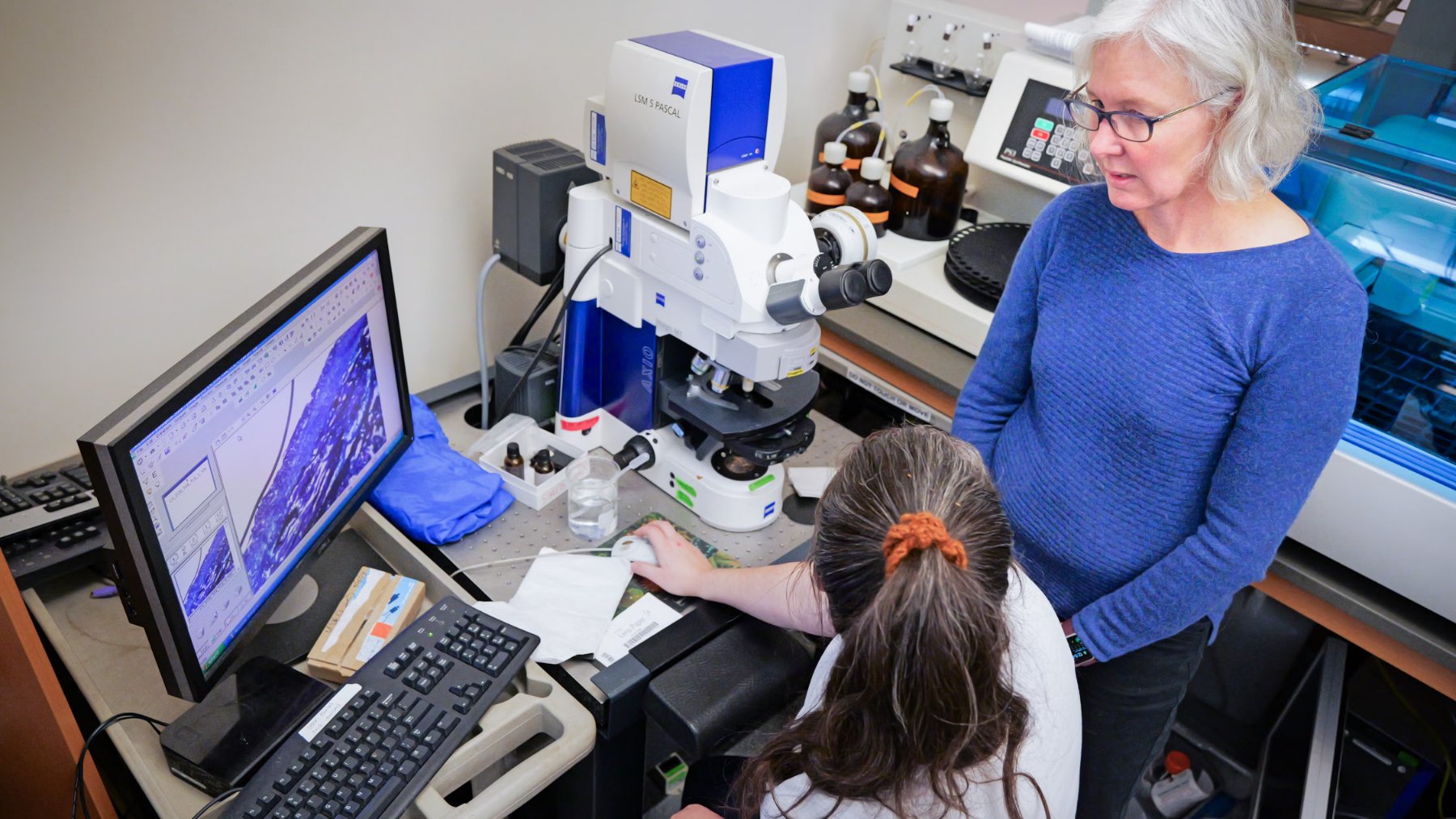
The team created 51 small worker microcolonies and gave them sugar water containing no sulfoxaflor, 160 parts per billion, or 310 parts per billion for three weeks. Researchers then flash-froze brain and ovary tissues and analyzed RNA, which allowed them to see which genes had become more or less active.
The ovarian response was far stronger than the response in the brain. Genes linked to egg formation and cell division were turned down, while several cellular signaling pathways became more active, a pattern the authors interpreted as evidence of stress and disrupted reproductive function.
Michael Goodisman, a professor in Georgia Tech’s School of Biological Sciences, said the work “connects molecular changes in gene expression to real-world consequences.” In practical terms, the study followed the warning from the gene level to the ovary, the egg count, and the behavior of the microcolony.
Egg production fell without a mortality spike
Control microcolonies produced 2.43 times more eggs than those receiving 160 parts per billion. At 310 parts per billion, none of the microcolonies laid a single batch of eggs during the three-week experiment, while control bees developed ovaries that were 1.68 times larger than those in the highest-exposure group.
Yet mortality did not differ significantly between the treated and untreated groups. That is the central lesson. A test focused only on how many adult bees die could miss reproductive damage that may weaken a colony later.
These were laboratory worker microcolonies rather than complete queen-led colonies living in fields. The results therefore should not be read as a direct forecast of losses in every wild population, but the design gave researchers a controlled way to measure ovary activation, egg laying, and group behavior.
The colony’s daily routine also changed
The exposed bees did more than lay fewer eggs. Control microcolonies built 2.24 times more food-storage pots than the lower-exposure group and more than 17 times as many as the higher-exposure group. They also consumed 1.61 and 2.44 times more sugar water, respectively.
Most basic movement remained stable, including crawling speed, distance traveled, and time spent moving. Some defensive responses shifted, however. Leg lifting decreased at the lower concentration, while bees in the higher group were more likely to sting, although biting and buzzing did not change.
That uneven pattern is important. The pesticide did not cause a simple collapse in every behavior. Instead, the strongest and most consistent effects centered on reproductive physiology and colony-level activity.
Why bumblebees matter to food crops
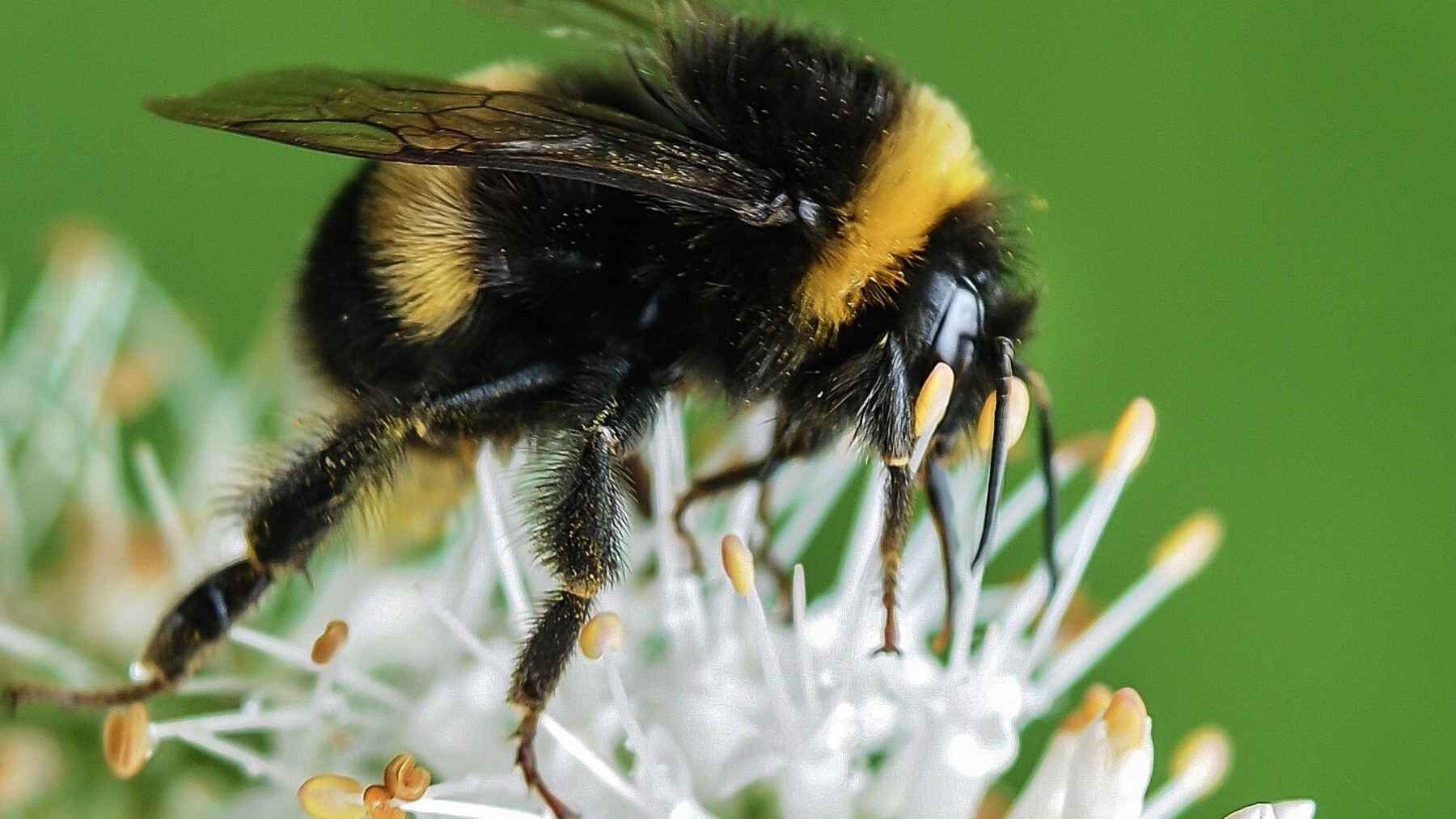
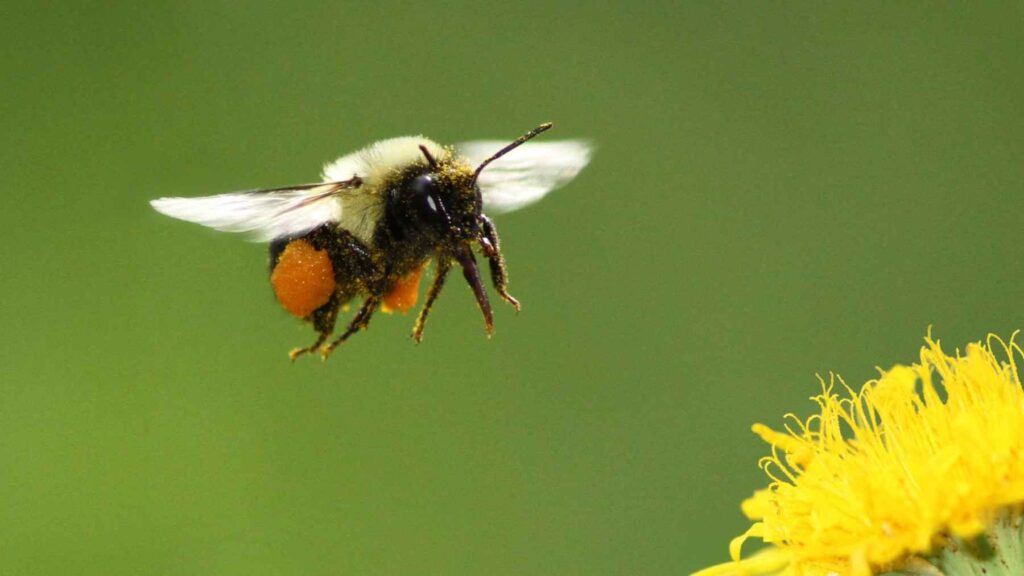
Bumblebees are especially useful pollinators because they perform “buzz pollination.” They grip a flower and vibrate their flight muscles, shaking loose pollen that plants such as tomatoes, blueberries, and peppers can otherwise hold tightly.
They can also forage in cooler conditions when many other insects are less active. Georgia Tech notes that roughly one-third of the food people grow depends on pollinators such as bees, which turns a change in bumblebee reproduction into more than a small laboratory concern.
Sarah Orr, who led the research while working as a Georgia Tech postdoctoral fellow, put the link plainly. “If they’re not producing enough offspring, pollination will decline.” Should similar reproductive disruption occur across many colonies, fewer bees could be available to visit crops and wildflowers in later seasons.
What the study does not prove
The researchers deliberately selected concentrations that were high enough to reveal biological mechanisms without causing substantial mortality. The paper states that both levels exceeded most estimated exposure in agricultural fields, so the experiment does not show that every approved use of sulfoxaflor will produce the same outcome.
It also cannot fully separate direct ovarian toxicity from reduced feeding. The gene data point toward a direct effect on reproductive pathways, but the exposed bees also drank less sugar water, which may have intensified the loss of ovary development and egg production.
Even with those limits, several measurements moved in the same direction. Altered ovarian genes, smaller ovaries, fewer eggs, lower food consumption, and weaker nest building formed a connected pattern rather than a single isolated result. That makes the study an early warning, not a final verdict on every real-world exposure.
Pesticide tests may need a wider lens
The authors argue that pollinator risk assessments should look beyond immediate death and include chronic effects on reproduction, physiology, behavior, and gene regulation. A living bee is not always a healthy bee. That is the gap this research exposes.
This does not mean farmers can simply abandon pest control. Sulfoxaflor is used against sap-feeding insects such as aphids that can damage crops, and the researchers say the goal is to find practical ways to manage pests while protecting beneficial insects and the food systems that depend on them.
The study did not test a particular farm remedy, but it strengthens the case for field-based trials and safety reviews that follow reproduction as well as survival. The warning light may appear in the ovaries long before it appears in a mortality count.
The full study was published in Ecotoxicology and Environmental Safety.