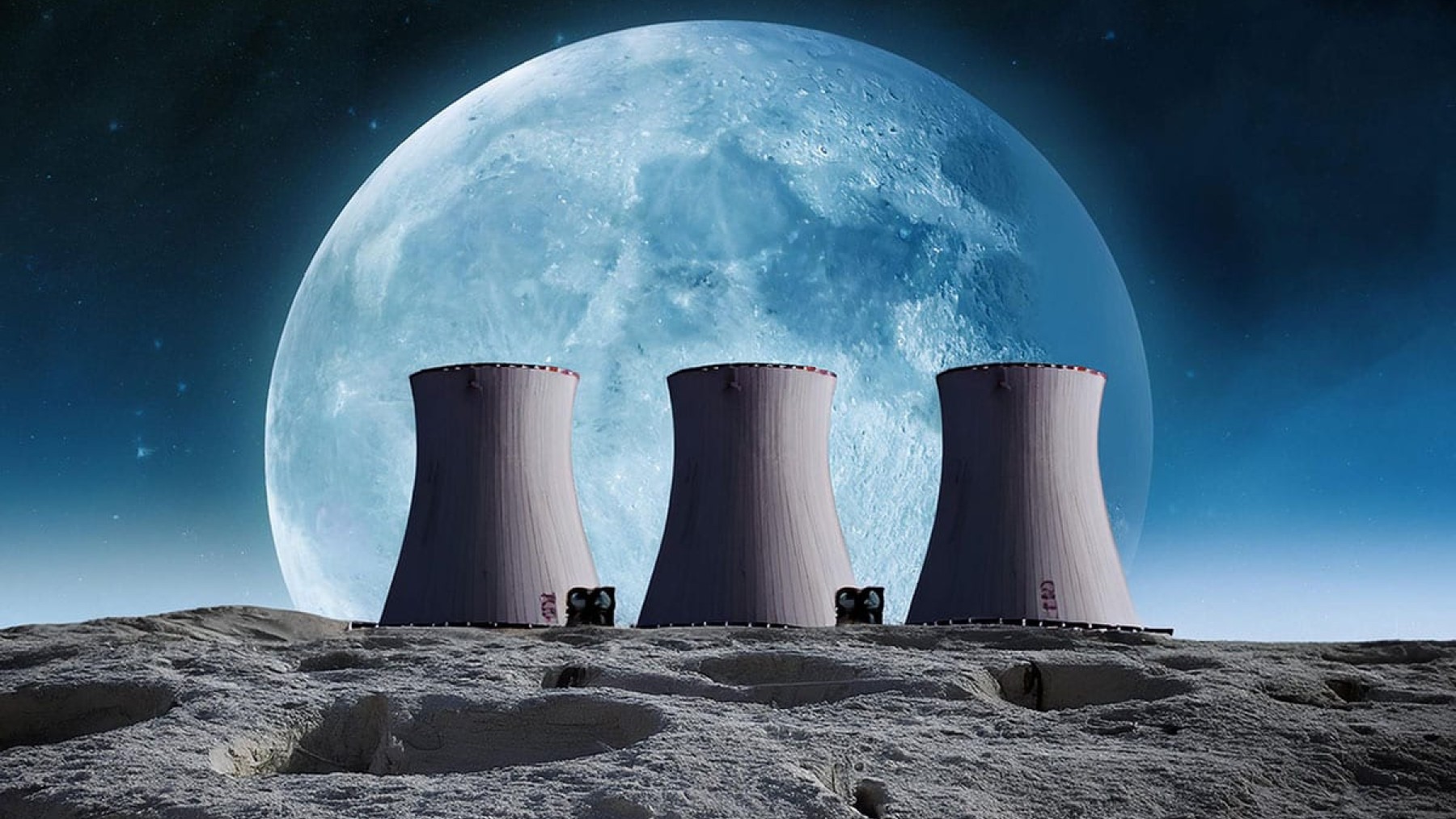
Russia, China, and America have been vying for the number one spot in the space race since the 1950s. A new development on the moon could see Russia securing its leadership and dominance in this area once again. Russia plans to build a nuclear power plant on the moon to secure an energy source for the international moon research station. China is considering becoming the main partner in the project.
It seems like science fiction, but Russia is close to setting up nuclear energy on the moon
Russia has big plans for the moon. It hopes to increase a Russian presence on the moon to counter the strong presence America has. Also, there are potentially valuable resources on the moon that Russia would like to explore. Once the country sets up an international research station there, it could start pursuing any of these important projects:
- Doing lunar science experiments
- Mining moon rocks and minerals
- Building a human settlement
- Setting up lunar satellites
All of these potential missions will need power to operate. Since there’s no electric grid on the moon, Russia has decided to build a nuclear energy power plant on the lunar surface. This unlikely scenario could generate at least half a megawatt of electricity. While that’s not nearly as much as similar nuclear projects generate on Earth, it is enough electricity to power at least one major operation.
Russia is looking for partners in its mission to electrify the international moon base, and China wants to get involved
Russia could probably move forward with its lunar nuclear power plant without help from any other nation, but the country is hoping to foster international cooperation this time. China is considering getting involved with the nuclear project on the moon. China has a huge amount of resources to dedicate to the project, and the country is constantly working on improving nuclear fusion and nuclear fission technology. It would be a powerful partner to further the ambitions of getting nuclear energy on the moon.
Interestingly, India is interested in the project as well. India and Russia, previously the Soviet Union, were very close allies in the 1950s and ’60s. While the 1990s saw the two superpowers grow apart, the 2010s started bringing them back together. India has been growing its space programs, and the South Asian country would benefit from being involved with a moon mission.
If nuclear energy is going to work on the moon, it has to be automated so that humans aren’t involved
China and Russia want to get the nuclear lunar power plant up and running by 2035. One significant hurdle that Russia and China will have to overcome is the fact that humans don’t live on the moon so the nuclear power plant will have to be built and run using automated machinery. Russia feels positive about facing this challenge, but detractors say that it will delay the project by many years.
Automated machinery is used in almost every industry. It would not be a stretch to deploy similar kinds of tools to set up a nuclear reactor. However, developing the infrastructure for nuclear energy is expensive. If anything goes wrong, China and Russia will lose their investments. Fortunately, both of the countries seem to have deep pockets, and they are both committed to challenging America’s aerospace program supremacy.
Nuclear energy can be volatile. While contemporary technology is much safer than anything in the past, there are still significant dangers involved. Russia and China will have to set their researchers to task figuring out how to compensate for the moon’s unique climate, gravity, and atmosphere. If and when they get a nuclear reactor on the moon online, the world will surely take notice.