Much interest has fallen on the need to unlock clean and limitless energy, and some projects are reaching critical milestones. With a certain invention, Europe will be able to perhaps say goodbye to hydrogen. The global race to unlock clean and limitless energy has reached a critical milestone. The nuclear fusion project called the International Thermonuclear Experimental Reactor (ITER) has plans to revolutionize the clean energy sector. Experts believe nuclear fusion could replace our reliance on hydrogen.
Understanding the science behind 150 million °C and -269 °C
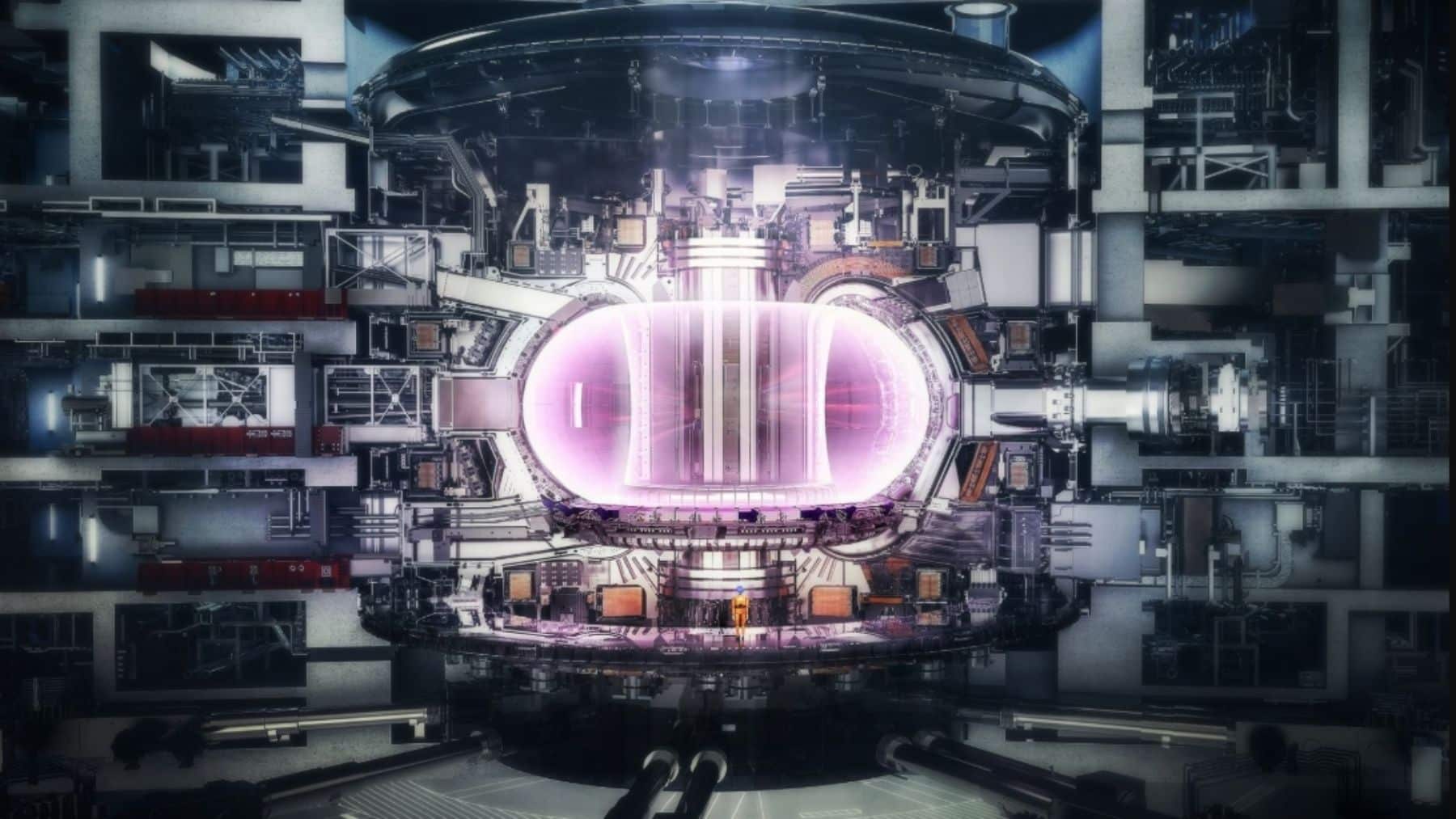
With ITER, a core focus is reaching temperatures hotter than the sun but controlling it using components operating near absolute zero in order to create energy.
The difference comes into play as ITER works on using fusion. Fission, on the other hand, splits up atoms, however, fusion works by fusing hydrogen isotopes (deuterium and tritium) to form helium. When this happens, energy gets released. The problem is that Earth lacks the Sun’s gravitational mass to trigger fusion naturally, resulting in the need for scientists to intervene to recreate conditions for heat and magnetic confinement.
Scientists achieve this by heating plasma (a superheated gas made of charged particles) at 150 million °C, making it far hotter than any naturally occurring temperature in the solar system. In this way, nuclei can overcome their natural repulsion and fuse. The secret is that plasma ought to be contained to avoid melting the reactor walls. Introducing the second extreme: -269 °C.
As such, superconducting magnets and the recently completed Central Solenoid generate a magnetic field so powerful that it confines plasma in a donut-shaped vacuum chamber. In order to keep superconductivity, these magnets need to be kept at cryogenic temperatures with zero electrical resistance, while still showcasing their ability to carry massive currents. That is where the astounding 150 million °C and -269 °C come from with this project.
ITER is taking Europe beyond hydrogen
Europe is one country that has invested in hydrogen as a renewable energy fuel. However, with hydrogen comes the challenge of transportation, storage, and efficiency. Europe is more interested in green hydrogen than black hydrogen, posing an even bigger challenge. What fusion offers is an unlimited energy supply devoid of carbon emissions and radioactive waste. With fusion, there is no risk of meltdowns.
The ITER project showcases a collaboration between 35 countries, including all of the European Union member states. Only when operational can well tell if controlled fusion can work at scale. The success of this project could result in the move away from hydrogen dependency towards a fusion-based infrastructure.
The pull towards fusion above hydrogen is due to energy sustainability and energy density. As such, one gram of fusion fuel releases more energy than burning eight tons of oil. The beauty part is that deuterium for water and lithium for tritium breeding are abundantly available. The fact that materials required are not rare to find makes fusion not only believable but possible.
Hydrogen won’t entirely be eliminated and will serve niche purposes, while a functional fusion reactor would replace hydrogen for most endeavors.
Future of fusion in Europe
Now that the Central Solenoid is complete, ITER can transition to its final assembly phase in France. The ideal is to reach “first plasma” by 2035, resulting in a full-scale testing of the fusion reaction. Should this be successful, ITER will pave the way for the next step, DEMO, a commercial prototype designed to supply power to the grid by 20250. Thus, ITER won’t generate electricity itself.
The path towards fully embracing fusion is complex still, however, it sets the foundation for Europe’s future away from carbon energy. 150 million °C and -269 °C are the two liquid gas figures reshaping the energy world. With the novel and innovative solution to transport hydrogen, the world’s energy future has endless possibilities.