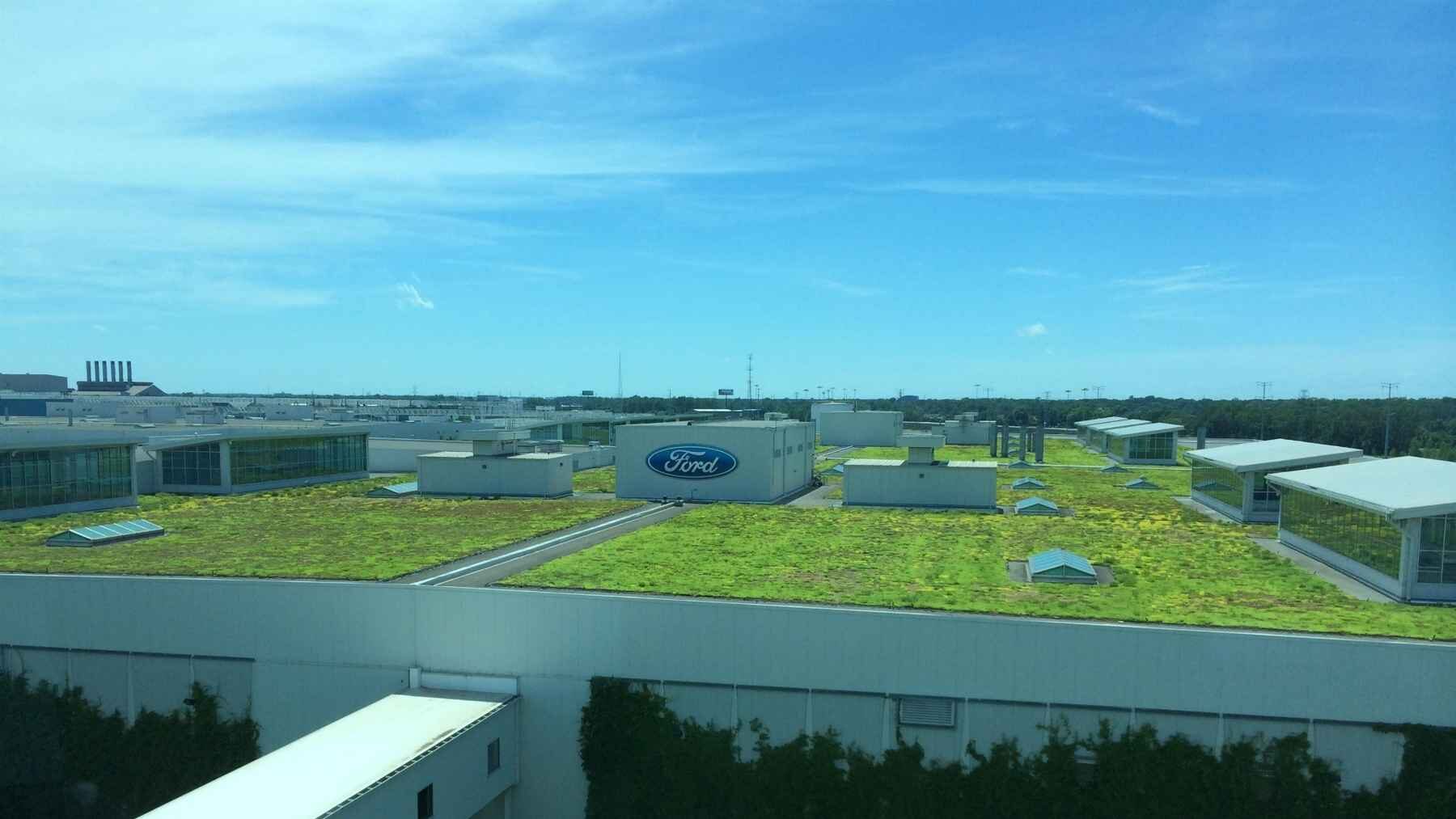
Ten-and-a-half acres of colorful flowering plants is not usually associated with heavy industrial activity. A giant Ford plant in Dearborn, Michigan features exactly that on the roof of its F-150 and Raptor pickup factory.
When Henry Ford was buying 2,000 acres on the banks of the Rouge River in 1915, he had considered housing a bird sanctuary on site, a plan that never came to fruition. As war and rapid industrial growth called for more production, the complex grew into the largest the world had ever seen. Today, the rooftop collects rainfall above the heads of thousands of workers below, partially bringing Ford’s vision full circle.
The bird sanctuary that never happened
As World War I was nearing an end, Navy Undersecretary Franklin D. Roosevelt called on Ford to build Eagle Boat patrol crafts at the site, which was not originally to be a factory. The river was widened so that massive ore carriers could dock there.
Ford’s “ore to assembly” mission had been accomplished by 1927, where raw materials and parts arrival and final vehicle production happened at the same facility. The massive complex employed over 100,000 workers and produced around 4,000 vehicles per day.
Industry left a heavy footprint
The success of the plant did not come without its consequences. It produced heavy pollution from coke and steel production, heavy metals, coal distillation, and other contaminants, according to federal documents.
From the late 1990s to early 2000s, Ford opted to redevelop the underused 600-acre facility instead of abandoning it, at a cost of roughly $2 billion.
Why plants beat more pipes
Rather than build a conventional rooftop, the redevelopment team saved Ford $35 million with this earthy design costing less than a third of the typical alternative.
It uses porous pavement with an underground water storage system that slows and filters runoff with shallow, vegetated channels. This design solved previous stormwater flooding issues on the property.
The roof became a second ground level
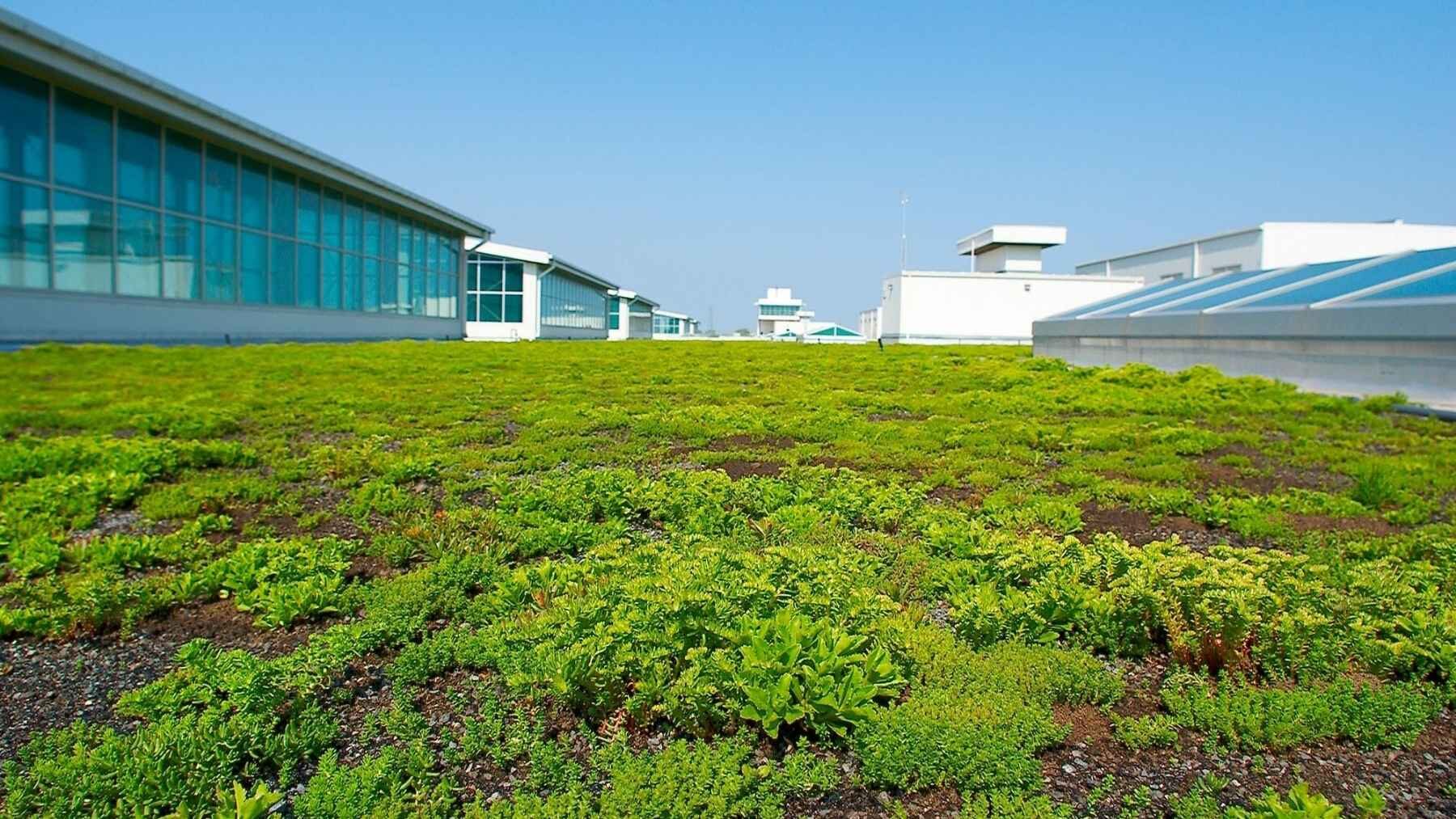
The 454,000-ft.² roof was installed in 2002 and covered with drought-resistant sedum. Not only did they save on construction costs, but heating and cooling bills as well. Ford reports that the plant stays naturally 10° warmer in winter and 10° cooler in summer.
This was the largest green roof in the world at the time of its completion.
The birds arrived in five days
It didn’t take long for the feathered friends to show up. Architectural design company William McDonough and Partners reports of killdeer building nests and laying eggs there within just five days.
Biodiversity returned to the stormwater landscape in many forms as well. Various bird species, butterflies and other insects, and microorganisms now occupy the wider area of the facility. The EPA reports 20,000 honeybees buzzing around thousands of flowers, shrubs and trees that have sprouted up around the plant.
Meanwhile, heavy industrial manufacturing continues to pound away inside.
What this project does not prove
While this sounds like a feel-good story about a legendary company, which in a way it is, we must understand it with caution. Historical contamination and emissions don’t disappear with one green roof, but providing wildlife habitat and mitigating a footprint can still happen while business continues as usual.
Ford’s 4,995 employees at its Dearborn Truck Plant continue to build heavy-duty trucks under this green philosophy that rests overhead.
The official project overview was published by Ford Motor Company.