On the hottest nights, most families reach for the air conditioner and brace for the electric bill. An Argentine homeowner took a different route, sending outdoor air through pipes buried beneath his yard before it entered two bedrooms. The setup is known as a Canadian well, or more precisely, an earth-to-air heat exchanger.
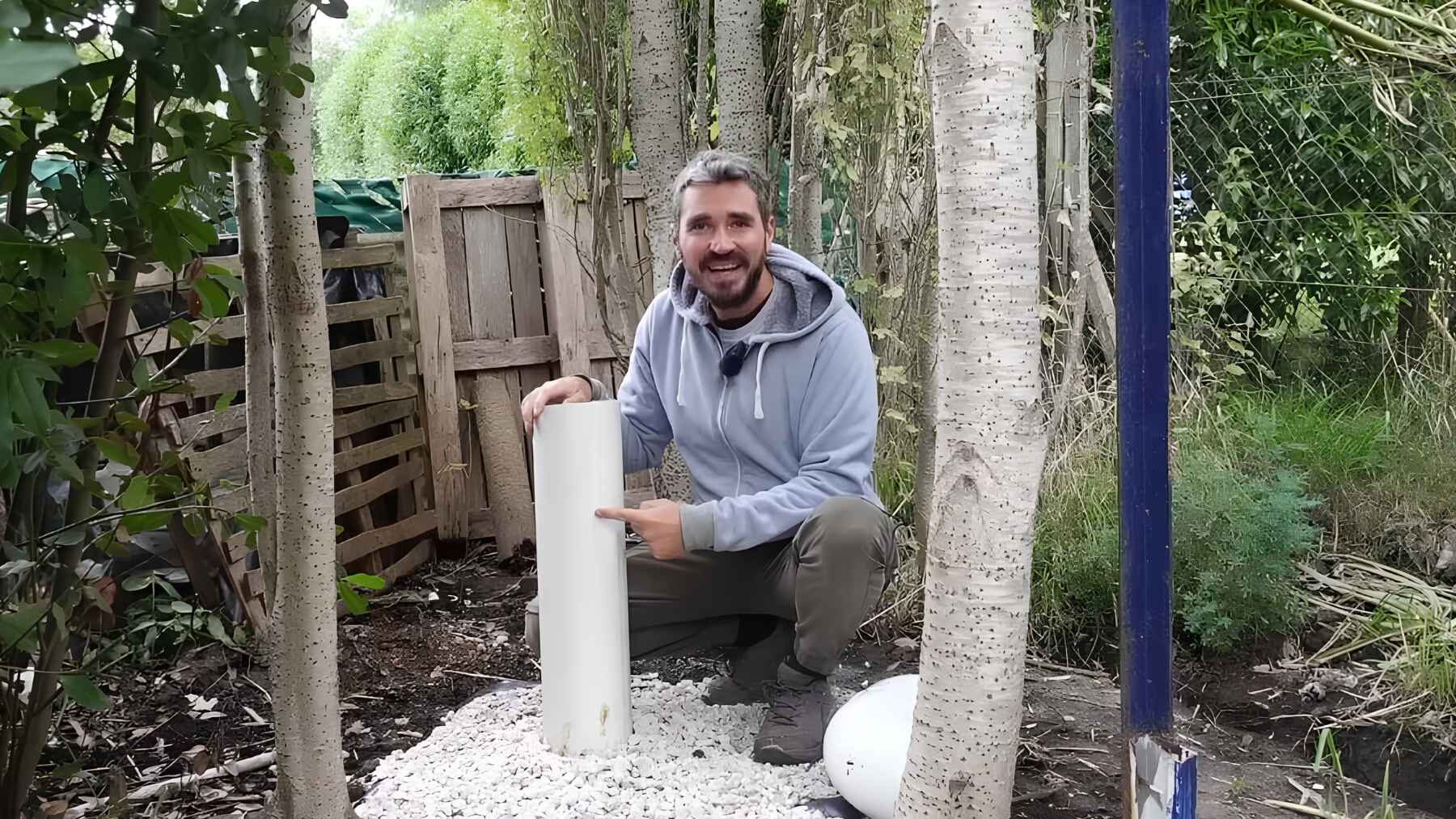
In an original video posted in April 2025, Argentine permaculture educator Martín Santiago Schmull of Permacultura Holística said he began the system in 2022 and that it was already helping cool his children’s rooms. The International Energy Agency analysis expects building space-cooling demand to rise almost 4% a year through 2035 under current policies, which helps explain why low-power ideas are getting another look. Still, this household project is a demonstration, not a controlled test with independently verified temperature and energy records.
How buried-air cooling works
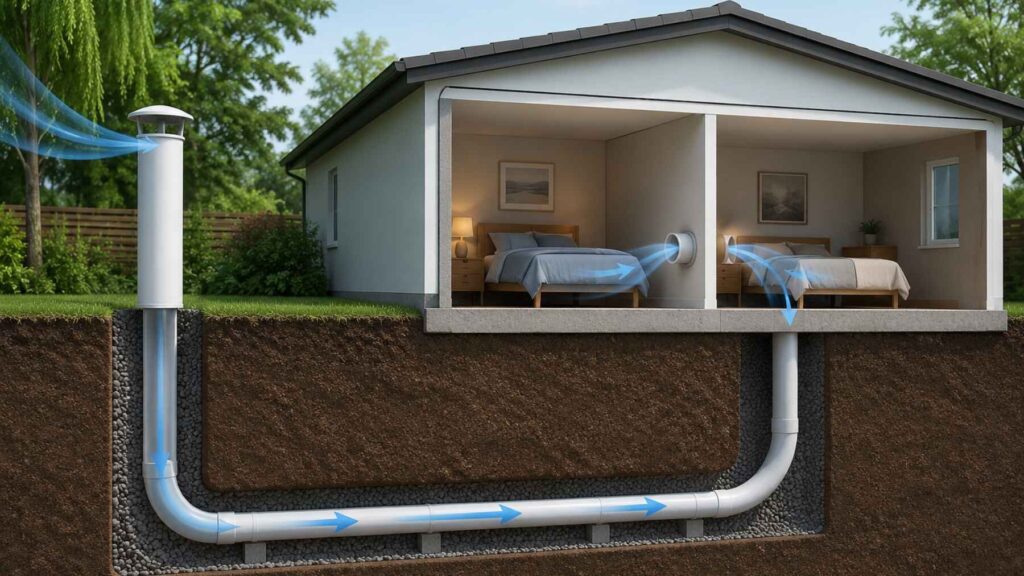
A Canadian well uses the ground as a giant temperature buffer. Outdoor air moves through buried ducts, where it gives up heat to cooler soil in summer and picks up heat in winter. Engineers call this preconditioning because the air is partly cooled or warmed before it reaches the house.
It is not the same as a geothermal heat pump, which uses powered equipment to move heat through a refrigeration cycle. An earth tube has no compressor or refrigerant loop, and a small fan may be its only electrical load. A recent scientific review found that the modern form took shape in the mid-20th century, though people have used underground spaces for thermal comfort for far longer.
What he built beneath the yard
The outdoor intake feeds a buried air route that branches toward two children’s bedrooms. In the video, the builder shows a protective cover, discusses adding an insect screen, and explains drainage points intended to remove moisture. He described the system as “providing comfort to both rooms,” which he said used no other cooling appliance.
The installation evolved over several years after work began in 2022. The video description said the system was being finished when the clip appeared in 2025, so reports describing it as a project completed in 2026 do not match the original timeline. No published meter readings show how much electricity the household saved.
Why it can use less electricity
A standard air conditioner runs a compressor, fans, and a refrigerant circuit to carry indoor heat outside. A buried-air system lets the soil handle part of that job before the air reaches the room. When natural airflow is too weak, a low-power fan can push air through the ducts.
That may mean fewer compressor hours and a smaller hit to the electric bill. But the cooling is not free because excavation, pipework, filters, drainage, and maintenance all cost money. Research generally treats earth tubes as pre-cooling systems that can reduce the load on air conditioning, not as guaranteed replacements during severe heat.
Tests show meaningful cooling
In a 2024 experimental study, Ricardo Molina-Rodea and colleagues at the National Autonomous University of Mexico tested a compact vertical system in warm weather. With outdoor air reaching 95°F and wells less than 10 ft. deep, the device lowered the air temperature by about 9°F to 17°F. That does not promise the same result in every backyard, but it confirms that the heat exchange can be substantial.
A separate modeled case study estimated that an earth-to-air exchanger could cut the annual energy needed to cool ventilation air by 16%. That figure did not represent total household electricity use. The model’s preferred design was about 16 ft. deep and 262 ft. long for its particular climate and cost assumptions, a reminder that one layout does not fit every home.
Climate and soil decide the result
Performance depends on soil, moisture, burial depth, pipe length, pipe diameter, airflow, and local weather. Moist, thermally conductive ground usually moves heat more effectively than dry, insulating soil. Shade and vegetation above the route can also limit solar heating near the surface.
That sticky summer heat we all know creates another issue. As warm, humid air cools inside a pipe, water can condense on the walls, much like droplets on a cold drink. Good drainage is essential, and the strongest results usually come when the earth tube works alongside insulation, exterior shade, controlled ventilation, and efficient cooling equipment for extreme days.
Clean air is the real design test
A 2025 paper led by civil engineer María Belén Birche at the National University of La Plata warns that air quality can suffer when the system is treated as nothing more than a buried pipe. The authors call for condensate drainage, tightly sealed joints, suitable pipe materials, filters, and access for cleaning. Without those safeguards, dust, mold, or bacteria may build up.
The paper recommends placing the outdoor intake about 5 feet above ground, protecting it from direct sun, and keeping it away from garages, kitchens, and bathrooms. The intake also needs protection from animals and heavy rain. Local radon conditions, drainage, soil properties, and building rules should be reviewed before a permanent system is installed.
An old idea with a modern role
So, can a trench under the yard replace an air conditioner? In mild conditions, a well-designed system may deliver comfortable ventilation on its own. During long, punishing heat waves, it is more likely to lower the incoming air temperature and reduce how hard conventional equipment must work.
That still matters. Quieter rooms, less compressor noise, and fewer hours of hot exhaust blowing beside the house can improve daily comfort, even when backup cooling remains necessary. The ground is not magic, but used carefully, it can take the first step before electricity does the rest.
The work on Canadian-well design in Argentina has been published in Estudios del Hábitat.