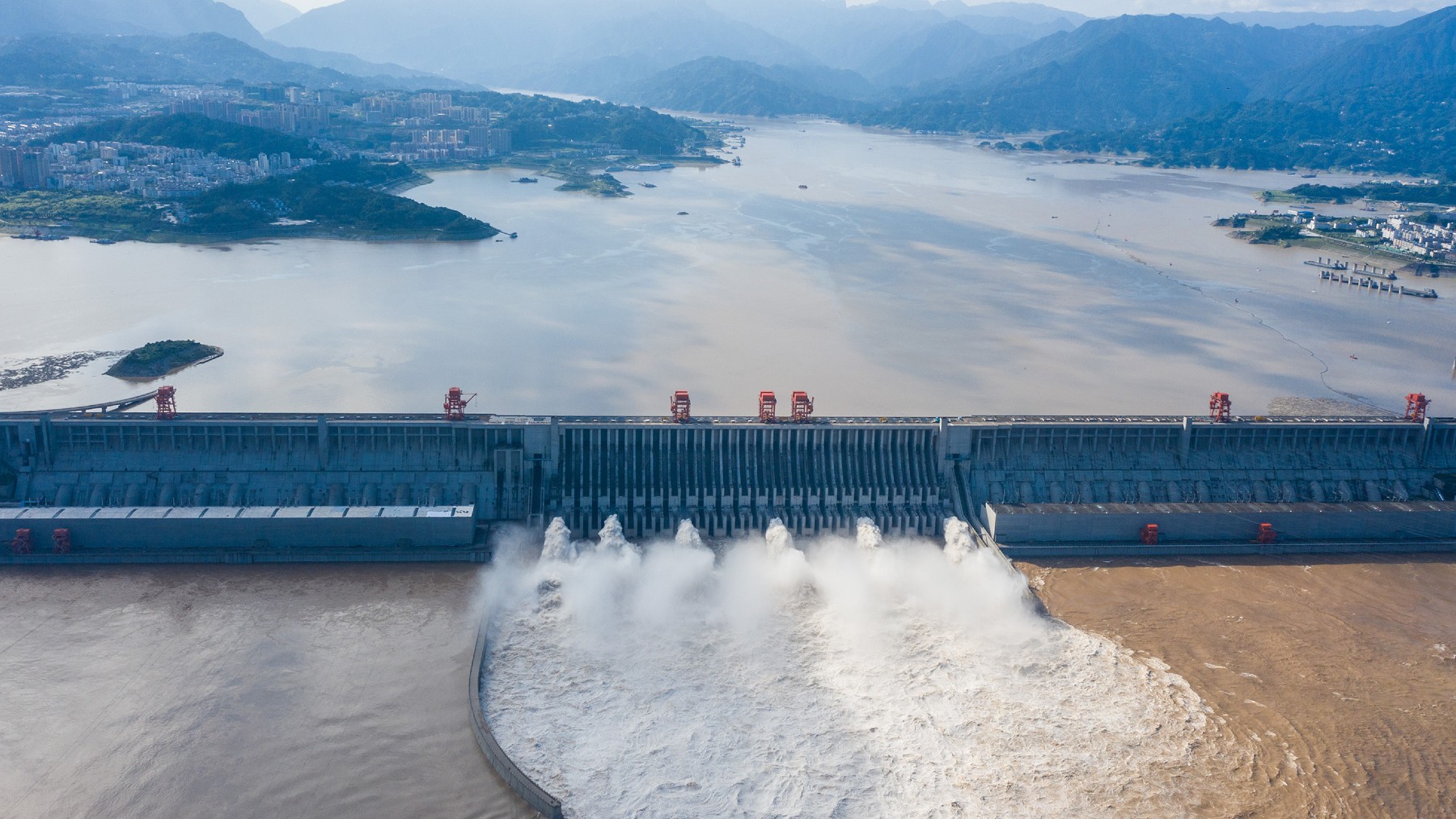
Large-scale renewable energy is one of the proposals humanity is pursuing to decarbonize industry. We’ve seen it by sending solar panels into space and even building colossal wind turbines… out of wood. However, there seems to be one country that has gone too far with the largest hydroelectric dam on the planet. Do you know where it is? It’s so massive, it increases the length of days.
This is the largest hydroelectric dam on the planet: is it located in the U.S.?
Hydroelectric dams are the big machines that are constructed to use the force of the flowing water to generate electricity. Renewable sources of energy are deemed as natural resources and hence they are of more use to the environment than any other alternatives.
They are emissions-free sources of energy, thus providing flood control and also a recreational facility. Nonetheless, they are also associated with the cons like the interference of ecosystems, the moving of communities and the geologic impacts.
The Three Gorges Dam, which is the biggest hydroelectric dam on the planet, is located in China. This gigantic project supplies a huge amount of renewable electricity but it has also been a subject of the controversy over its environmental and social impacts.
It´s so massive, that increases the lenghts of the days on the planet
The Three Gorges Dam is a huge hydroelectric power dam situated in the Hubei province of China. The road goes the Yangtze River, the longest river in Asia and the third longest in the world. The dam is situated in the west of the city of Yichang in the Xilingxia Gorge, among the three gorges that gave the dam its name.
The other two gorges connected with the dam are the Qutang Gorge situated upstream and the Xiangxi Gorge, placed downstream. Collectively, the three gorges create a stunning neighborhood along the middle part of the mighty Yangtze River.
The Three Gorges area has for a long time been famous for its magnificent landscape. Nevertheless, this essential watershed has also been the cause of disastrous floods in the history of China. The main cause of the flood control was the reason for the Chinese government’s decision to construct the huge dam.
How big is the Three Gorges Dam? You won´t believe its capacity
The Three Gorges Dam is huge in size and power supply. The height is 610 feet and its length is 7,661 feet, making it one of the largest dams in the world. Its reservoir goes upstream for 400 miles and has 39 miles of it. 3 cubic kilometers of water were used in the evacuation process.
The Three Gorges Dam is the power generator with an astounding capacity of 22,500 megawatts from its 32 main turbines. Thus, it became the biggest hydroelectric power station on earth. To give you an idea, its capacity is more than twice that of the Itaipú Dam in Brazil, the second largest dam in capacity.
The Three Gorges Dam can produce from 80 to 85 TWh annually, which is 4% of the total electric generation of China. It has had significant environmental consequences. When the reservoir was flooded, it submerged about 632 square kilometers of land. This included farmland, villages, and cities.
The colossal size of the Three Gorges Dam is a proof of the achievements of contemporary engineering techniques. The dam is the energy source for millions of homEven though it is a subject of debate, its magnitude has made it an essential element of China’s infrastructure and electricity supply.
A hydroelectric dam like this demonstrates how new renewable energy projects are not just going to be small or medium-sized solar panels. What is now being sought is to produce clean electricity on a large scale, even compromising ecosystems that should be more protected, something we in Alaska have been seeing for several decades and which always raises controversy.