Confirmed by the Mississippi Forestry Commission: campfires, fire pits and burn barrels are banned under county burn bans, with fines of $100 to $500; its list shows 40 counties as of November 28
By our count, 40 Mississippi counties are on the MFC burn ban list as of Nov. 28. Gas grills are allowed; violators face fines of $100 to $500.

· 3 min read
Key points
- During a Mississippi burn ban, campfires, bonfires, fire pits, burn barrels and debris burning are not allowed, according to the Forestry Commission.
- Gas and propane grills and heaters and charcoal grills are allowed if used safely; exemptions vary by county.
- Willful violations are a misdemeanor with fines of $100 to $500 under Section 49-19-351 of the Mississippi Code, as cited by the MFC.
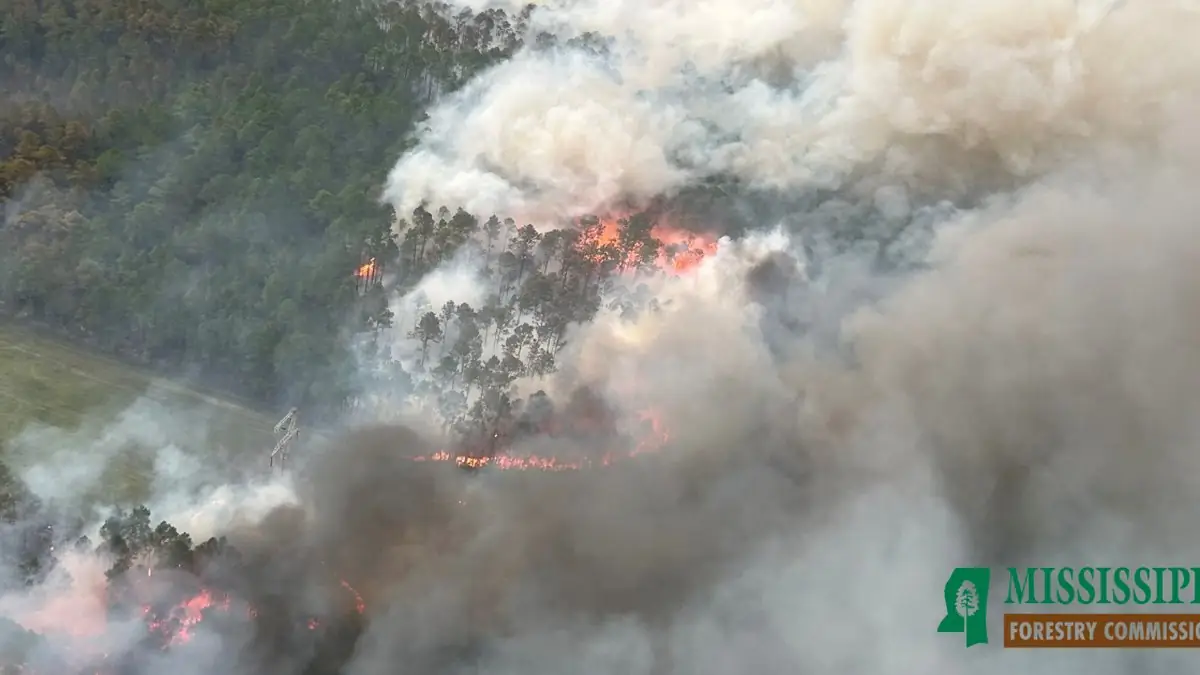
Dozens of Mississippi counties have burn bans in force. By our count, 40 counties are on the Mississippi Forestry Commission's burn ban list as of November 28. Most of those bans run into December, and exemptions vary by county.
During a burn ban, "anything with an open flame that produces an ember is not allowed," according to the commission's burn ban page. The banned list includes campfires, bonfires, fire pits and fire rings. Burn barrels, debris burning and field burning are not allowed either.
Anyone who knowingly and willfully violates a burning ban is guilty of a misdemeanor, the MFC says. Violators may be fined not less than $100 and not more than $500. It cites Section 49-19-351 of the Mississippi Code of 1972, as amended.
How a county ban works
Burn bans are restrictions on outdoor burning during drought or wildfire conditions. A county board of supervisors normally requests a ban, and the Forestry Commission approves the request, according to the agency. The local sheriff's department then enforces the ban.
Every ban has its own expiration date and expires at midnight on that date. On the list checked for this article, several end on November 30 and a large group on December 7. The latest, in Humphreys County, ends on December 30.
Some bans are new this month: Lowndes County's, for example, was issued on November 27 and runs to December 27. Tishomingo County's ban was issued on November 20 and runs to December 20. Because bans start and expire on their own dates, the count of 40 holds for November 28 only, and residents should check the MFC page before burning anything.

What is still allowed
The commission lists propane and gas grills, propane and gas heaters and charcoal grills as allowed during a burn ban. They should be used as the manufacturer describes, the MFC says. Keep them safely away from combustible materials, never leave them unattended and dispose of them properly after use.
Charcoal briquettes are of great concern to the agency. After use, it advises letting the coals cool completely and dousing them in water before putting them in a metal container.
The wind can carry floating embers away from a fire and start a spot fire up to one-half mile away, the agency warns.
In an August 18 release, the agency explained how it tracks the danger. It watches the weather and the Keetch-Byram Drought Index, which measures drought and soil moisture deficiency on a scale from 0 to 800.
Exemptions differ by county
Each ban lists either no exemptions or one or more from a set key. That means the rules are not identical everywhere. The key on the MFC page includes the Mississippi Forestry Commission, certified burn managers and county fire services.
It also covers commercial contractors with heavy construction equipment whose burns meet state environmental rules. Agricultural field burns are on the key too. Madison County's ban, for instance, is listed with no exemptions.
What the Drought Monitor says
The MFC page does not give a reason for each county's ban. For the region, the US Drought Monitor summary for November 24 said "drought-related conditions deteriorated across isolated areas of Arkansas, Louisiana, Mississippi, and Tennessee."
Over the past 90 days, below-normal precipitation prevailed across much of Arkansas, Louisiana, Mississippi and eastern Texas, the summary said, with rainfall 4 to 12 inches or more below normal. Citing NASA SPoRT-LIS maps from November 23, it said soil moisture was below the 10th percentile in areas of the region, including Mississippi.
"Right now, one spark is all it can take to start a wildfire," MFC Fire Chief Randy Giachelli said in an August release. At the time, the agency was fighting a large wildfire in Jackson County.
What residents should do
Nearly nine out of 10 wildfires nationwide are caused by humans, the MFC said in August. The agency calls prevention especially important during periods of elevated fire danger.
The MFC asks residents to check current burn ban information before any outdoor burning and to follow state and local restrictions. Anyone who sees a wildfire should call 911, the agency said in that release.
Its other tips include properly disposing of smoking materials and never throwing them from a vehicle. Drivers should also keep vehicles and equipment away from tall, dry grass, where hot exhaust systems could ignite vegetation.
The county list, the exemptions key and the penalty are posted on the Mississippi Forestry Commission's official burn ban page at mfc.ms.gov. Bans start and expire on their own dates, so check the page for your county.
Mississippi Forestry Commission
Glossary for this story
- Drought
- A long period of much-lower-than-normal rainfall that reduces the water in rivers, reservoirs and soil.
Javier Niño
Writer at ECOnewsJavier Niño has been a Spanish National Police officer since 2017 and a journalist specialising in employment, labour law and Social Security, with more than seven years of writing experience. At ECOnews he covers environment, energy and sustainability news, focusing on how new regulations and court rulings affect people in their everyday lives.
More from Javier NiñoComments · 0
Rules ›No comments yet. Be the first to share your view.