North Carolina's draft permit would cap five 'forever chemicals' flowing from a Sampson County landfill into Bearskin Swamp, and the public can comment until January 11
NC DEQ's draft permit for the Sampson County Landfill would limit GenX, PFOS, PFOA, PFHxS and PFNA in discharges to Bearskin Swamp. Comments to Jan. 11.

· 3 min read
Key points
- The draft permit would regulate treated groundwater and leachate that the Sampson County Landfill discharges to Bearskin Swamp, in the Cape Fear River basin; it is not final.
- The limits are based on the EPA's 2024 drinking water standards, and the permit would require quarterly monitoring for more than 60 PFAS.
- Public comments are accepted until January 11, 2027, by email to publiccomments@deq.nc.gov or by mail.
North Carolina regulators want to put limits on the forever chemicals leaving a landfill in Sampson County. The state Department of Environmental Quality has released a draft permit and is taking public comments until January 11, 2027.
The permit is not final. It would regulate discharges of PFAS from groundwater and leachate at the Sampson County Landfill, according to a department news release dated November 23. Leachate is water that drains through a landfill.
The landfill, in Roseboro, discharges treated leachate and treated groundwater to Bearskin Swamp. The swamp is in the Cape Fear River basin, according to the official public notice for the permit. The notice lists three outfalls, or discharge points.
Five PFAS with limits
PFAS are a group of man-made chemicals widely found in commercial, industrial and consumer products. They are known as "forever chemicals" because they don't break down in the environment, the release explains. They can also build up in humans and animals.
According to DEQ, potential impacts from long-term exposure can include reproductive effects and developmental delays. They can also include an increased risk of some cancers and reduced immune system abilities.
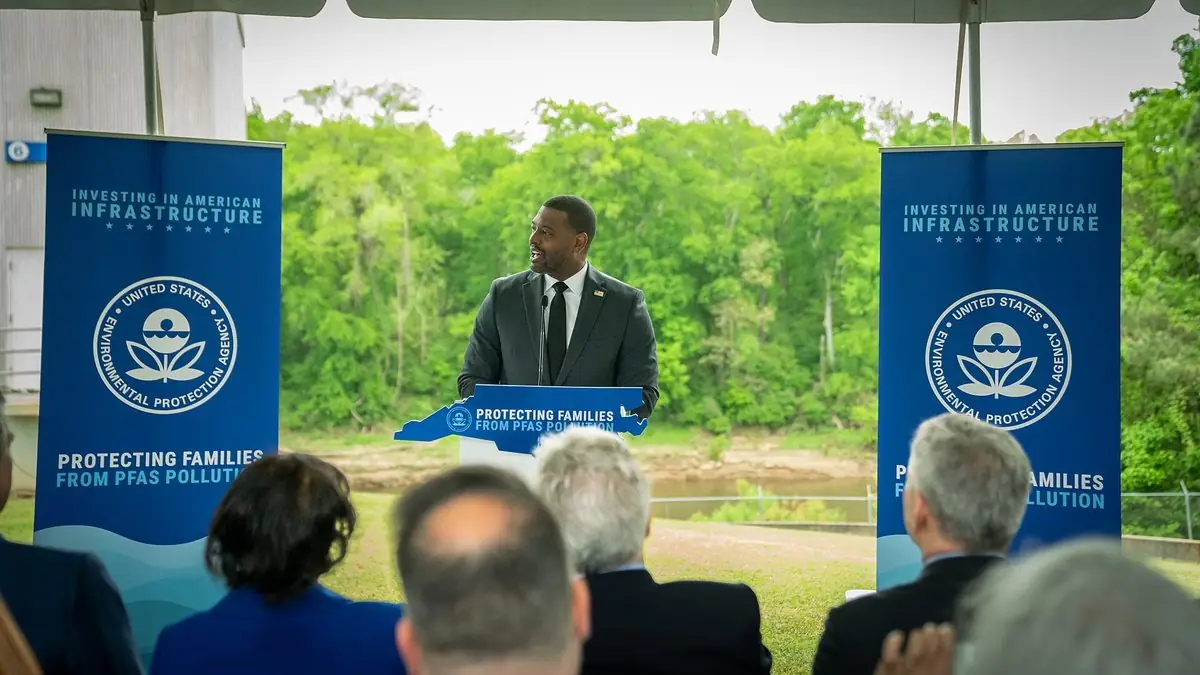
The draft permit limits five PFAS compounds: HFPO-DA (GenX), PFOS, PFOA, PFHxS and PFNA. Those limits are based on the health-based standards in the EPA's 2024 National Primary Drinking Water Regulations, the department says.
The permit would also require quarterly monitoring for more than 60 PFAS. It also sets limits for other contaminants so the receiving waterway meets water quality standards, the release says.
The notice says some parameters are water quality limited and that the discharge may affect future allocations in this portion of the Cape Fear River basin.
A treatment system already agreed
The landfill is operated by Sampson County Disposal LLC, which DEQ described in its 2025 release as a subsidiary of GFL Environmental Inc. The department says it has been working in cooperation with the company to address PFAS contamination.
The draft permit incorporates the requirements of a special order by consent reached on November 10, 2025. It limits discharges from the landfill's groundwater gravity intercept system, DEQ says. DEQ's release says that water runs through a new treatment system that discharges to Bearskin Swamp.
"The treatment that Sampson County Disposal LLC will implement to reduce pollution of groundwater and waterways is one of the most advanced of its kind to remove forever chemicals like PFAS," said DEQ Secretary Reid Wilson. "The treatment system is a major step toward protecting people's health from PFAS contamination."
How the contamination was found
In 2023, DEQ's Division of Waste Management began requiring PFAS testing at all solid waste sanitary landfills in the state. That covers groundwater, surface water and leachate, according to a December 2025 release on the agreement.
Sampling by the landfill operator and by the division in 2023 and 2024 revealed PFAS-contaminated groundwater reaching Bearskin Swamp, that release said. The water came from an intercept system that collects groundwater under the landfill. It sent that water to constructed wetlands next to the swamp.
Under the 2025 order, the treatment system had to achieve a minimum 50% reduction by January 14, 2026, and 90% by April 14, 2026, according to DEQ's December 2025 release. The landfill was to meet final concentration levels starting November 15, 2026. The sources reviewed do not say whether those milestones were met.
In that same 2025 release, Wilson noted that the landfill is a receiver and not a producer of PFAS chemicals. He said DEQ would keep working to address PFAS discharges at the source.
In its December 2025 release, DEQ estimated that 3.5 million North Carolinians drink tap water with PFAS above an EPA health-based standard. DEQ said the standard was scheduled to take effect in 2029, and that the deadline may be extended to 2031, according to the EPA's announcement at that time. The 2026 release does not update the estimate.
How to comment
Comments can be emailed to publiccomments@deq.nc.gov with "Sampson County Landfill NPDES Permit" in the subject line. Mailed comments must be postmarked no later than January 11, DEQ says.
The draft permit and related documents are posted on DEQ's public notices page. Printed copies can be reviewed at the department's Fayetteville Regional Office by appointment, according to the notice. All comments received by January 11 will be considered in the final decision on whether to issue the permit and what it requires.
The same notice was set to be published in The Sampson Independent, a local newspaper, on November 21, according to the notice itself.
US Environmental Protection Agency
Glossary for this story
- EPA
- The Environmental Protection Agency: the U.S. federal agency in charge of protecting air, water and land and enforcing environmental laws.
- Wetlands
- Areas covered by water all or part of the year, such as marshes, swamps and bogs. They teem with life and store a lot of carbon.
- NPDES
- The U.S. National Pollutant Discharge Elimination System, a permit program under the Clean Water Act that regulates pollutants discharged into rivers, lakes, wetlands and other surface waters.
ECOnews Newsroom
Writer at ECOnewsA team of journalists specializing in socio-environmental news, sustainability, climate change, the environment, responsible consumption, and innovation. At EcoNews, we provide clear, reliable, and relevant coverage of the environmental and social challenges shaping our era.
More from ECOnews NewsroomComments · 0
Rules ›No comments yet. Be the first to share your view.