The universe
82 stories · since 2025 · latest, November 18, 2026
A study suggests that a dense clump of dark matter, not a black hole, could sit at the center of the Milky Way
For more than fifty years, astronomy textbooks have treated the center of the Milky Way as the home of a supermassive black hole. It is the invisible…
ECOnews Newsroom · March 31, 2026
New dark energy data from 2025 and 2026 revive the Big Crunch theory about the end of the universe
For more than twenty years, schoolbooks and science shows have repeated the same story that the universe is not only expanding, it is speeding up. Now a…
ECOnews Newsroom · March 30, 2026
Einstein predicted it a century ago… and now they are measuring it live: two stars approaching each other like a cosmic clock
A century ago, Albert Einstein predicted that massive objects that orbit each other would send tiny ripples through space itself and slowly spiral…
Adrian Villellas · March 29, 2026
It is believed that a violent collision between two planets located 11,000 light-years away has created a gigantic dust cloud… and astronomers believe they have witnessed it almost in real time
Two planets may have slammed into each other around a faraway star, and astronomers think they caught the fallout almost as it happened. In archived…
Adrian Villellas · March 28, 2026
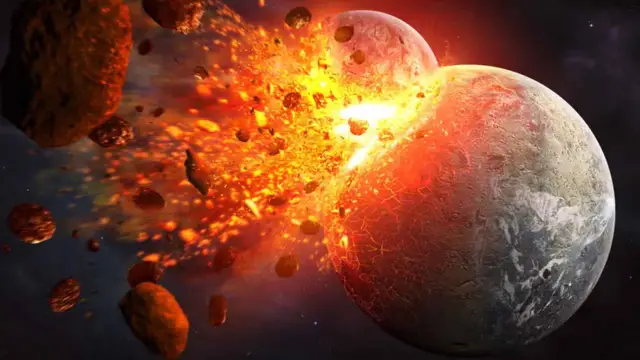
Wormholes are not shortcuts through the universe, but bridges between the future and the past
Forget the movie scene where a spaceship dives into a glowing tunnel and pops out next to another galaxy. A new line of research suggests that what many…
ECOnews Newsroom · March 26, 2026
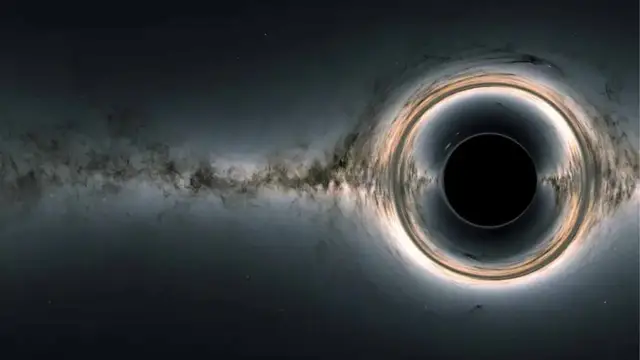
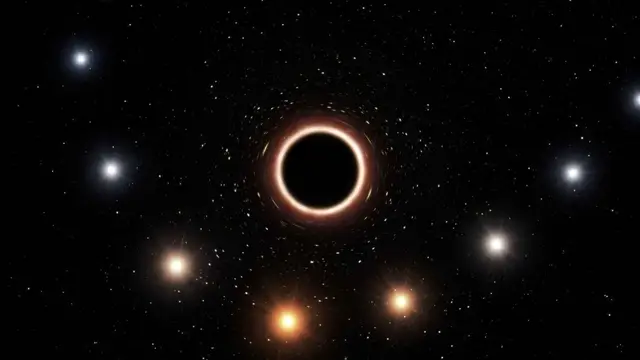
Scientists propose that the center of the Milky Way does not contain a black hole, but rather ultra-dense dark matter
Astronomers have shown that the powerful gravity at the center of the Milky Way can be reproduced without assuming a black hole sits there. Their new…
ECOnews Newsroom · March 12, 2026
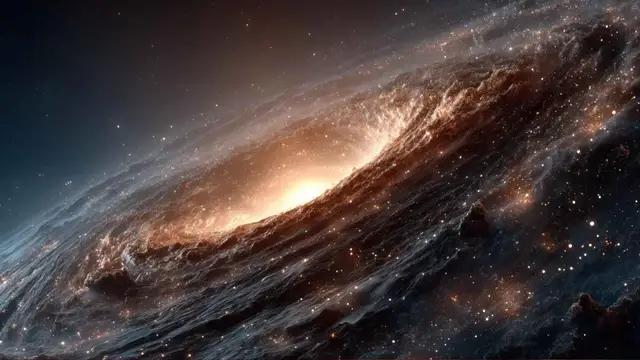
James Webb discovers (once again) the most distant galaxy in the universe and breaks its own record
The universe has a new distance champion, and once again the telescope holding the trophy is the James Webb. Astronomers have confirmed a tiny, yet…
Adrian Villellas · March 2, 2026
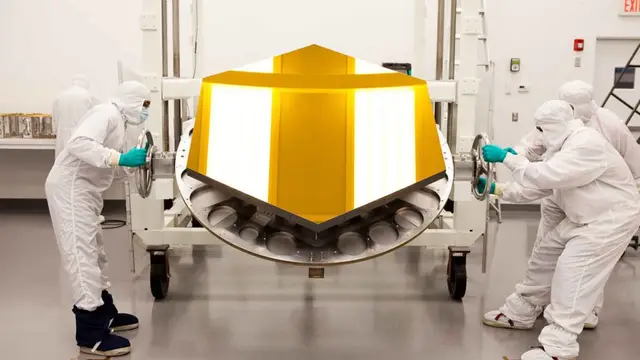
For 25 years, we believed that 70% of the universe was “dark energy”… but this new theory could prove that it was all a mistake
Dark energy, the invisible something that is supposed to make up about 70% of the universe, may not be needed to explain why space keeps speeding up.
ECOnews Newsroom · February 11, 2026
What Eddington once called absurd could be behind 70% of the cosmos: the new idea that turns the universe’s expansion into a kind of cosmic “fuel” that no one had taken this seriously before
For decades, black holes were treated like a cosmic punchline. In the 1930s, astronomer Arthur Eddington openly mocked the idea that a star could collapse…
Adrian Villellas · February 9, 2026
A galaxy looked calm in the first images, but when it was brought into focus it turned out to be a cluster of at least 15 stellar bursts, like cosmic grapes
A galaxy that lived only about 930 million years after the Big Bang looked, at first glance, like a smooth rotating disk. Then astronomers zoomed in with…
ECOnews Newsroom · February 8, 2026
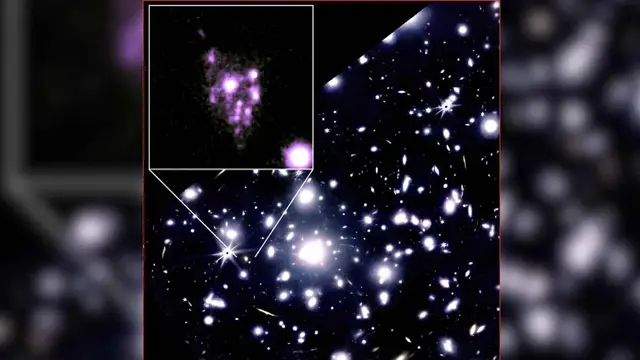
Just 600 million years after the Big Bang, a compact galaxy appears that produces stars as if there were no tomorrow
Using one of the most sensitive radio telescopes on Earth, astronomers have found an extreme kind of “star factory” in the very young universe.
ECOnews Newsroom · February 7, 2026
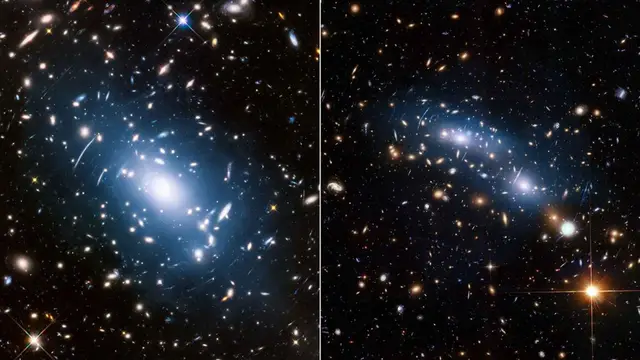
ALMA detects “cotton” clouds in the Small Magellanic Cloud and provides unexpected clues about how the first stars in the universe were born
When we picture where stars are born, many of us imagine long, dark threads of gas slowly collapsing under gravity.
ECOnews Newsroom · February 6, 2026
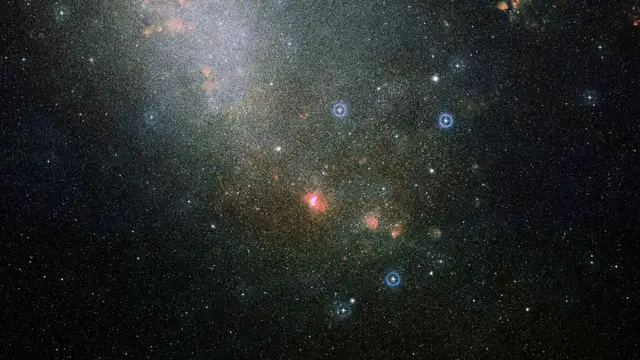
The loudest gravitational wave ever heard comes from 2025 and tests Hawking’s rule with almost absurd precision
The universe has just sent its loudest gravitational whisper so far. In that tiny ripple in space time, Stephen Hawking’s black hole rule has faced its…
ECOnews Newsroom · January 30, 2026
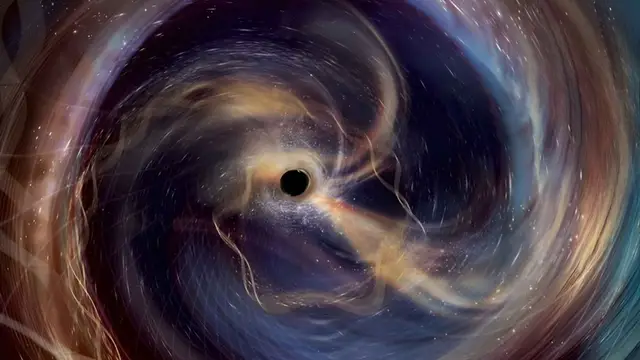
Images capture how a baby star shoots a jet at full speed 440 light-years away and the “rebound” ends up hitting its own disk where planets are born
Astronomers have caught a baby star in the middle of a cosmic backfire. A high-speed jet shot out from the young star WSB 52, inflated a giant bubble of…
ECOnews Newsroom · January 26, 2026
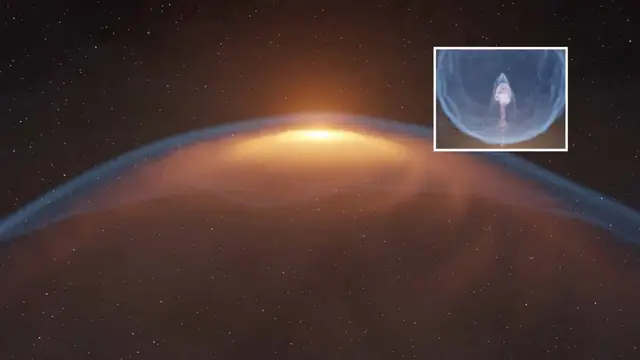
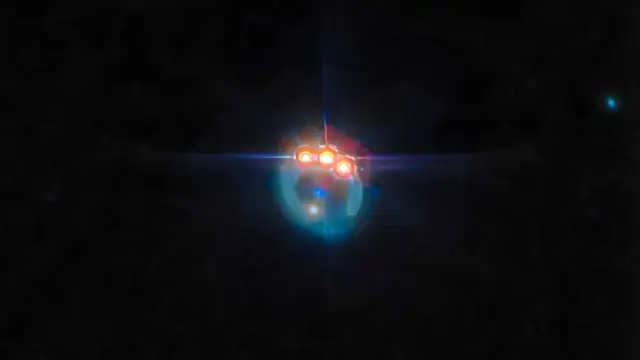
Four images of the same quasar reveal the “aura” of a black hole 6 billion light-years away, and its size surprises even astronomers
Black holes are famous for being invisible. So how do you measure a halo of hot gas wrapped around one about 6 billion light-years from Earth? Using a…
ECOnews Newsroom · January 26, 2026