The universe
82 stories · since 2025 · latest, November 18, 2026
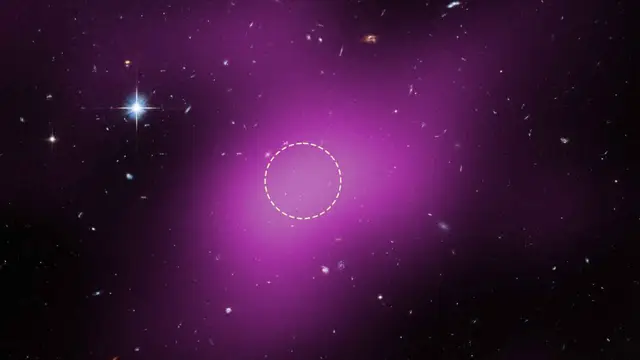
An astrophysicist argues dark matter doesn’t exist and the universe is 27 billion years old, a controversial theory trying to fit data that won’t sit still in the standard model
For nearly a century, dark matter has been the invisible scaffolding of modern cosmology. It helps scientists explain why galaxies hold together, why…
Adrian Villellas · June 7, 2026
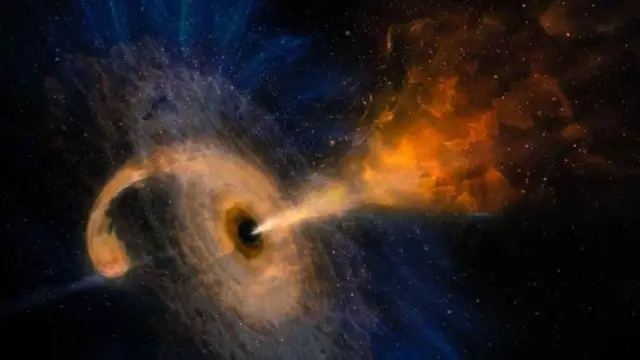
A radio burst traveled 10 billion years before reaching Earth, and the newly detected FRB acts like a time capsule from the early universe
A powerful radio signal has reached Earth after crossing a staggering stretch of the universe, giving astronomers a rare glimpse into a time when galaxies…
Adrian Villellas · May 25, 2026
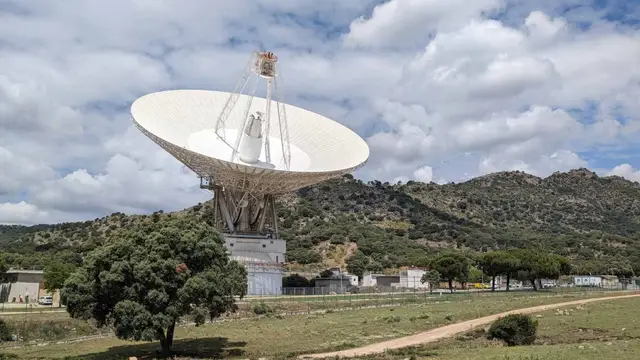
Scientists discover that the Milky Way may be floating on a dark-matter sheet millions of light-years wide, changing the map of our galaxy’s hidden support
Galaxies are not sprinkled evenly through space. They clump in clusters, stretch into filaments, and leave behind huge “voids.” A new study published on…
ECOnews Newsroom · May 15, 2026
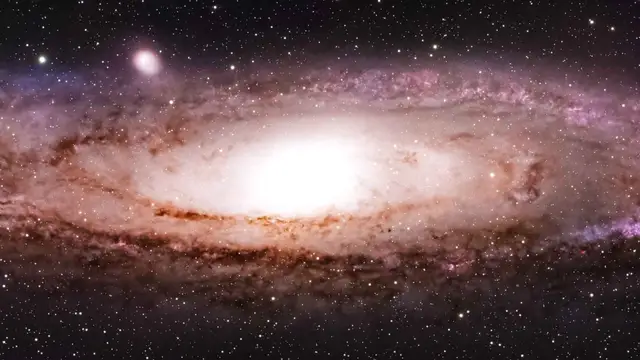
The largest test of gravity on cosmic scales confirms Newton and Einstein and points to dark matter
Gravity is the force that keeps your feet on the ground, but it also choreographs the slow “dance” of galaxy clusters spread across space. A new study…
ECOnews Newsroom · May 11, 2026
A new theory suggests gravitational waves could modulate the light emitted by atoms, as if every atom carried a tiny trace of the universe’s deepest vibrations
Gravitational waves are famous for shaking the universe, yet barely nudging anything around us. We have detected them with some of the most sensitive…
ECOnews Newsroom · May 6, 2026
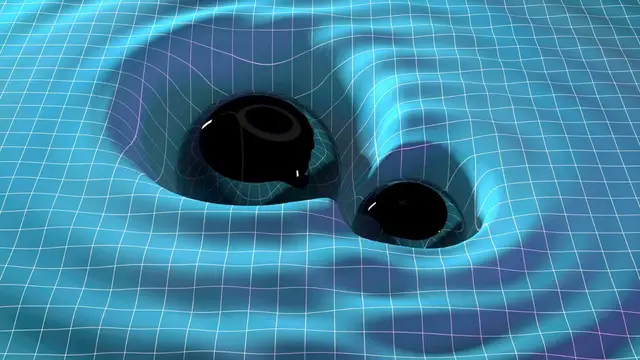
A super-Earth has been discovered just 10 light-years away, which could harbor an atmosphere and water, but reaching it with current technology would take us about 15,000 years
Astronomers have confirmed a planet called GJ 887d in the habitable zone of the nearby red dwarf star GJ 887. It circles every 50.8 days and has at least…
ECOnews Newsroom · May 3, 2026
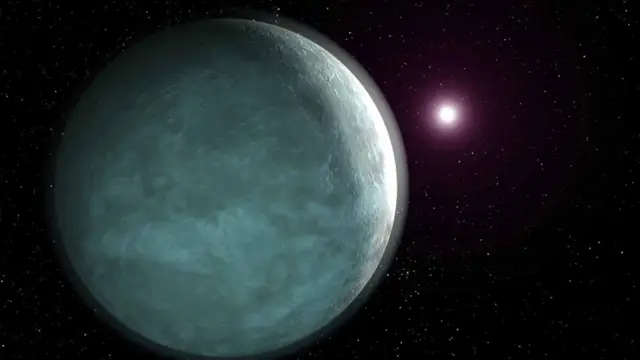
A potentially habitable super-Earth has been discovered just 10 light years away, and the big question of what might be waiting for us out there returns with a vengeance
A planet that might be able to hold liquid water has been confirmed orbiting one of our nearest stellar neighbors. The world, called GJ 887 d, sits in the…
ECOnews Newsroom · April 30, 2026
NASA observes the Sahara from the International Space Station and detects a gigantic eye nearly 50 kilometers wide, whose origin is not as cosmic as it seems
NASA Earth Observatory has spotlighted one of the Sahara’s most recognizable sights, the Richat Structure in Mauritania, often nicknamed the “Eye of the…
ECOnews Newsroom · April 26, 2026
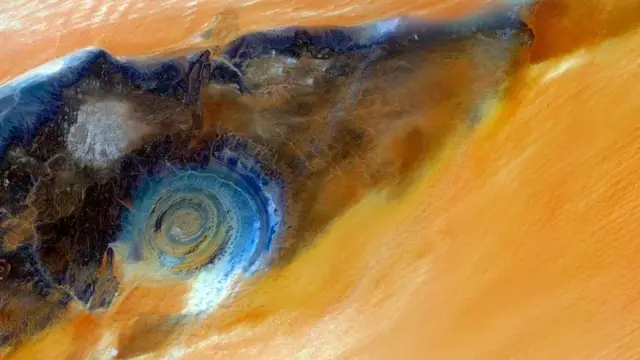
Astronomers have detected, for the first time and in real time, a violent collision between two young planets located 11,000 light-years away
A distant star has been acting like a porch light, dimming in bursts and then fading again. In new research, astronomers say the young F-type star, hotter…
ECOnews Newsroom · April 26, 2026
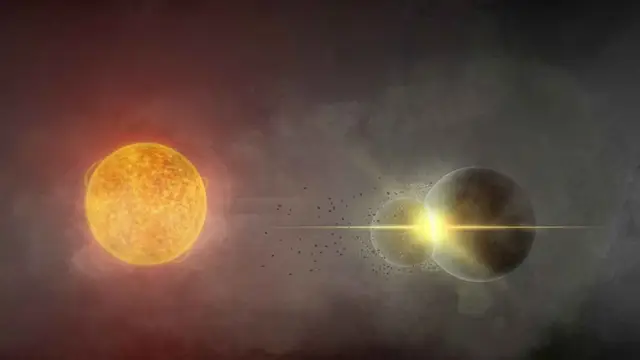
The James Webb Space Telescope detected strange red spots in the early universe, and now a study suggests that they were not galaxies, but young black holes growing at a breakneck pace
What if some of the strangest lights in the early universe were not giant, impossible galaxies at all, but young black holes hiding in plain sight? A new…
ECOnews Newsroom · April 10, 2026
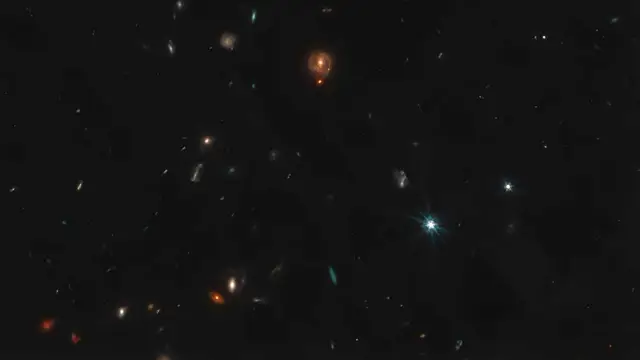
James Webb images show the “Exposed Cranium” nebula PMR 1, a dying star 5,000 light-years away
At first glance, it looks like a transparent skull drifting through deep space. But NASA’s new James Webb Space Telescope images show that PMR 1,…
Adrian Villellas · April 9, 2026
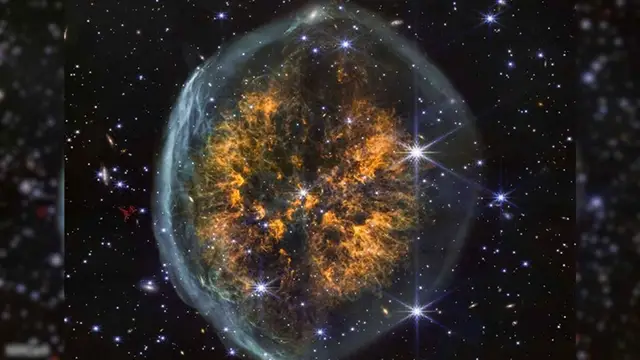
Astronomers discover a solar system 120 light-years away with two “Earths” and an arrangement so strange that it doesn’t fit any known formation model
What happens when a planetary system refuses to follow the usual script? Astronomers say they have found exactly that around LHS 1903, a small red dwarf…
Adrian Villellas · April 6, 2026
CDG-2, a galaxy in the Perseus cluster made of 99.9% dark matter, is one of the darkest ever found
Imagine a galaxy that barely shines, so faint it hides in the background glow of the universe. Astronomers now say such a ghostly system, called Candidate…
Adrian Villellas · April 4, 2026
A student has created cosmic dust in the laboratory and may have revealed how the ingredients for life on Earth came about
When you wipe dust off a shelf, it rarely feels like a clue to the beginning of life. Yet a new experiment suggests that tiny grains of cosmic dust, born…
Adrian Villellas · April 2, 2026

Astronomers suspect they have discovered an object that could reveal one of the greatest mysteries of the universe
Astronomers have confirmed a strange new kind of cosmic object. It is a compact cloud of gas and dark matter called Cloud 9, parked on the outskirts of…
ECOnews Newsroom · April 1, 2026